
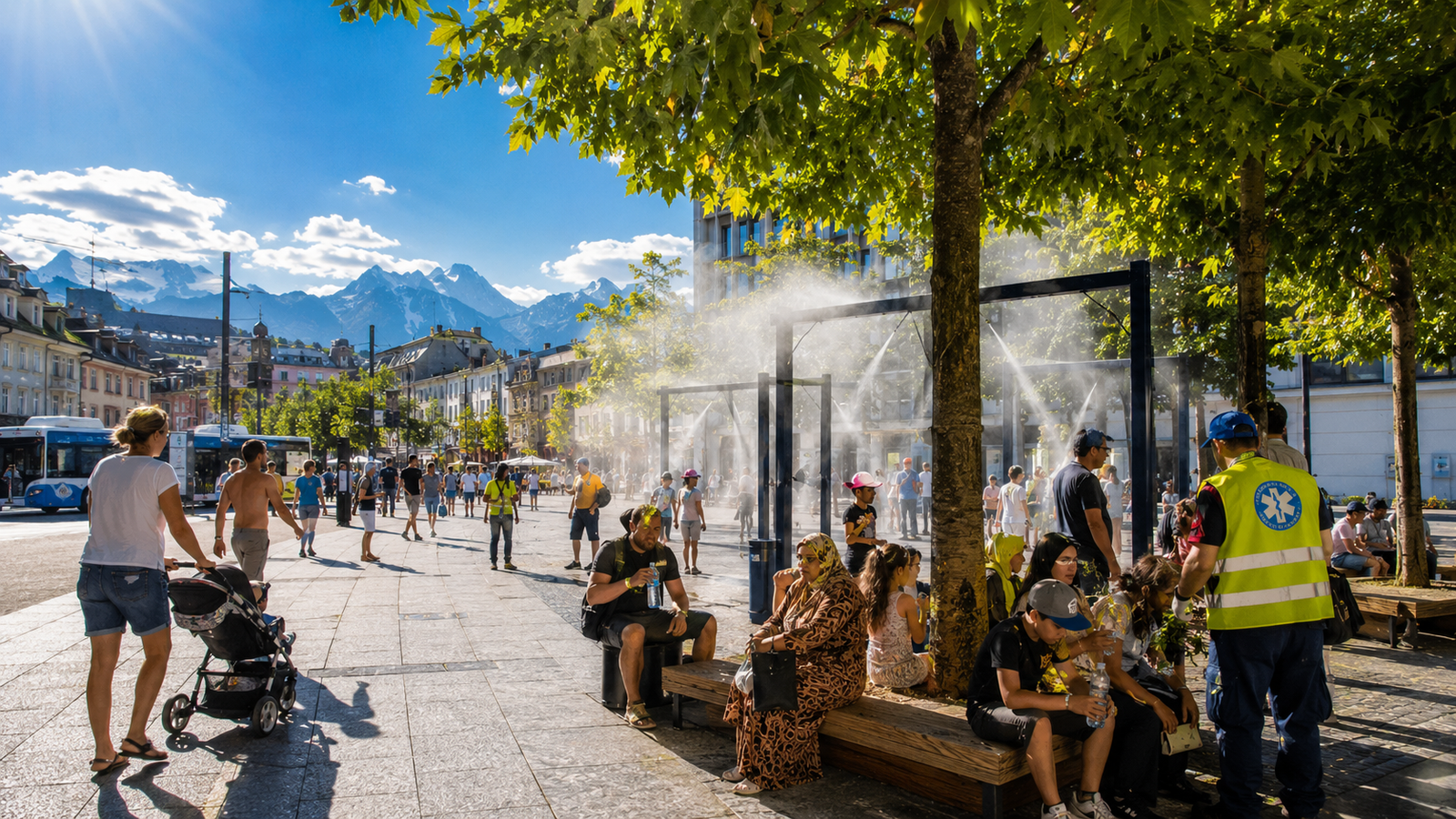
Swiss Public Backs Expanded Heatwave Defenses as Extreme Summer Temperatures Raise Concerns
Growing concern over increasingly intense summer temperatures has translated into broad public support for stronger heat-protection measures across Switzerland, according to newly released survey findings that point to rising awareness of the health and social risks associated with extreme heat.
The results indicate that a substantial majority of residents favor greater investment in adaptation efforts designed to help communities cope with heatwaves, a trend that reflects changing public attitudes as Europe experiences more frequent periods of exceptionally hot weather.
The survey, conducted as Switzerland continues to confront the realities of a warming climate, found support for a range of protective measures aimed at reducing heat-related risks. Backing was particularly strong for initiatives focused on safeguarding vulnerable populations, improving urban environments, and expanding public infrastructure capable of providing relief during periods of extreme heat.
The findings arrive at a time when heatwaves are increasingly being viewed not only as environmental events but also as public health emergencies. Researchers and health authorities have repeatedly warned that prolonged exposure to high temperatures can significantly increase the risk of illness and death, particularly among older adults, people with chronic medical conditions, outdoor workers, and residents of densely built urban areas. Recent European studies and mortality analyses have linked major heat events to thousands of excess deaths across the continent.
Public support for adaptation measures appears to extend beyond emergency responses. Respondents also expressed approval for longer-term strategies that seek to reduce heat exposure through urban design, building improvements, expanded green spaces, and enhanced planning standards.
Cities have become a particular focus of concern. Urban areas often experience higher temperatures than surrounding regions because concrete, asphalt, and buildings absorb and retain heat. Researchers studying Swiss cities have highlighted the importance of better monitoring and adaptation strategies as urban populations face increasing exposure to heat-related risks.
The survey results suggest that many Swiss residents recognize the need for authorities to prepare for hotter summers rather than treating extreme heat as a temporary or isolated problem. This marks a notable shift in a country traditionally associated with alpine climates and moderate summer conditions.
Recent years have brought repeated reminders that Switzerland is not immune to the broader climate trends affecting Europe. Heatwaves have become more frequent and more intense across the continent, with scientists documenting rising temperatures and longer periods of extreme heat. Meteorological agencies have increasingly issued heat warnings affecting large portions of Switzerland during particularly hot periods.
Health experts argue that adaptation measures can produce immediate benefits. Shaded public areas, cooling centers, improved building insulation, heat-resilient urban planning, and targeted warning systems are among the interventions commonly recommended to reduce health impacts during heat emergencies.
The survey’s findings also highlight a growing expectation that governments should play an active role in protecting communities. Public demand for stronger heat protections mirrors broader discussions taking place across Europe, where policymakers are under pressure to address the consequences of rising temperatures.
Across the continent, heat-related concerns have increasingly influenced debates over infrastructure, housing, workplace conditions, healthcare preparedness, and energy systems. The issue has moved beyond environmental policy alone and is now closely linked to questions of public safety and quality of life.
Experts note that heat poses unique challenges because its effects are often less visible than those of floods, storms, or wildfires. Yet heatwaves can be among the deadliest weather-related events. Research has shown that extreme temperatures can impair physical performance, cognitive functioning, and overall health while placing additional strain on healthcare systems.
The Swiss survey reflects a growing understanding of those risks among the public. While opinions may differ regarding specific policies, the overall message is clear: most respondents support stronger efforts to help communities adapt to hotter conditions.
Climate adaptation has become an increasingly important part of policy discussions as governments attempt to balance long-term emissions reduction goals with immediate measures that protect people from existing climate impacts. Heatwave preparedness is often viewed as one of the most practical examples of adaptation because the benefits can be realized quickly and directly.
Urban planners, public health officials, and climate researchers have emphasized that adaptation strategies are most effective when implemented before emergencies occur. Early planning can reduce risks to vulnerable populations, limit pressure on public services, and improve resilience during prolonged periods of high temperatures.
The survey suggests that many Swiss residents share that perspective. Rather than waiting for future heat emergencies, respondents appear to favor proactive investments designed to reduce exposure and strengthen preparedness.
As Europe continues to experience hotter summers and climate experts warn that extreme heat events are likely to remain a recurring challenge, public support for adaptation measures could play an important role in shaping future policy decisions. For Switzerland, the latest findings indicate that a significant portion of the population is prepared to back stronger protections aimed at helping communities withstand the growing threat posed by heatwaves.