Lake Stellisee, Zermatt, Switzerland
Lake Stellisee: The Mirror Lake That Captures Switzerland’s Most Famous Mountain
Long before social media transformed mountain photography into a global phenomenon, travelers were making the journey to a small Alpine lake above Zermatt in search of a single image. The goal was simple: to see the Matterhorn reflected on still water.
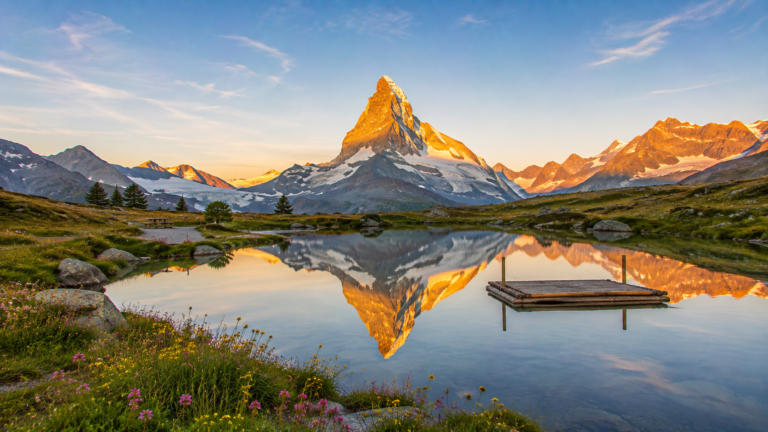
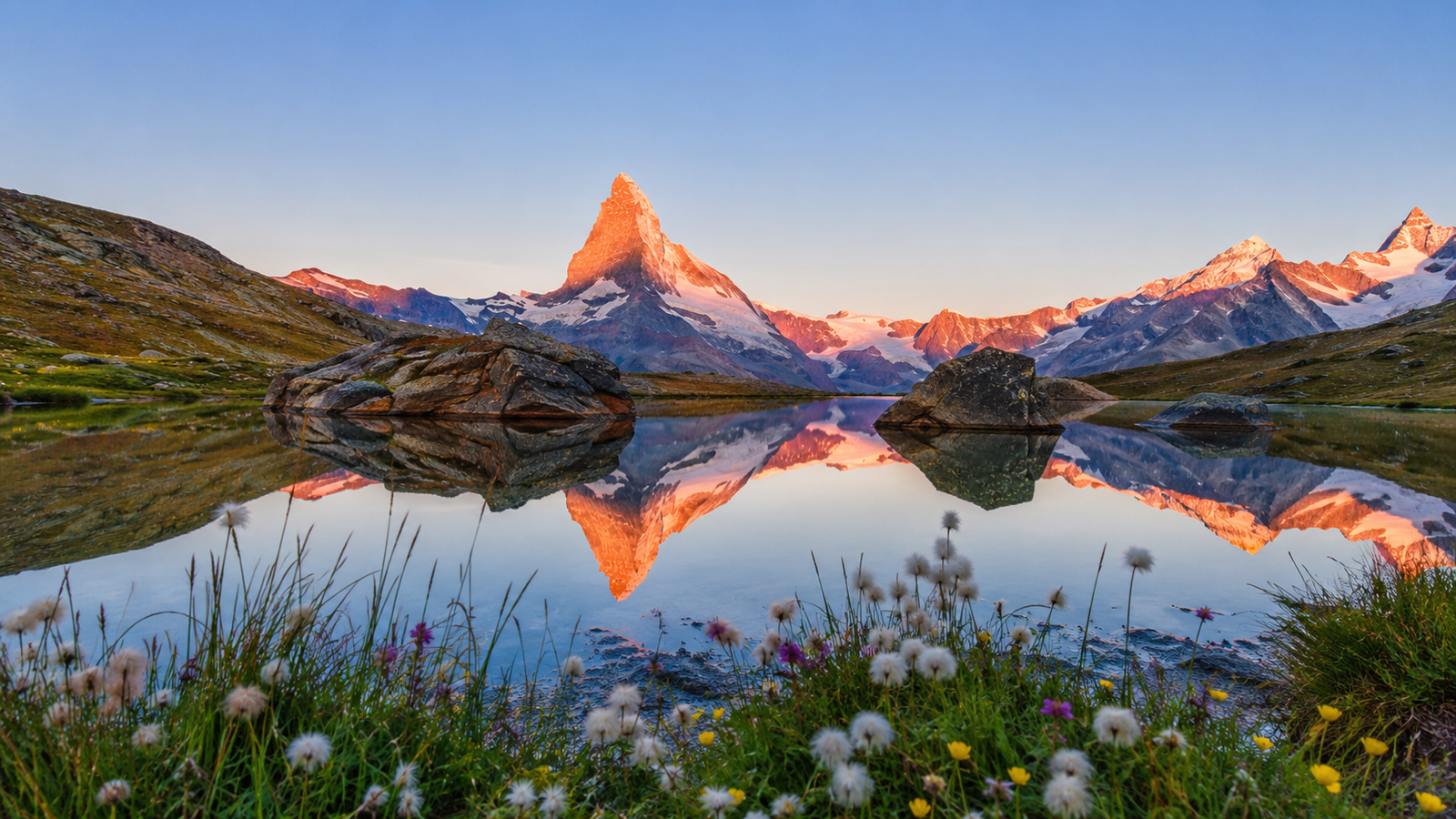
That destination is Lake Stellisee, one of the most celebrated mountain lakes in Switzerland and arguably the country’s most famous natural photography location. Situated at an elevation of approximately 2,537 meters in the mountains above Zermatt, Stellisee has become synonymous with the iconic image of the Matterhorn mirrored perfectly on a glass-like surface. Yet reducing the lake to a photographic viewpoint alone overlooks what makes it truly special.
Beyond the reflections lies a remarkable Alpine landscape shaped by glaciers, surrounded by peaks exceeding 4,000 meters, and connected to one of the most scenic hiking networks in the Swiss Alps. For many visitors, Stellisee becomes far more than a photo stop—it becomes the highlight of their time in Zermatt.
Why Stellisee Became a Global Symbol of Switzerland
Few locations are as instantly recognizable as Stellisee.
Images of the lake appear in tourism campaigns, travel magazines, guidebooks, and photography exhibitions around the world. The reason is obvious to anyone who visits on a calm day. The Matterhorn rises directly beyond the lake, and when wind conditions are favorable, its unmistakable pyramid-shaped summit appears reflected in extraordinary detail across the water’s surface.
The effect is particularly striking because the mountain dominates the horizon without obstruction. Unlike viewpoints where forests or settlements interrupt the scenery, Stellisee offers an open Alpine setting that allows the Matterhorn to command complete attention.
The reflection has become one of Switzerland’s defining visual icons, attracting photographers from across the globe in every season.
Yet even when the water is disturbed by wind or changing weather, the surrounding scenery remains exceptional.
A Lake Surrounded by Alpine Giants
Standing at the lakeshore reveals a panorama extending far beyond the Matterhorn itself.
The region surrounding Stellisee is home to some of the highest mountains in the Alps. Alongside the Matterhorn, visitors can observe peaks belonging to the Monte Rosa massif and other towering summits that exceed 4,000 meters in elevation. The landscape is shaped by glaciers, rocky ridges, and expansive mountain slopes that create a dramatic backdrop in every direction.
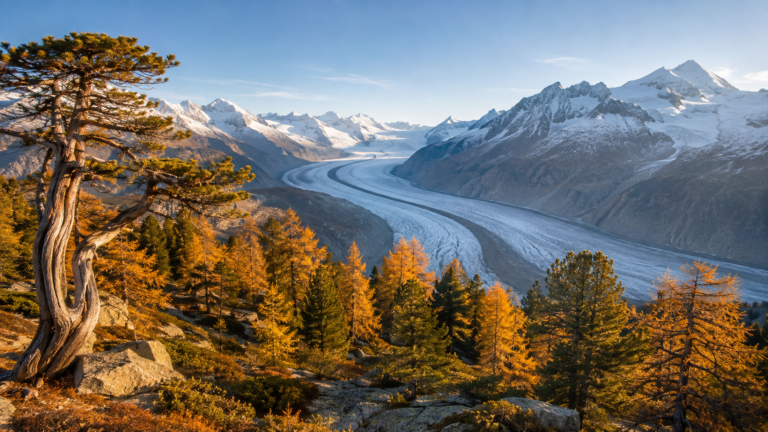
The nearby Findel Glacier has played a significant role in shaping the geography of the area, leaving behind geological features visible along surrounding hiking routes. Alpine meadows and rocky terrain soften the rugged mountain environment, creating a balance between grandeur and tranquility.
The result is a landscape that feels vast and wild while remaining surprisingly accessible.
The Best Time to Experience the Lake
While Stellisee is beautiful throughout the day, certain moments have earned legendary status among photographers and mountain enthusiasts.
Sunrise is widely regarded as the most rewarding time to visit. As the first sunlight reaches the upper slopes of the Matterhorn, the mountain often glows with shades of pink, orange, and gold. During calm conditions, these colors are reflected in the lake, creating one of the most memorable natural spectacles in the Swiss Alps.
Sunset offers a different atmosphere. The crowds often diminish, temperatures cool, and the surrounding peaks gradually transition through changing colors as daylight fades.
Weather plays a crucial role in the experience. Clear skies and minimal wind produce the mirror-like conditions for which Stellisee is famous, while changing clouds can add drama and depth to the landscape.
For visitors interested in photography, patience often proves as valuable as technical skill.
Reaching Stellisee from Blauherd
One reason for Stellisee’s popularity is that visitors do not need to undertake a demanding mountain expedition to reach it.
Most travelers begin their journey in Zermatt before taking mountain transportation to Blauherd. From the Blauherd station, a well-maintained hiking path leads to Stellisee in approximately twenty minutes. The route is suitable for a wide range of visitors and provides outstanding views almost immediately after leaving the station.
The walk itself is part of the attraction. As the trail approaches the lake, the Matterhorn gradually emerges in full view, creating a sense of anticipation that builds with every step.
Because access is relatively straightforward, Stellisee appeals not only to experienced hikers but also to families, photographers, and travelers seeking a memorable mountain excursion without an all-day commitment.
The Heart of the Five Lakes Walk
Although some visitors return after photographing the lake, many continue onward along one of Zermatt’s most famous hiking routes.
The Five Lakes Walk links Stellisee with Grindjisee, Grünsee, Moosjisee, and Leisee. Covering a varied route through Alpine terrain, the trail introduces hikers to five distinct mountain lakes, each with its own character and scenery.
Stellisee serves as the opening highlight for many hikers. From there, the trail passes through landscapes rich in Alpine flowers, glacier-influenced terrain, and panoramic viewpoints. Several of the lakes also offer additional Matterhorn reflections, ensuring that the iconic mountain remains a constant companion throughout the journey.
The route has become one of the most popular hiking experiences in the Matterhorn region because it combines world-class scenery with manageable distances and well-marked trails.
A Landscape of Alpine Flowers and Wildlife
Visitors often arrive focused entirely on the Matterhorn, only to discover another attraction at their feet.
The area surrounding Stellisee supports a variety of Alpine plants that flourish during the summer months. Cotton grass grows near the shoreline, creating distinctive white accents across the meadows. Seasonal wildflowers add color to the rocky landscape, transforming the area into a vibrant mountain ecosystem.
The broader region is also home to wildlife associated with the high Alps, including marmots and the distinctive Valais black-nosed sheep that have become a symbol of the canton. These animals contribute to the authentic mountain character that defines the Zermatt area.
Unlike heavily developed tourist destinations, Stellisee remains primarily a natural environment where scenery and ecology take center stage.
More Than a Photograph
Many destinations become famous because of a single image. Stellisee is one of the rare places where the reality often exceeds expectations.
The reflection of the Matterhorn may be the initial attraction, but the experience extends far beyond photography. Visitors discover an Alpine landscape shaped by glaciers, connected by scenic trails, and framed by some of Europe’s highest peaks. They encounter changing light, mountain silence, and a sense of scale that photographs can only partially capture.
Whether arriving at sunrise, hiking the Five Lakes Walk, or simply sitting beside the water watching clouds drift across the summit of the Matterhorn, visitors quickly understand why Stellisee remains one of Switzerland’s most enduring natural landmarks.
In a country filled with spectacular lakes, Stellisee continues to stand apart—not because it is the largest or most remote, but because it offers one of the most unforgettable views in the Alps.