Lake Zurich, Zurich, Switzerland
Lake Zurich: Where Switzerland’s Largest City Meets a Landscape of Water, Vineyards, and Alpine Views
Many visitors arrive in Zurich expecting a global financial center, a transportation hub, or a gateway to the Swiss Alps. What often surprises them is how deeply the city’s identity is tied to water. Stretching southeast from the heart of Zurich toward rolling hills, vineyards, and historic lakeside towns, Lake Zurich is far more than a scenic backdrop. It serves as a gathering place, transportation corridor, recreational playground, and defining feature of everyday life in northern Switzerland.
Known in German as Zürichsee, the lake connects urban neighborhoods, historic villages, nature reserves, and cultural landmarks across two cantons. Unlike many Alpine lakes hidden within remote mountain valleys, Lake Zurich blends natural beauty with modern Swiss life, creating an experience that feels distinctly different from other lake destinations in the country.
A Lake Created by Ancient Glaciers
The origins of Lake Zurich reach back to the last Ice Age.
As glaciers advanced and retreated across the Swiss Plateau, enormous masses of ice carved depressions into the landscape. When the glaciers melted, water gradually filled these basins, forming the elongated lake that exists today. The result is a lake stretching from Zurich toward the southeastern communities of the region, framed by gentle hills rather than dramatic Alpine cliffs.
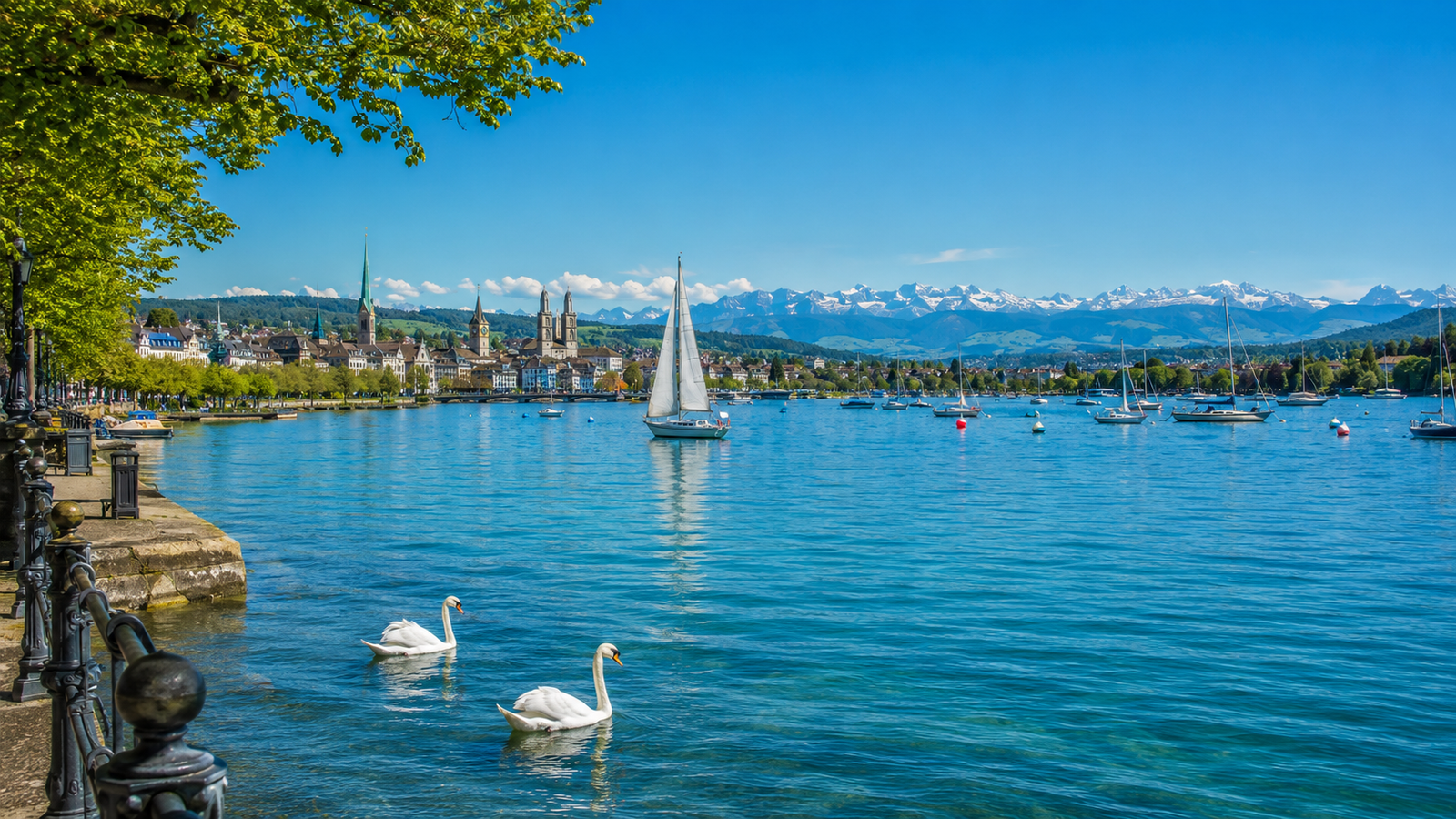
Although the lake lies outside the high Alps, mountain views remain a constant presence. On clear days, visitors can see distant snow-covered peaks rising beyond the southern horizon, creating a striking contrast between the calm waters and Switzerland’s rugged mountain interior.
The Linth River contributes significantly to the lake’s water system before the Limmat River flows out from the northern end through the city of Zurich, continuing toward northern Switzerland.
The Lake That Helped Build Zurich
Long before Zurich became an international financial center, Lake Zurich played a vital role in the region’s development.
For centuries, the lake served as an important transportation route linking communities along its shores. Goods, agricultural products, and travelers moved across the water long before modern roads transformed regional travel. Lakeside settlements grew around fishing, trade, and agriculture, establishing communities that remain active today.
Archaeological discoveries have revealed prehistoric pile dwellings around parts of the lake. Several of these ancient lakeshore settlements form part of the UNESCO World Heritage listing known as the Prehistoric Pile Dwellings around the Alps. These remains provide valuable insight into early human life in the region and demonstrate that people have been drawn to Lake Zurich for thousands of years.
As Zurich expanded during the nineteenth and twentieth centuries, the lake evolved from a trade route into a recreational and cultural centerpiece. Today, its waterfront remains one of the city’s most valued public spaces.
Exploring the Lake from the Water
One of the most rewarding ways to experience Lake Zurich is by boat.
Passenger vessels connect numerous destinations along the shoreline, allowing travelers to move between urban districts, lakeside villages, and historic towns while enjoying uninterrupted views of the surrounding landscape.
The experience differs significantly from cruising on Alpine lakes. Here, the scenery combines elegant waterfront promenades, hillside vineyards, church towers, forests, and distant mountain views. The atmosphere feels relaxed and accessible, offering visitors a glimpse into everyday Swiss life rather than a purely wilderness experience.
Many routes depart directly from central Zurich, making lake excursions one of the easiest day activities for visitors staying in the city.
The gradual transition from urban waterfront to rural shoreline highlights the remarkable diversity contained within a relatively small geographic area.
The Lakeside Promenades That Define Zurich
Few European cities integrate a large lake into urban life as successfully as Zurich.
The city’s lakefront promenades attract residents and visitors throughout the year. Wide walking paths, gardens, public parks, and open gathering spaces create a vibrant waterfront environment where people come to exercise, relax, socialize, or simply enjoy the scenery.
Among the most popular areas is the stretch between Bellevue and Zürichhorn, where landscaped parks provide excellent views across the water. Swans, sailboats, and passenger ships contribute to the classic lakeside atmosphere that has become synonymous with Zurich itself.
Unlike destinations where waterfront access is limited, much of Lake Zurich’s shoreline remains highly accessible, encouraging visitors to engage directly with the lake rather than simply admire it from a distance.
Beyond the City: Villages, Vineyards, and Historic Towns
While Zurich often dominates attention, many of the lake’s most memorable experiences lie beyond the city limits.
Traveling south along the shoreline reveals a collection of lakeside communities that maintain their own distinct character. Small harbors, historic churches, waterfront cafes, and quiet promenades create an atmosphere very different from the urban center.
One of the most notable destinations is the medieval town of Rapperswil, located at the upper end of the lake. Often referred to as the “Town of Roses,” Rapperswil is known for its historic old town, lakeside castle, and panoramic views across the water. Its position overlooking the narrow section of the lake has made it an important regional settlement for centuries.
The surrounding hills also support vineyards that benefit from the lake’s moderating influence on local temperatures. These vineyard landscapes contribute another layer to the region’s cultural identity and scenic appeal.
A Lake Designed for Outdoor Living
Lake Zurich plays a central role in outdoor recreation throughout the year.
During the warmer months, swimming becomes one of the lake’s defining traditions. Public bathing facilities, known locally as badis, provide direct access to the water and remain an important part of Swiss summer culture.
Sailing, paddleboarding, rowing, kayaking, and cycling are also popular activities around the lake. Numerous paths follow portions of the shoreline, offering opportunities for leisurely walks and longer cycling excursions.
Because of its accessibility and relatively mild environment, Lake Zurich attracts both dedicated outdoor enthusiasts and casual visitors looking for a relaxing day by the water.
The lake’s recreational value extends well beyond tourism, serving as an essential component of daily life for many local residents.
Seasonal Character Throughout the Year
Lake Zurich undergoes subtle but fascinating transformations across the seasons.
Spring brings flowering parks, fresh greenery, and increasingly active waterfronts. Summer delivers long evenings along the shoreline, outdoor dining, and busy swimming areas. Autumn introduces colorful hillsides and vineyard landscapes, while winter often creates atmospheric scenes of mist rising above the water beneath snow-covered Alpine peaks in the distance.
Each season offers a different perspective on the lake, ensuring that repeat visits rarely feel the same.
For photographers, the changing light conditions are particularly rewarding. Sunrise reflections, evening city lights, and seasonal contrasts provide countless opportunities to capture the lake from new angles.
Planning Your Visit
One of Lake Zurich’s greatest advantages is its accessibility. Zurich Airport, Switzerland’s busiest international airport, lies only a short distance from the lake, while Zurich’s rail network provides convenient access to destinations throughout the region.
Visitors can easily combine lake experiences with cultural attractions such as Zurich’s Old Town, museums, shopping districts, and nearby mountain excursions. This flexibility makes Lake Zurich particularly attractive for travelers seeking both urban exploration and natural scenery within the same trip.
Whether experienced from a lakeside promenade, a historic town, a passenger boat, or a quiet vineyard overlooking the water, Lake Zurich reveals a side of Switzerland that extends beyond Alpine peaks and postcard villages. It is a destination where nature, history, culture, and modern life meet along one of the country’s most cherished waterways.