
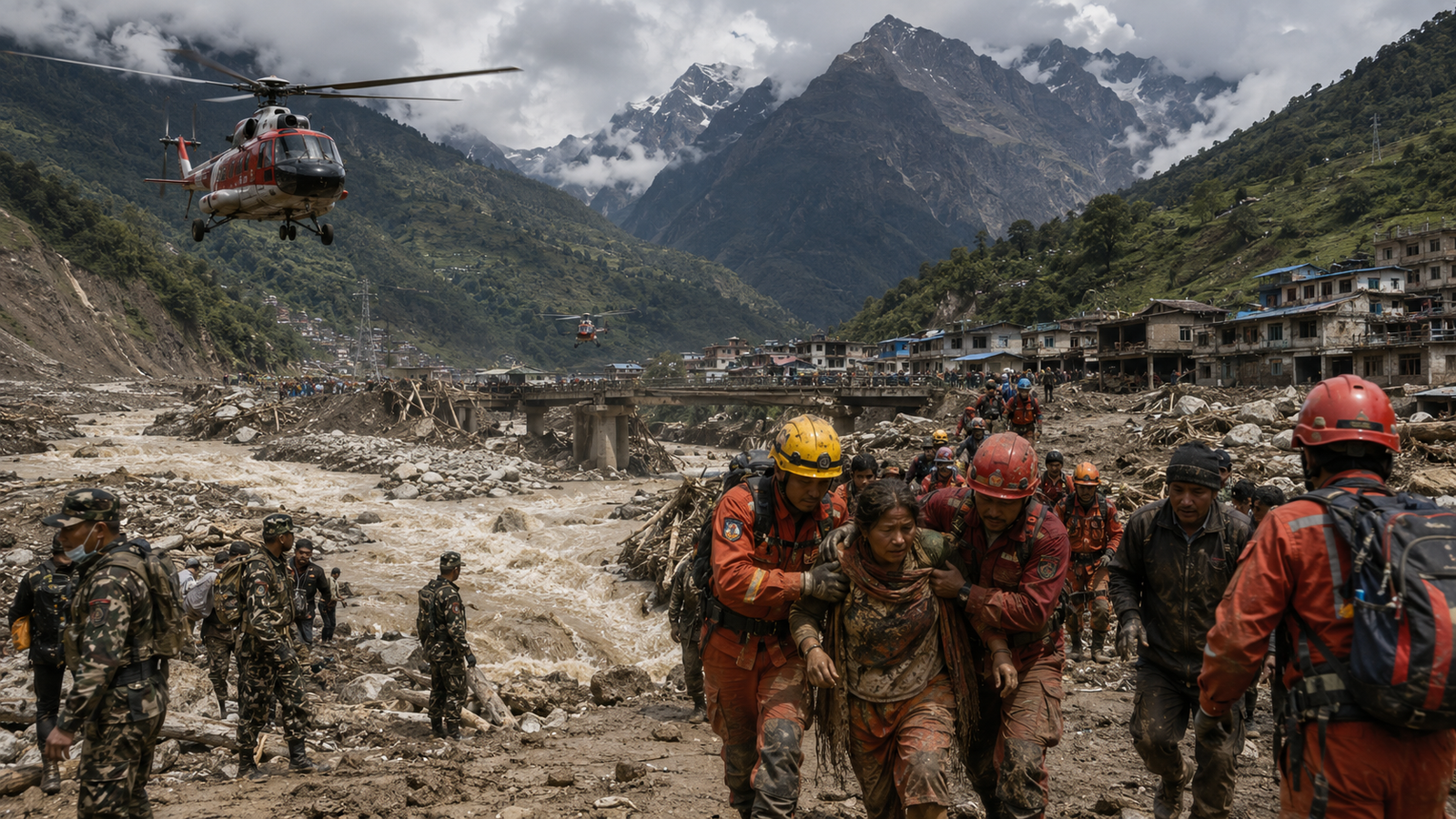
Swiss Woman Found Alive After Massive Nepal Flood Disaster as Search Efforts Continue
A Swiss woman who was reported missing following one of the deadliest flood disasters to strike the Himalayan region in recent years has been found alive, bringing a rare piece of positive news amid a humanitarian crisis that continues to unfold across Nepal and neighboring Tibet.
Swiss authorities had been attempting to establish contact with the woman after devastating floods swept through mountainous areas along the Nepal-China border earlier this week. The confirmation that she survived comes as rescue teams continue searching for hundreds of people who remain unaccounted for following the catastrophe.
The disaster began when a massive flow of water, mud, rocks and debris tore through valleys in northern Nepal after what authorities believe may have been a glacial-related event in the Himalayas. Entire sections of communities, roads and critical infrastructure were destroyed as floodwaters surged downstream through several districts. Investigators are still examining the precise cause of the event, though early assessments have pointed to a glacier-related collapse that may have temporarily blocked a river before unleashing a powerful flood wave.
Initial reports from Nepal’s tourism authorities listed a Swiss national among hundreds of missing individuals from numerous countries. The affected region is a major transit corridor for trekkers, tourists and religious pilgrims traveling through the Himalayas, making the international impact of the disaster particularly severe.
Authorities later announced that the Swiss woman had been located alive. Reports also indicated that dozens of other foreign nationals were found and rescued during ongoing operations. The development provided a measure of relief for families and officials who had feared the worst after communication links were severed in parts of the disaster zone.
Despite the successful rescue, the broader humanitarian situation remains critical. Officials in Nepal and China continue to report extraordinarily high numbers of missing persons. Estimates from multiple authorities and international organizations indicate that more than 1,300 people remain unaccounted for across the affected region, while hundreds of fatalities have already been confirmed.
The flood struck an area that serves as both a popular trekking destination and an important route for pilgrims traveling toward Mount Kailash, one of the most revered religious sites in the Himalayas. As a result, the disaster affected citizens from dozens of countries. Authorities have reported missing tourists, trekkers and pilgrims from Asia, Europe, North America and Oceania, creating a complex multinational rescue effort.
Swiss officials have been closely monitoring developments since the crisis emerged. The Swiss Federal Department of Foreign Affairs launched efforts to determine whether Swiss citizens were among the victims and worked with diplomatic missions in Kathmandu and Beijing to gather information. The confirmation that the missing Swiss woman survived represents a significant breakthrough in those efforts.
At the same time, Switzerland has joined the international response to the disaster. The Swiss government announced humanitarian assistance valued at approximately $1 million to support emergency relief operations. According to Swiss authorities, the funding is intended to help provide clean drinking water, food assistance, emergency shelter, medical services and psychosocial support for affected communities.
Swiss humanitarian organizations have also mobilized resources. Aid groups including Helvetas and the Swiss Red Cross have launched emergency operations and fundraising campaigns to assist victims. Teams on the ground are assessing damage and helping coordinate relief efforts in some of the hardest-hit communities.
Rescue operations remain extremely challenging. Floodwaters destroyed roads, bridges and communication networks across portions of the affected area, forcing authorities to rely heavily on helicopters and specialized rescue teams. Many communities remain difficult to access, slowing efforts to locate survivors and deliver emergency assistance.
The disaster has also renewed concerns about climate-related risks in the Himalayan region. Scientists and disaster specialists have increasingly warned that rising temperatures are affecting glaciers and mountain environments throughout the Himalayas. While investigators continue examining the specific trigger behind this event, experts have repeatedly highlighted the growing vulnerability of high-altitude regions to extreme natural hazards.
For Switzerland, the survival of the missing woman has transformed a feared tragedy into a story of relief. Yet the broader crisis remains far from over. Thousands of families across multiple countries are still waiting for news about loved ones, while emergency workers continue searching through devastated valleys and damaged communities.
As rescue operations move forward, international aid agencies and governments are expected to remain engaged in both immediate humanitarian relief and the longer-term recovery effort. The discovery of the Swiss survivor offers hope that additional rescues may still be possible, even as the scale of the disaster continues to become clearer.