Saanen, Canton of Bern, Switzerland
Saanen: Discover a Timeless Swiss Village Beneath the Bernese Alps
Long before luxury travelers arrived in nearby Gstaad and before mountain tourism transformed parts of the Alps, Saanen stood as the historic center of a remarkable valley in western Switzerland. Today, this charming village remains one of the most authentic destinations in the Bernese Oberland, offering visitors a rare opportunity to experience centuries of Alpine history surrounded by spectacular mountain scenery.
Often overshadowed by its famous neighbor, Saanen rewards travelers with something increasingly difficult to find in the Alps: a genuine historic village where local traditions, preserved architecture, and everyday Swiss life continue to shape the landscape. Walking through its streets feels less like visiting a resort and more like stepping into a living piece of Swiss history.
The Historic Center of the Saanenland
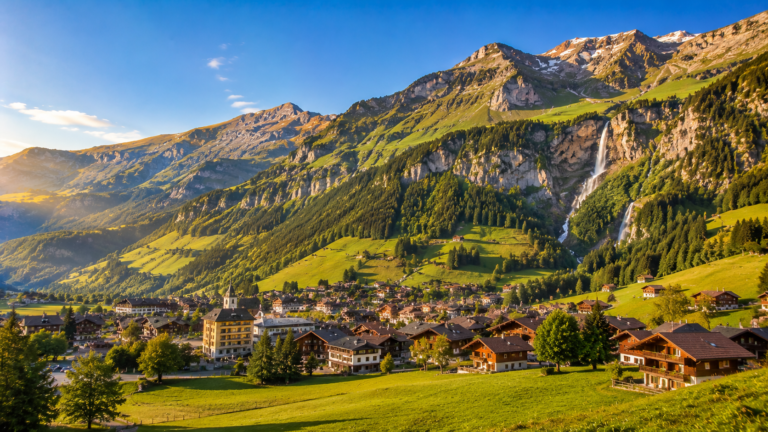
Saanen lies in the western Bernese Oberland, close to the borders of the cantons of Vaud, Fribourg, and Valais. The village forms the historical heart of the Saanenland region, an area characterized by broad valleys, Alpine pastures, traditional farming communities, and mountain peaks.
The settlement developed along important historical routes that crossed the Alps. For centuries, travelers, merchants, and local communities moved through this region, helping shape the village into an important center of trade and administration. Its location also placed it near cultural and linguistic frontiers, adding another layer to its rich heritage.
At approximately 1,000 meters above sea level, Saanen enjoys a picturesque setting surrounded by forests, meadows, and mountains, while the Saane River flows through the valley nearby.
A Story Written Across Centuries
Historical records mention Saanen as early as 1228, although the area was inhabited long before that. Archaeological evidence points to earlier settlements in the region, while the village gradually emerged as an important center within the territory of the Counts of Gruyère.
Throughout the Middle Ages, Saanen gained influence as a regional community. Local residents increasingly secured rights and freedoms, eventually purchasing significant privileges from the ruling counts. These developments strengthened the village’s identity and helped establish a tradition of local independence that remains part of its character today.
The village later became part of Bernese territory following the financial collapse of the Counts of Gruyère in the 16th century. During this period, the Protestant Reformation was introduced, bringing major religious and social changes to the region.
Unlike many historic settlements that lost their identity through modernization, Saanen managed to preserve much of its architectural and cultural heritage, making it one of Switzerland’s most valuable historic village centers today.
A Village of Chalets and Craftsmanship
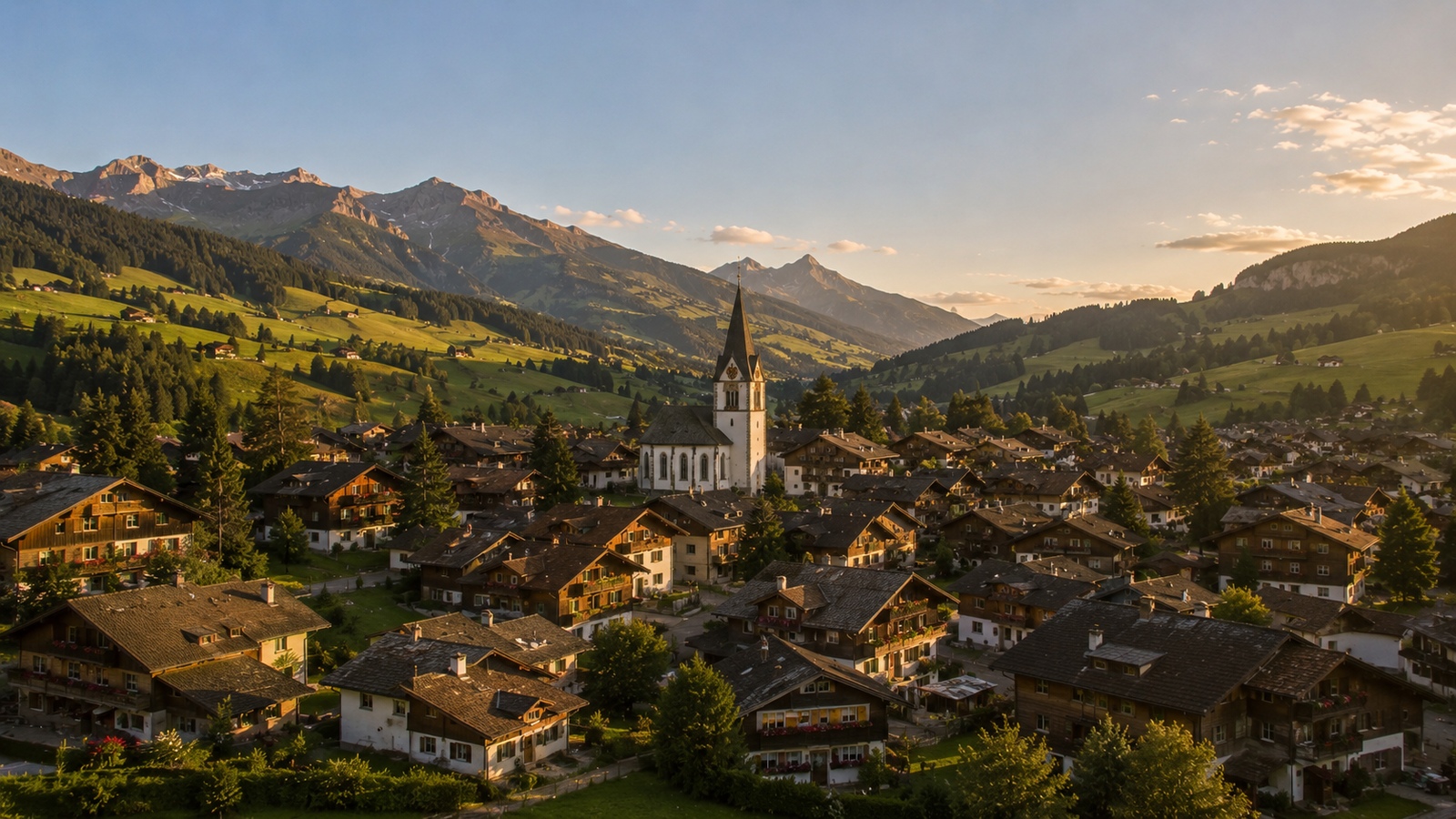
One of Saanen’s most striking features is its collection of traditional wooden chalets. Many date back several centuries and showcase the craftsmanship that has defined the region for generations. Decorative carvings, carefully maintained facades, and distinctive Alpine construction techniques create a village landscape that feels timeless.
The historic village center is recognized as an important Swiss heritage site. Rather than functioning as an open-air museum, it remains a living community where homes, shops, and public spaces continue to serve everyday purposes while preserving their historical character.
Strolling through the village reveals details that are easily missed elsewhere: carved wooden balconies, traditional barns, flower-filled window boxes, and historic buildings that tell stories spanning centuries.
St. Mauritius Church and Local Heritage
Dominating the village skyline is the Church of St. Mauritius, one of Saanen’s most important landmarks. A church existed on the site by the Middle Ages, and the present building largely reflects a major reconstruction completed during the 15th century. Historic wall paintings and Gothic architectural elements highlight its significance within the region’s cultural heritage.
The church serves not only as a religious site but also as a reminder of the village’s historical importance. Its tower remains one of the defining features of the Saanen skyline and a favorite subject for photographers.
Visitors interested in local history can also explore the Museum of the Saanen Countryside, which presents aspects of regional life, traditions, and cultural development.
Nature Beyond the Village Streets
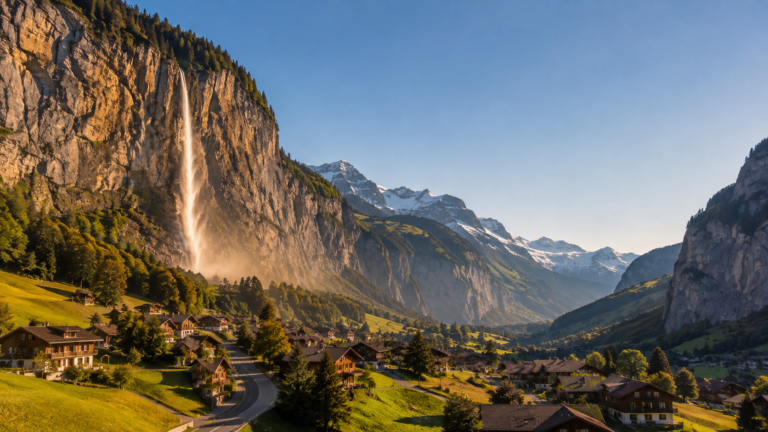
While history is central to Saanen’s appeal, the surrounding landscape is equally impressive. The village sits amid rolling Alpine terrain that transitions into higher mountain environments throughout the region.
Numerous hiking routes connect Saanen with neighboring communities, forests, and mountain viewpoints. Trails range from gentle valley walks to more demanding routes that explore the surrounding Alpine landscapes.
Cycling is also popular during warmer months, while scenic drives reveal traditional villages, mountain pastures, and panoramic viewpoints throughout the Saanenland.
Because Saanen forms part of the wider Gstaad region, visitors can easily combine cultural exploration with outdoor adventure, creating a balanced travel experience that appeals to a broad range of interests.
The Rhythm of the Seasons
Every season highlights a different aspect of Saanen’s personality.
Spring brings fresh greenery to the valley and renewed activity across Alpine meadows.
Summer is ideal for hiking, cycling, sightseeing, and enjoying long daylight hours in the mountains.
Autumn introduces golden forests and quieter landscapes, offering particularly rewarding opportunities for photography.
Winter transforms the village into a snowy Alpine setting connected to the wider winter sports opportunities of the surrounding region. Nearby ski areas and mountain facilities attract visitors while Saanen itself retains its peaceful village atmosphere.
Arriving in Saanen
One reason for Saanen’s enduring popularity is its accessibility. The village is connected to Switzerland’s rail network and can be reached comfortably from major Swiss cities. Scenic train journeys through the Bernese Oberland add to the experience, offering spectacular views before visitors even arrive.
Road access is equally convenient, with routes linking Saanen to neighboring valleys and destinations across western Switzerland. The location makes it an excellent base for exploring the broader Gstaad region and surrounding Alpine landscapes.
Why Travelers Continue to Return
Saanen offers something increasingly rare in modern tourism: authenticity. While many destinations focus on creating attractions, Saanen’s greatest attraction is the fact that it has preserved its identity.
Visitors come for the historic chalets, the centuries-old church, the mountain scenery, and the cultural heritage. They stay because the village feels real. Life here continues much as it has for generations, shaped by local traditions, Alpine landscapes, and a strong sense of community.
In a region famous for world-class tourism, Saanen provides a quieter and more intimate experience. It is a place where Swiss history remains visible in everyday life, where mountain landscapes frame every view, and where the character of the Bernese Oberland can still be experienced in its most authentic form.