
Thunderous Bell Tradition Draws Thousands to Swiss Cultural Gathering
The rhythmic clang of massive cowbells reverberated across the Bernese countryside this weekend as thousands of participants and spectators gathered for one of Switzerland’s largest celebrations of traditional folk culture.
The village of Schüpfen, located in the Seeland region of the canton of Bern, became the center of Swiss cultural life as bell-ringing groups from across the country assembled for the Federal Bell-Ringers and Trychel Gathering, a national event dedicated to preserving and showcasing centuries-old customs. Organizers expected around 3,000 active participants representing hundreds of associations from different regions of Switzerland.
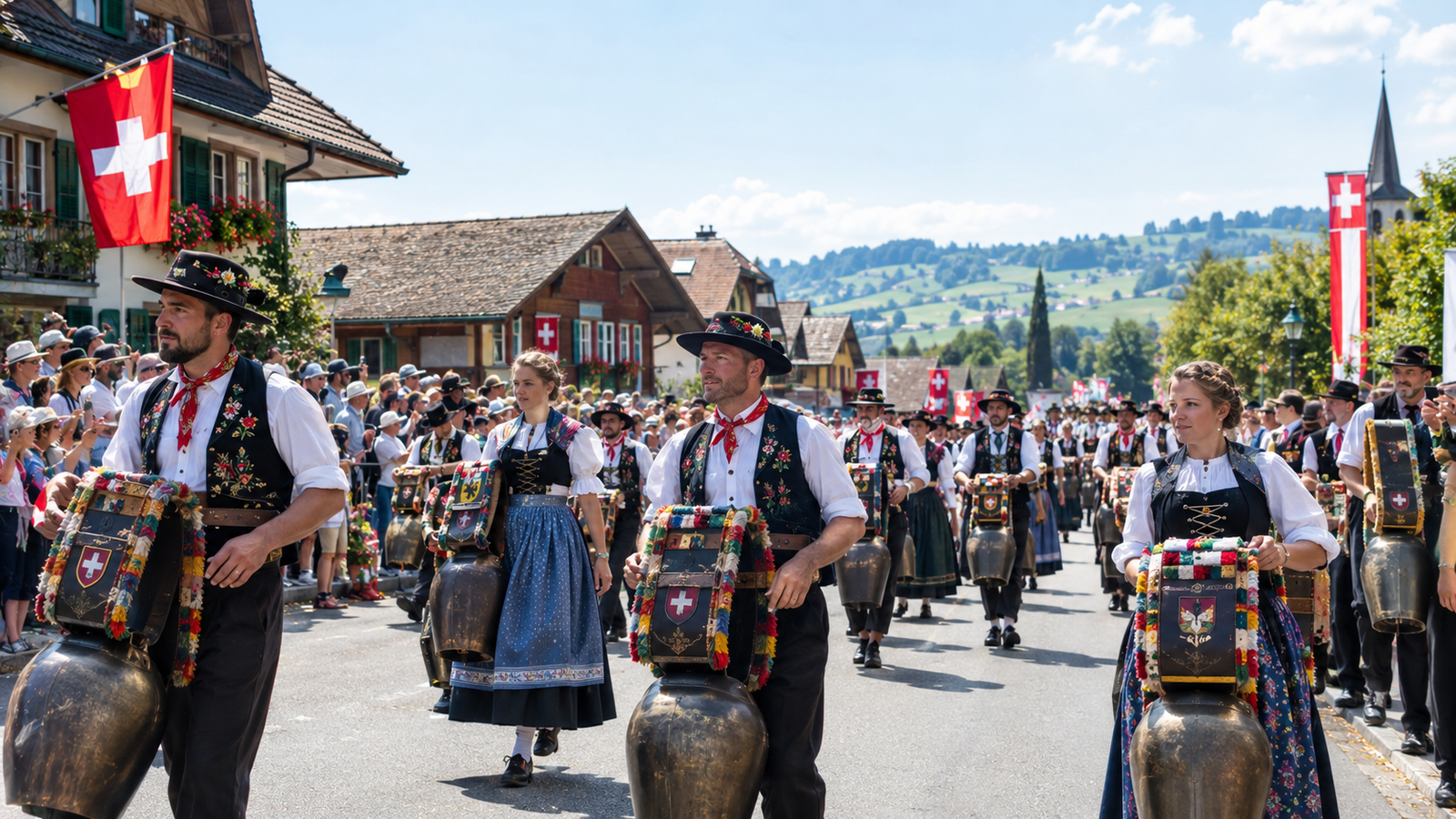
For three days, the usually quiet community was transformed into a meeting place for practitioners of a tradition that remains deeply rooted in Swiss rural identity. Participants arrived carrying large hand-forged bells known as Trycheln, instruments that have long been associated with Alpine customs, seasonal ceremonies, and communal celebrations.
The highlight of the gathering came during the major processions through the village streets. Groups marched in coordinated formations while swinging heavy bells in rhythmic patterns that produced a powerful and unmistakable sound. The collective resonance could be heard across large sections of the surrounding countryside, creating an atmosphere that combined spectacle, tradition, and community pride.
Swiss bell-ringing traditions vary significantly from one region to another. Different cantons maintain distinct styles, rhythms, clothing, and ceremonial practices. Some groups emphasize slow, synchronized movements, while others focus on more energetic performances designed to create dramatic acoustic effects. Events such as the national gathering provide a rare opportunity for these regional traditions to be presented side by side.
The cultural significance of Trychel ringing extends far beyond public festivals. Historians and folklore researchers trace many bell-ringing customs to centuries-old Alpine practices. In various regions, bells were traditionally used during winter ceremonies and seasonal celebrations. Folklore associated the loud sounds with driving away evil spirits, protecting communities, or welcoming positive forces during important transitions in the agricultural calendar. Some traditions may have roots that predate Christianity in parts of the Alpine region.
Today, however, the practice is generally viewed as an important element of Swiss intangible cultural heritage rather than a religious or supernatural ritual. Participants often describe their involvement as a way of preserving local identity and maintaining connections between generations.
The event in Schüpfen reflected that emphasis on continuity. Families, community groups, and visitors traveled from throughout Switzerland to participate in celebrations that included music, cultural exhibitions, social gatherings, and educational activities highlighting the history of bell-ringing traditions. Organizers also created cultural and heritage displays designed to explain the origins and evolution of the practice to younger generations and visitors unfamiliar with the custom.
Unlike many large national events, the gathering does not focus on competition. There are no championship rankings or performance scores. Instead, the emphasis remains on participation, cultural exchange, and mutual appreciation among groups representing different regions. Organizers describe the gathering as an opportunity to strengthen community bonds while ensuring traditional knowledge continues to be passed on.
The bells themselves represent a significant aspect of Swiss craftsmanship. Traditional Trycheln are often handmade through specialized forging techniques that require extensive experience and knowledge. Craftsmen carefully shape metal sheets and tune each bell to achieve a distinctive sound. Many bell makers consider the tonal quality of each instrument to be a defining characteristic, and experienced participants can often recognize particular bells by sound alone.
In recent years, interest in Swiss folk traditions has experienced renewed visibility. Cultural organizations and heritage advocates have increasingly promoted local customs as part of broader efforts to preserve regional identities in an era of rapid globalization and social change. Events celebrating traditional music, Alpine culture, and historic crafts have attracted growing audiences both within Switzerland and among international visitors.
The Schüpfen gathering demonstrated that such traditions continue to resonate with modern audiences. While rooted in rural history, the event attracted people from urban centers and younger generations alongside long-time practitioners. The combination of dramatic sound, visual spectacle, and historical significance has helped maintain public interest in customs that might otherwise risk fading over time.
The presence of national political figures and public officials further highlighted the cultural importance attached to the event. Such participation reflects official recognition of traditional customs as an important component of Swiss cultural life and national identity.
As the final processions concluded and the sound of thousands of bells gradually faded across the Seeland landscape, participants celebrated not only the success of the gathering but also the endurance of a tradition that has survived for generations. In a country known for balancing modern innovation with respect for history, the powerful resonance of the Trychel remains a reminder that cultural heritage continues to play a meaningful role in contemporary Swiss society.