
Neuchâtel Confectioner Creates Record-Breaking Pink Carac to Support Breast Cancer Awareness
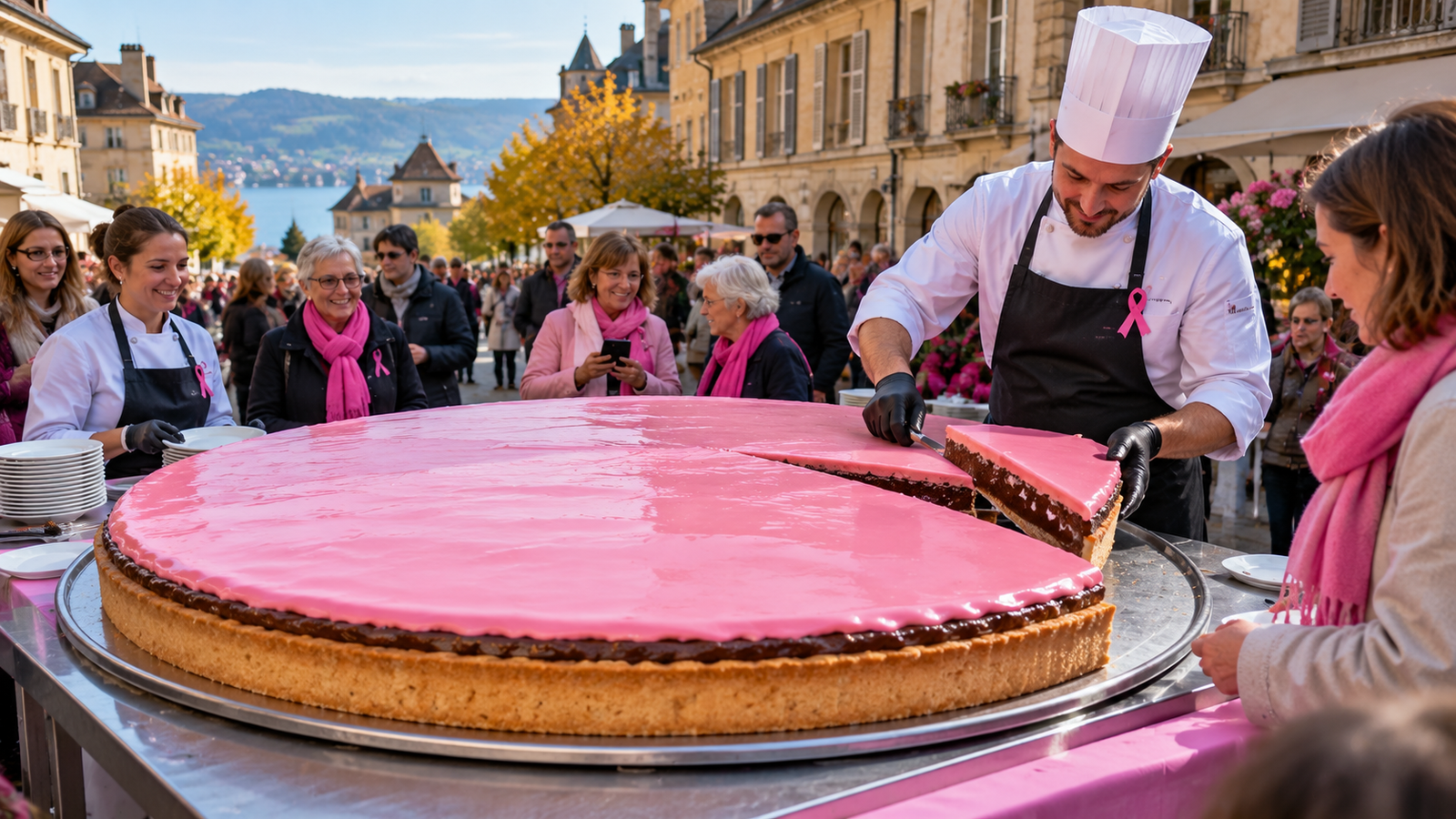
A giant pink pastry has put the Swiss city of Neuchâtel in the spotlight, turning a familiar local confection into an unusual public campaign for breast cancer awareness. Created by the city’s Confiserie Schmid, the oversized carac measured 82.5 centimeters in diameter and weighed an estimated 17 to 18 kilograms when presented to the public on October 17, 2026. Around 200 people gathered for the event, many wearing pink in support of the cause.
The creation surpassed the 80-centimeter pink carac made in Yverdon-les-Bains in 2025, setting a new reported record for the pastry. But the event was designed to achieve more than a record-sized dessert: it formed part of Switzerland’s annual Pink October campaign, which uses public activities and participating bakeries to encourage breast cancer prevention and awareness.
A Swiss pastry becomes the centerpiece of a public campaign
The carac is a traditional Swiss pastry particularly associated with French-speaking Switzerland. Its familiar form typically combines a pastry base, chocolate filling and a distinctive icing layer. For the annual Carac Rose initiative, participating confectioners replace the customary green appearance with pink, creating a recognizable symbol for breast cancer awareness.
In Neuchâtel, Confiserie Schmid took that idea to an exceptional scale. The family confectionery, a longstanding business in the city, prepared the enormous version for the October event. Its diameter exceeded the previous year’s creation by 2.5 centimeters, making the latest pastry the largest reported example of its kind.
The pastry was presented in the city center before being shared with members of the public. The gathering combined a local food tradition with a message about health, prevention and community participation.
The event also demonstrated how a familiar product can attract attention to a cause without relying exclusively on formal presentations or medical information sessions. A giant dessert offered a visible focal point, while the accompanying activities gave visitors opportunities to learn about breast cancer prevention.
Pink October extends beyond the pastry
The event took place during Pink October, the annual awareness campaign associated with breast cancer. In Switzerland, the Carac Rose initiative has developed into a network involving bakeries, confectioners and organizations supporting people affected by the disease.
The initiative was established by Mélanie Tanner, who was diagnosed with breast cancer in 2020 at the age of 38. She subsequently used her marketing experience to develop an awareness campaign aimed in particular at encouraging younger women to pay attention to prevention and screening.
The campaign has grown considerably since its early editions. In 2022, it began with three confectioneries. By 2023, participation had expanded to around 100 businesses, followed by approximately 250 in 2024. The 2025 campaign involved hundreds of bakeries and additional retail outlets, extending the initiative beyond its original regional base.
In 2026, the campaign continued to expand geographically, with participating businesses and partners also active in German-speaking Switzerland. The use of a familiar Swiss pastry gives the initiative a practical way to reach people in everyday settings, including local bakeries and shops.
The approach is not a substitute for medical services or professional advice. Its purpose is to create opportunities for conversation, increase awareness and direct public attention toward prevention.
Local organizations put prevention at the center
The Neuchâtel event included more than the unveiling and distribution of the giant carac. Visitors could also explore information stands and activities focused on breast cancer prevention and self-examination.
Organizations involved included the Neuchâtel Cancer League, the BEJUNE screening association and the regional health network réso.ne. Their participation helped connect the public celebration with organizations that work on health information and prevention.
The program included opportunities for visitors to discuss screening and learn about breast self-examination. Such activities can help people become more familiar with their bodies and understand where to seek reliable medical guidance.
Breast self-examination should not be presented as a replacement for recommended screening or clinical assessment. The appropriate screening approach depends on factors such as age, individual risk and medical history. Awareness campaigns are most useful when they encourage people to consult qualified health professionals and use established screening services.
By placing prevention information alongside a public event, organizers sought to make these conversations accessible in a community setting.
Why a record-sized pastry attracts attention
The scale of the carac gave the campaign a visual centerpiece that could draw visitors, attract media coverage and create a shared experience. Its pink icing also made the connection to breast cancer awareness immediately recognizable.
The record attempt built on a pattern established during previous Pink October campaigns. In 2025, Ackermann Artisan produced an 80-centimeter carac in Yverdon-les-Bains, surpassing an earlier version made in Lausanne. The 2026 creation in Neuchâtel continued that informal annual tradition of making the pastry larger while retaining its connection to prevention.
There is a broader community dimension to this approach. Local businesses can contribute their skills and visibility, while charities and health organizations provide information and connect people with relevant services. Members of the public can participate through purchases, attendance and conversations.
The pastry’s size is an attention-grabbing feature, but the campaign’s longer-term value depends on whether that attention helps people find trustworthy information and engage with appropriate preventive care.
How sales support the campaign
The Carac Rose initiative also links the product to fundraising. Participating businesses sell pink versions of the traditional pastry at a slightly higher price, with part of the proceeds directed to partner organizations supporting people affected by breast cancer and related prevention efforts.
In the canton of Neuchâtel, the Cancer League states that 50 centimes from each pink carac sold are donated to its organization. The arrangement gives customers a direct way to contribute through an everyday purchase, while allowing participating confectioners to support the campaign through their normal business activities.
The amount raised by the 2026 campaign had not been established in the reports available at the time of the event. It would therefore be premature to quantify the initiative’s financial impact or compare its fundraising performance with earlier years.
Nevertheless, the model creates a connection between a local culinary tradition and a wider public-health effort. Its reach depends on participation by businesses and customers, as well as the ability of partner organizations to translate awareness into useful information and support.
A community event with a message beyond the record
The gathering in Neuchâtel illustrates how a regional food tradition can become part of a broader campaign without losing its familiar character. The carac remains a pastry, but its pink version has taken on an additional role as a symbol of solidarity and prevention.
The reported record of 82.5 centimeters gives the 2026 event a distinctive headline. The more important measure of its success, however, will be the conversations it encourages, the visibility it brings to partner organizations and the support it generates for breast cancer awareness.
As Pink October activities continue across Switzerland, the Neuchâtel event offers an example of how local businesses, community groups and health organizations can work together around a recognizable shared idea. A giant pastry cannot solve the challenges associated with breast cancer, but it can provide a memorable way to bring prevention into public view.