Lake Pfäffikon, Pfäffikon, Switzerland
Lake Pfäffikon: Exploring One of Switzerland’s Most Important Nature Reserves
Just twenty kilometers from the center of Zurich lies a landscape that feels surprisingly distant from urban life.
Lake Pfäffikon, known locally as Pfäffikersee, is not a destination defined by mountain panoramas or famous resort towns. Instead, it offers something increasingly rare in modern Europe: a largely protected natural environment where wetlands, reed beds, forests, and open water coexist within one of Switzerland’s most densely populated regions.
For many visitors, the lake is a place to walk, cycle, observe wildlife, and escape city life. For historians and archaeologists, it is a landscape that preserves evidence of some of Switzerland’s earliest human settlements. For conservationists, it represents one of the country’s most significant wetland ecosystems.
Together, these elements make Lake Pfäffikon one of the most fascinating natural destinations in the Canton of Zurich.
A Lake Shaped by Ice and Time
Like many lakes across northern Switzerland, Lake Pfäffikon owes its existence to the Ice Age.
Thousands of years ago, glaciers moving through the region carved depressions into the landscape. As the ice retreated, meltwater filled these basins, creating the lake that exists today.
The result is a relatively shallow body of water surrounded by fertile lowlands, forests, and extensive marsh habitats. Unlike the steep-sided lakes of the Alps, Lake Pfäffikon blends gently into the surrounding countryside, creating ideal conditions for wetland development.
This geological history continues to influence the lake’s ecological character. Its shallow waters and protected shoreline support a remarkable diversity of plant and animal life, making the area one of the most valuable natural habitats in the Zurich region.
A Nationally Important Wetland
What distinguishes Lake Pfäffikon from many Swiss lakes is not its size but its environmental significance.
Large sections of the shoreline are protected under Swiss conservation measures. Reed beds, marshes, wet meadows, and shallow-water habitats provide refuge for numerous species of birds, amphibians, insects, and aquatic life.
The lake forms part of an important ecological corridor within the Swiss Plateau and serves as a critical habitat for migratory birds traveling across Europe.
Visitors quickly notice that nature protection plays a central role in the area’s management. Observation points, designated walking routes, and carefully maintained access areas allow people to experience the landscape while minimizing disturbance to sensitive ecosystems.
This balance between accessibility and conservation has helped preserve the lake’s natural character despite its proximity to Zurich.
The Remarkable Boardwalk Through the Wetlands
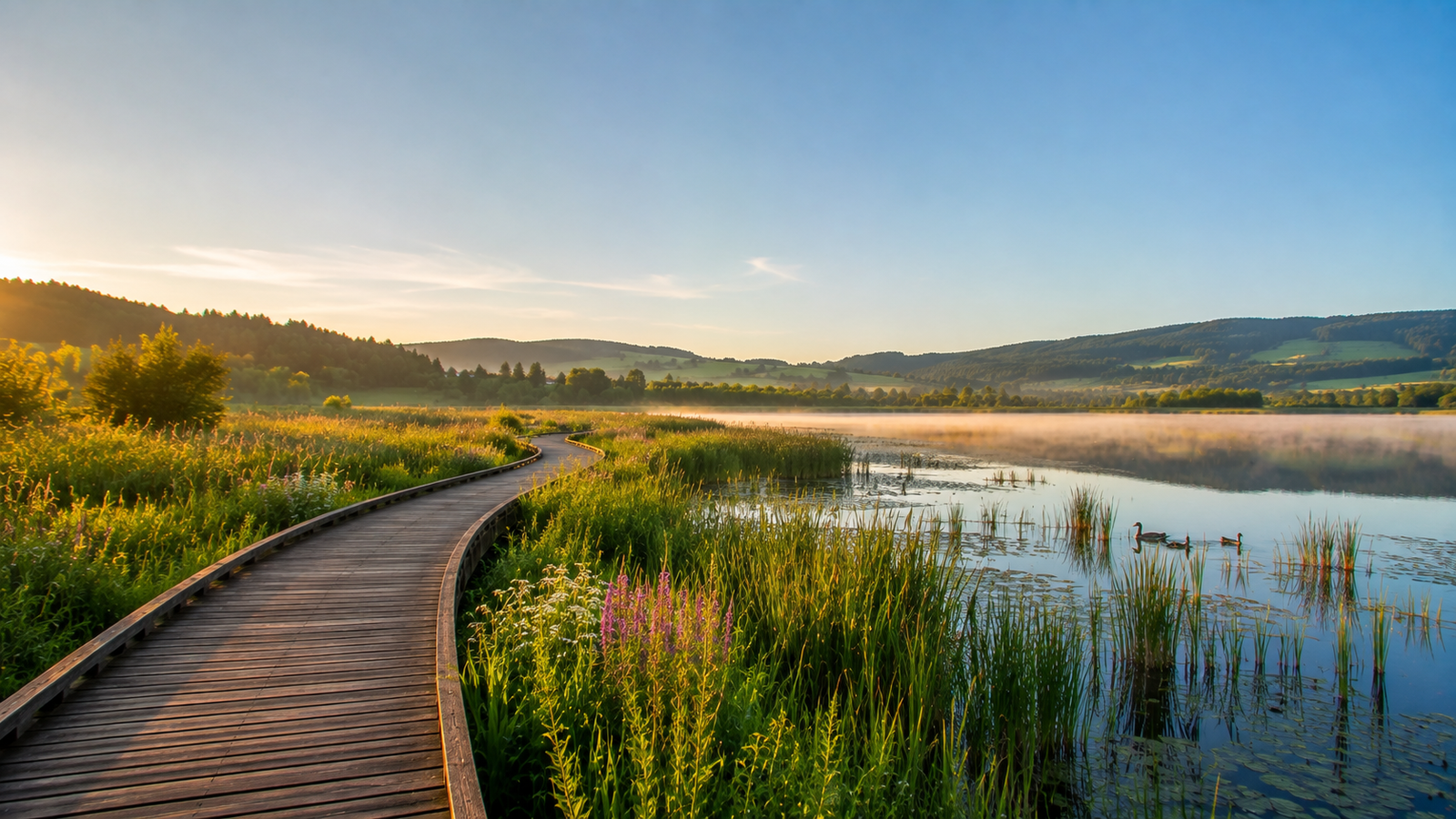
One of the most memorable experiences at Lake Pfäffikon is walking along the wooden boardwalk that crosses sections of the protected marshland.
The elevated pathway allows visitors to move directly through habitats that would otherwise be inaccessible. Instead of observing nature from a distance, walkers become immersed in the landscape.
Reeds sway in the wind. Waterbirds move quietly through shallow channels. Seasonal wildflowers appear along the edges of the wetlands. Reflections shift constantly across the calm water surface.
The boardwalk has become one of the lake’s defining attractions because it provides an intimate connection with the environment without compromising ecological protection.
For photographers, birdwatchers, and nature enthusiasts, it offers some of the most rewarding viewpoints around the lake.
A Window into Prehistoric Switzerland
Long before modern towns appeared around Lake Pfäffikon, prehistoric communities settled along its shores.
Archaeological discoveries have revealed evidence of ancient lakeside settlements dating back thousands of years. These prehistoric pile-dwelling communities formed part of a broader network of settlements around the Alps.
The significance of these archaeological remains extends far beyond the region itself. Prehistoric pile dwellings found around Alpine lakes are recognized internationally for the insights they provide into early European societies.
Lake Pfäffikon therefore represents not only a natural treasure but also an important archaeological landscape.
The area’s history demonstrates how humans have interacted with the lake for millennia, adapting to its resources while shaping the surrounding environment.
Birdwatching at One of Zurich’s Finest Wildlife Destinations
Few locations in the Canton of Zurich rival Lake Pfäffikon for birdwatching opportunities.
Throughout the year, visitors can observe a wide variety of waterfowl and wetland species. Seasonal migration periods are particularly rewarding, as birds traveling across Europe use the lake as a resting and feeding area.
Observation towers and designated viewing locations provide excellent opportunities to watch wildlife without disturbing sensitive habitats.
The diversity of environments surrounding the lake contributes to this richness. Open water, reed beds, forests, meadows, and agricultural land each support different species, creating a dynamic ecological mosaic.
Even casual visitors often encounter swans, ducks, grebes, herons, and other birdlife during a single walk around the shoreline.
A Lake Designed for Slow Exploration
Unlike many Swiss lakes focused on water sports and tourism infrastructure, Lake Pfäffikon encourages a slower pace.
The circular trail around the lake is popular with walkers, runners, and cyclists. The route provides constantly changing scenery while remaining relatively accessible due to the area’s gentle topography.
The journey passes wetlands, woodland sections, lakeside viewpoints, nature observation areas, and open countryside. Every season offers a different experience.
Because motorized recreation remains limited compared to larger lakes, visitors often notice an unusual sense of tranquility. Natural sounds dominate the environment, reinforcing the feeling of being immersed in a protected landscape rather than a busy recreation area.
This peaceful atmosphere is one of the lake’s greatest strengths.
The Communities Around the Lake
Several municipalities share the shores of Lake Pfäffikon, including Pfäffikon, Seegräben, and Wetzikon.
These communities maintain close relationships with the surrounding natural environment while offering convenient access points for visitors.
The village of Seegräben is particularly well known as a gateway to the lake’s wetlands and archaeological heritage. Cafés, local services, and recreational facilities provide a welcoming base for exploring the area.
Meanwhile, Pfäffikon itself combines modern residential life with easy access to nature, illustrating how the region has successfully integrated conservation and community development.
The surrounding settlements remain relatively understated, allowing the landscape itself to remain the primary attraction.
Seasonal Character Throughout the Year
Lake Pfäffikon changes dramatically with the seasons.
Spring brings migrating birds, emerging vegetation, and colorful wildflowers along the wetlands. The lake becomes increasingly active as wildlife returns following winter.
Summer offers ideal conditions for walking, cycling, and extended exploration of the boardwalk network. Long daylight hours reveal the full diversity of the protected landscape.
Autumn transforms the surrounding forests into shades of gold, orange, and red. Morning mist often drifts across the water, creating particularly atmospheric scenes.
Winter introduces a quieter mood. Frost-covered reeds and still waters create a striking landscape that attracts photographers and nature enthusiasts seeking solitude.
Each season reveals a different aspect of the lake’s ecological complexity.
Why Lake Pfäffikon Matters
Lake Pfäffikon stands out because it offers something increasingly valuable: authenticity.
Rather than relying on dramatic scenery or major tourist attractions, it invites visitors to appreciate Switzerland’s natural heritage at a more intimate scale. Here, wetlands are as important as viewpoints, birdlife receives as much attention as recreation, and ancient history remains embedded within the landscape.
The lake demonstrates how conservation, archaeology, and outdoor recreation can coexist successfully within a modern region.
For travelers exploring the Canton of Zurich, Lake Pfäffikon provides an opportunity to experience a side of Switzerland that often goes unnoticed—one defined not by grandeur, but by the quiet richness of nature, history, and careful stewardship of the land.