Geneva Demonstration Renews Pressure on Switzerland Over Israel Policy
A demonstration in Geneva over the weekend brought renewed attention to Switzerland’s position on the conflict in the Middle East, as protesters called on the federal government to adopt tougher measures against Israel and increase pressure through economic and diplomatic channels.
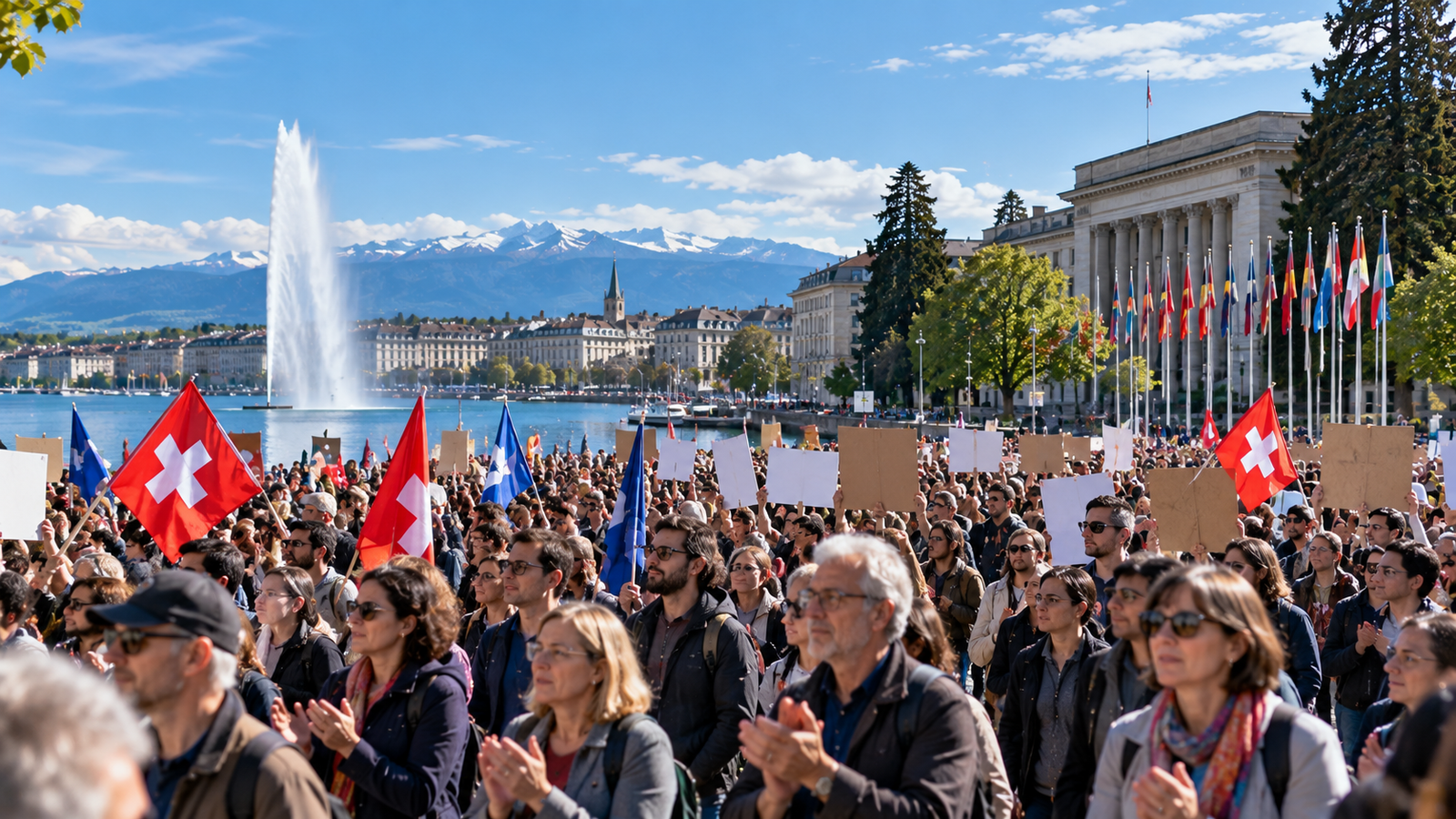
According to Geneva police, approximately 1,500 people participated in the rally, which was organized by the group Collectif Urgence Palestine. Authorities reported that the event remained peaceful throughout its duration despite the strong political messages delivered by participants.
The gathering took place just ahead of the third anniversary of the October 7, 2023 Hamas attacks that triggered the war in Gaza and set off a prolonged period of regional instability. Protesters used the event to criticize Israel’s military actions in the Palestinian territories and to demand a stronger response from Swiss authorities.
Demonstrators argued that Switzerland should introduce a range of measures, including military, trade, and energy sanctions against Israel. Participants also called for the suspension of military cooperation and urged Bern to reconsider broader economic, scientific, and cultural ties.
Pressure on Swiss Foreign Policy
The protest reflects a broader debate that has intensified across Europe as governments face increasing pressure from activists, humanitarian organizations, and political groups regarding their policies toward Israel and the Palestinian territories.
In Geneva, demonstrators accused Swiss authorities of failing to take sufficient action during the conflict and argued that the country should align its policies more closely with international legal and humanitarian concerns. Protesters carried banners and chanted slogans criticizing what they described as Switzerland’s passive stance on the crisis.
The demands extended beyond sanctions. Organizers also called on Swiss authorities to fully implement decisions and arrest warrants issued by international judicial bodies when applicable. The issue remains politically sensitive because Switzerland hosts numerous international organizations and frequently serves as a venue for diplomatic negotiations.
Swiss officials have previously maintained that certain international legal obligations must be balanced against the country’s longstanding diplomatic role and responsibilities as a host nation for peace talks and international dialogue.
Wider Concerns Raised by Demonstrators
Participants at the Geneva march highlighted conditions in Gaza, including civilian casualties, injuries, and humanitarian concerns. Speakers and activists also criticized developments in the occupied West Bank, where tensions have continued to generate international attention.
Several protesters referenced recent criticism directed at violent settler activity in the West Bank, an issue that has drawn concern from multiple governments and international organizations. Switzerland itself recently condemned violence linked to Israeli settlers, adding another layer to the domestic discussion surrounding Swiss policy toward the region.
The Geneva event occurred amid a wider international debate over accountability, humanitarian law, and diplomatic responses to the conflict. Across Europe and elsewhere, governments have faced growing pressure to reconsider trade relationships, sanctions policies, and diplomatic engagement connected to the war.
Geneva’s Role in International Activism
As home to the United Nations’ European headquarters and numerous humanitarian institutions, Geneva has frequently served as a focal point for demonstrations related to global conflicts.
Large protests connected to international issues have become a recurring feature of public life in the city. Activists often choose Geneva because of its symbolic importance as a center for diplomacy, human rights discussions, and international law. The city’s streets have hosted demonstrations linked to conflicts, climate issues, global summits, and humanitarian campaigns over many years.
The latest gathering continued that tradition, drawing participants from various activist organizations and community groups seeking to influence Swiss and international decision-making.
Police reported no major incidents during the march, contrasting with some larger international demonstrations that have occasionally led to clashes or security concerns in the region. Officials said the event proceeded calmly and concluded without significant disturbances.
Debate Likely to Continue
The Geneva protest is unlikely to be the final public demonstration on the issue. With the conflict remaining a major topic in international politics, pressure campaigns directed at governments across Europe are expected to continue.
For Switzerland, the challenge remains balancing its traditional role as a neutral state and diplomatic intermediary with growing domestic and international calls for stronger action. The country’s position has often placed it at the center of debates surrounding international law, humanitarian responsibilities, and conflict resolution.
While the demonstration itself does not alter government policy, it highlights the persistence of public activism surrounding the Israel-Palestinian conflict and the ongoing scrutiny of how governments respond to one of the world’s most contentious geopolitical crises.
As the conflict continues to shape international diplomacy, demonstrations such as the one in Geneva are likely to remain part of the broader conversation about sanctions, accountability, and the future of regional stability in the Middle East.