Swiss Anti-Nuclear Coalition Forces National Vote on New Reactor Plans
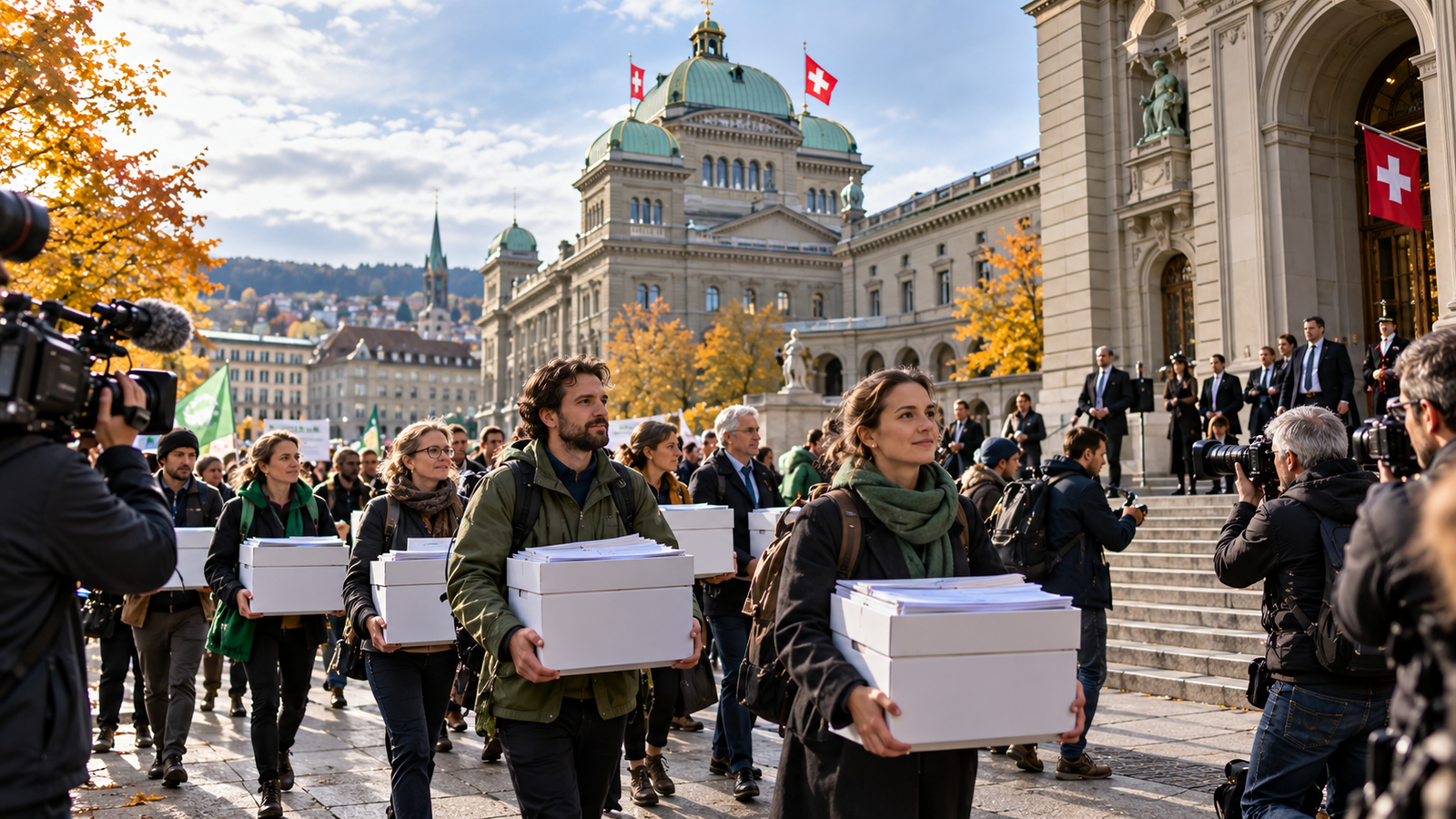
Switzerland’s long-running debate over nuclear energy has entered a new phase after opponents of plans to permit new nuclear power stations formally submitted a referendum request in Bern, potentially handing voters the final say on one of the country’s most consequential energy policy decisions in years.
The submission marks the latest chapter in a national discussion that has intensified as governments across Europe reassess energy security, electricity supply, climate targets, and the future role of low-carbon power generation. The referendum campaign reflects competing visions for how Switzerland should meet future energy demand while pursuing its environmental and economic objectives.
At issue is whether Switzerland should maintain restrictions that effectively prevent the construction of new nuclear power plants or reopen the possibility of future reactor development. The question has become increasingly prominent amid concerns about long-term electricity supply, growing electrification of transport and industry, and the need to reduce carbon emissions.
The referendum was delivered to federal authorities in Bern by groups seeking to preserve the existing prohibition on new nuclear facilities. Under Switzerland’s system of direct democracy, citizens can challenge parliamentary decisions through a referendum process, allowing voters to determine the fate of major policy changes. The submission represents a significant milestone, although election authorities must still verify the signatures and procedural requirements before a nationwide vote can be scheduled.
The dispute emerges nearly a decade after Swiss voters approved the Energy Strategy 2050, a landmark policy package that included measures to expand renewable energy while preventing the construction of new nuclear power stations. Existing reactors were permitted to continue operating as long as safety standards were met, but no replacement plants could be built under the framework approved by voters in 2017.
Since then, Switzerland’s energy landscape has evolved considerably. European electricity markets have experienced periods of volatility, while geopolitical tensions and concerns over energy dependence have prompted several countries to reconsider their energy strategies. Supporters of allowing future nuclear development argue that technological advances and changing energy needs justify revisiting earlier restrictions.
Advocates of a policy change contend that nuclear power provides a reliable source of low-carbon electricity capable of supporting climate goals while strengthening energy security. They argue that future generations should retain the option of deploying advanced reactor technologies if economic and technical conditions make them viable.
Opponents take a different view. Environmental organizations, anti-nuclear campaigners, and various political groups maintain that Switzerland should focus investment on renewable energy sources, energy efficiency, storage technologies, and grid modernization rather than reopening the door to nuclear development. They argue that renewable generation can provide a sustainable pathway without the long-term challenges associated with radioactive waste management and nuclear infrastructure.
The referendum campaign is expected to become one of the country’s most closely watched political debates. Switzerland has a lengthy history of public votes on nuclear energy, with citizens repeatedly weighing the balance between energy security, environmental concerns, economic considerations, and technological change. Questions surrounding nuclear power have appeared on Swiss ballots numerous times over the past several decades, making the issue one of the most frequently debated topics in the country’s energy policy history.
The timing of the latest referendum effort is particularly significant. Across Europe, governments are grappling with how to secure stable electricity supplies while meeting ambitious climate targets. Some countries have expanded support for nuclear energy as part of their decarbonization strategies, while others continue prioritizing renewable power and energy efficiency measures.
For Switzerland, the challenge is compounded by geography and seasonal demand patterns. Hydropower remains the backbone of the country’s electricity system, but policymakers have increasingly discussed how to ensure adequate power supplies during winter months when electricity consumption tends to rise. The broader energy transition has added urgency to questions about future generation capacity.
Economic considerations are also expected to play a central role in the campaign. Supporters of maintaining restrictions on new nuclear facilities argue that renewable technologies have become increasingly competitive and can be deployed more rapidly than large-scale reactor projects. Those favoring greater flexibility contend that excluding nuclear options could limit future policy choices and potentially increase dependence on imported electricity during periods of high demand.
The referendum process highlights the distinctive role of direct democracy in Switzerland’s political system. Citizens regularly participate in national votes on issues ranging from taxation and immigration to foreign policy and environmental regulation. Recent national referendums on other high-profile issues have demonstrated the continuing importance of public participation in shaping federal policy.
While the outcome remains uncertain, the debate is likely to extend beyond questions of technology and electricity production. The campaign will also touch on broader issues including climate strategy, industrial competitiveness, energy independence, public investment priorities, and long-term infrastructure planning.
Political parties, business groups, environmental organizations, and energy experts are expected to play prominent roles as the discussion unfolds. Both sides are likely to emphasize climate objectives while presenting sharply different views on how those goals should be achieved.
Federal authorities have not yet announced a voting date. Before any national ballot can occur, the referendum submission must complete the verification process required under Swiss law. Once validated, voters would ultimately decide whether Switzerland should preserve existing restrictions on new nuclear power stations or permit a policy shift that could reopen the possibility of future reactor construction.
The forthcoming campaign is poised to become one of the defining energy debates of the coming years. Whatever the eventual result, the referendum will shape how Switzerland approaches the intertwined challenges of energy security, climate policy, and electricity supply in the decades ahead.