
Eastern Swiss Lakes Reach Historic Lows as Drought Tightens Grip on Region
Eastern Switzerland is facing one of its most severe drought episodes in decades, with water levels in several major lakes falling to historic lows after months of unusually dry weather and persistent heat.
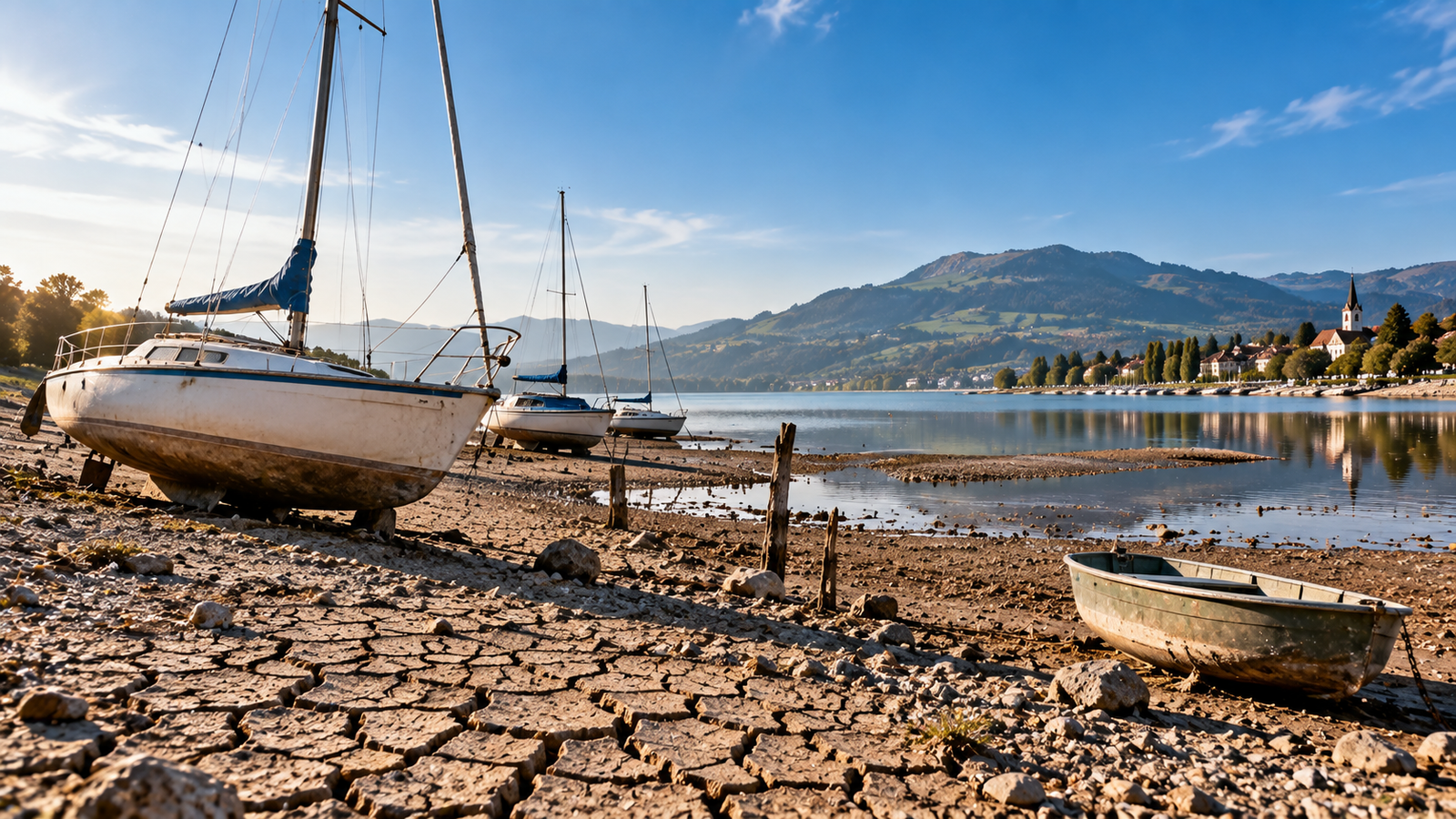
Hydrological measurements collected across the region show that lakes connected to the Rhine watershed have been particularly affected, highlighting the growing impact of prolonged dry periods on Switzerland’s freshwater systems. The situation has become especially noticeable around Lake Constance and nearby waterways, where receding shorelines, stranded boats and shrinking harbors have become increasingly common sights.
The most striking development has been recorded on Untersee, the western section of Lake Constance. Monitoring data indicate that water levels recently dropped below a record that had stood since January 1949. Measurements at the location date back to the late nineteenth century, making the latest reading one of the most significant low-water events ever documented in the area.
Local authorities have also reported exceptionally low conditions across numerous water bodies in the canton of Thurgau. Some smaller waterways and ponds have dried up entirely, while forecasts suggest further declines could occur if substantial rainfall fails to arrive in the coming weeks.
The drought’s effects extend beyond Lake Constance. Lake Walen, another important body of water in eastern Switzerland, recorded its lowest September level since measurements began there. Although the lake has experienced even lower levels in the past, current readings remain highly unusual for this time of year and reflect the broader regional water deficit.
Hydrologists say the low water levels are closely linked to a combination of weather factors that have developed over an extended period. Much of eastern Switzerland experienced a second consecutive winter with limited snowfall, reducing the amount of meltwater normally replenishing rivers and lakes during spring and summer. This was followed by repeated heatwaves that accelerated evaporation and increased pressure on already-stressed water resources.
The Rhine River system has been particularly affected. Lake Constance receives most of its water from the Rhine, which supplies a substantial majority of the lake’s inflow. However, sections of the Rhine basin in eastern Switzerland have been identified among the areas experiencing the most intense drought conditions this year. Reduced river flow has therefore translated directly into lower lake levels downstream.
Lake Walen is also influencing conditions farther west. With water levels significantly reduced, less water is flowing from the lake into the Linth River system, which serves as a key source of inflow for Lake Zurich. The situation illustrates how drought impacts can spread through interconnected waterways, affecting multiple lakes and river systems simultaneously.
Environmental specialists have increasingly warned that Switzerland’s lakes are becoming more vulnerable to weather extremes. In recent years, scientists have observed significant fluctuations in lake conditions, ranging from unusually warm water temperatures during heatwaves to rapid changes caused by intense rainfall events. The latest drought has once again highlighted the sensitivity of alpine and pre-alpine water systems to changing climate patterns.
The contrast with recent years is particularly notable. During the summer of 2024, parts of the Lake Constance region were dealing with flooding rather than water shortages. Heavy rainfall pushed water levels high enough to trigger the highest flood warning category around portions of the lake. Lakeside promenades, parking areas and outdoor hospitality venues were inundated, forcing authorities and communities to deploy temporary flood protection measures.
That dramatic shift from flood management to drought concerns within just a few years underscores the increasing volatility facing water managers across Switzerland. Experts note that both extremes can place stress on infrastructure, ecosystems and local economies, requiring different but equally complex responses.
Low lake levels can have a range of consequences beyond the visible retreat of shorelines. Navigation and recreational boating often become more difficult when harbor access is restricted. Aquatic ecosystems may also face additional stress as water temperatures rise and habitats shrink. In some locations, reduced water availability can affect agriculture, local tourism activities and environmental conservation efforts.
For communities around eastern Swiss lakes, the prolonged dry spell has already altered daily life. Harbors that typically accommodate seasonal boating activity have seen vessels grounded for extended periods, while exposed lakebeds have become increasingly visible. Residents and visitors alike are witnessing conditions rarely observed in living memory.
Meteorological forecasts offer little immediate relief. According to information cited by regional authorities, no significant rainfall was expected before the end of September, raising the prospect of a sixth consecutive month with below-average precipitation. Such a scenario would further deepen the water deficit that has accumulated throughout the year.
As Switzerland continues adapting to more frequent weather extremes, the record-low lake levels in the east are likely to become an important case study for water management, climate resilience and environmental planning. While rainfall could eventually restore some balance, the current drought serves as a reminder of how quickly hydrological conditions can change and how dependent many communities remain on stable seasonal weather patterns.