
Study Finds Swiss Cyclists Face Higher Crash Risk Than Riders in the Netherlands
Switzerland’s efforts to promote cycling as a sustainable mode of transportation are facing renewed scrutiny after new research indicated that bicycle riders in the country face a significantly higher risk of crashes than their counterparts in the Netherlands, a nation widely regarded as the global benchmark for cycling infrastructure and road safety.
The findings have sparked fresh discussion among transport planners, safety experts, and policymakers about the role of infrastructure design in protecting cyclists as bicycle use continues to grow across Europe.
The study, conducted by researchers examining police-reported cycling crashes and characteristics of the built environment in both countries, concluded that the likelihood of cycling accidents in Switzerland is nearly twice as high as in the Netherlands. Researchers linked the difference largely to variations in road design, cycling networks, and interactions between cyclists and other transport users.
The comparison comes at a time when many European governments are encouraging people to cycle more frequently to reduce emissions, ease congestion, and improve public health. Switzerland has invested heavily in cycling promotion in recent years, while the Netherlands has spent decades developing an extensive network of dedicated bicycle paths, protected intersections, and traffic-calming measures.
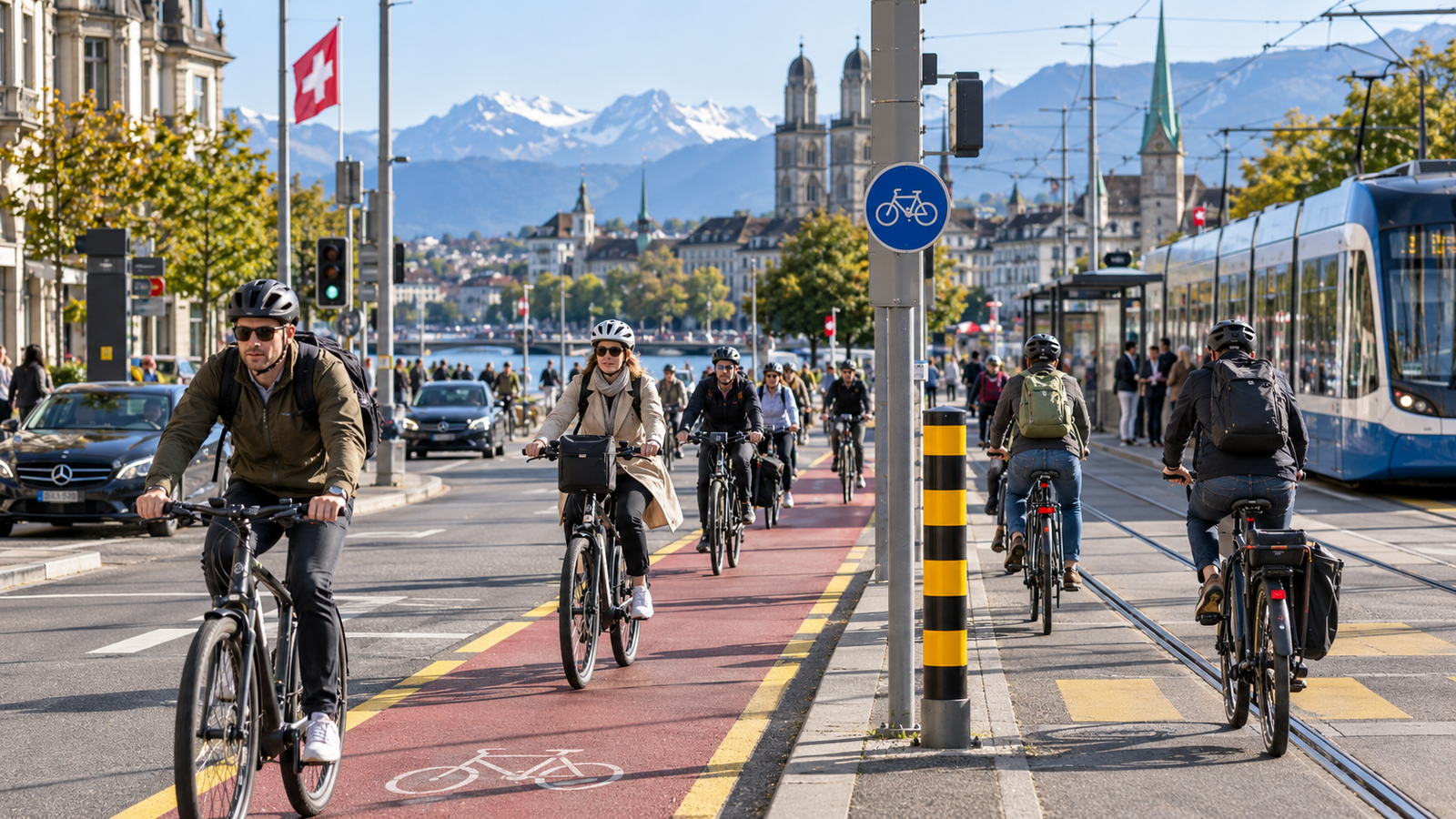
According to the research, several features of the urban environment appear to contribute to elevated crash risks in Switzerland. Intersections, public transport stops, tram tracks, and roads with higher speed limits were identified as locations where cyclists face increased danger. Researchers suggested that these factors create more conflict points between bicycles and motor vehicles, increasing the likelihood of accidents.
The Netherlands, despite being considered one of the safest cycling nations in the world, is not immune to cycling-related injuries and fatalities. Because bicycles are used extensively across Dutch society, cyclists account for a large share of overall road casualties. European and Dutch traffic data show that cyclists represent a substantial proportion of road deaths in the country, reflecting the high number of people who travel by bicycle every day.
Recent Dutch statistics also illustrate the challenges that accompany rising bicycle use. More than 280 cyclists lost their lives in traffic accidents in the Netherlands during 2025, while tens of thousands required hospital treatment following cycling-related incidents. Officials and safety organizations have pointed to aging populations and increasing e-bike usage as factors influencing accident patterns.
However, researchers emphasize that the comparison between the two countries should not be viewed simply through fatality figures. Instead, they argue that infrastructure quality and overall crash likelihood provide a more accurate measure of safety. The Netherlands benefits from a transportation system designed around bicycles, including separated cycling lanes and traffic management strategies that reduce direct conflicts between cyclists and motor vehicles.
In Switzerland, cycling conditions vary considerably between cities and regions. Urban centers such as Zurich, Basel, Bern, and Geneva have expanded cycling infrastructure over the past decade, but many routes still require cyclists to share road space with cars, buses, trams, and delivery vehicles. Safety advocates have long argued that inconsistent infrastructure can discourage cycling and expose riders to unnecessary risks.
The findings are likely to influence ongoing discussions surrounding Switzerland’s long-term mobility strategy. Federal, cantonal, and municipal authorities have increasingly promoted active transportation as part of climate and urban planning objectives. Encouraging more residents to cycle is viewed as an important component of reducing traffic congestion and lowering transportation-related emissions.
Yet transport experts warn that increasing bicycle use without corresponding safety improvements could undermine those goals. Public confidence in cycling often depends on perceptions of safety, particularly among families, older adults, and less experienced riders. Studies conducted internationally have repeatedly shown that protected cycling infrastructure tends to increase both safety and participation rates.
The research also highlights the importance of collecting accurate accident data. Investigators noted differences in reporting systems between Switzerland and the Netherlands, suggesting that some categories of cycling incidents may be recorded differently. Such discrepancies can complicate direct comparisons and influence how policymakers interpret safety trends. Nevertheless, the overall conclusion that Swiss cyclists face a substantially higher crash risk remained consistent throughout the analysis.
Road safety remains a broader concern across Switzerland. Official statistics previously showed that road fatalities reached their highest level in nearly a decade in 2024, with cyclists, pedestrians, and e-bike users among the groups affected. While total serious injuries declined, transport authorities continue to examine measures aimed at reducing risks for vulnerable road users.
For policymakers, the latest findings provide a reminder that increasing cycling participation and improving cycling safety must advance together. As cities seek cleaner and more efficient transportation systems, the experience of the Netherlands offers lessons on how infrastructure, road design, and long-term planning can help create safer conditions for people who choose to travel by bicycle.
The debate is expected to continue as Swiss authorities evaluate future investments in cycling networks. While the country has made progress in promoting sustainable mobility, the research suggests that significant opportunities remain to improve safety and bring cycling conditions closer to those found in Europe’s leading bicycle-friendly nation.