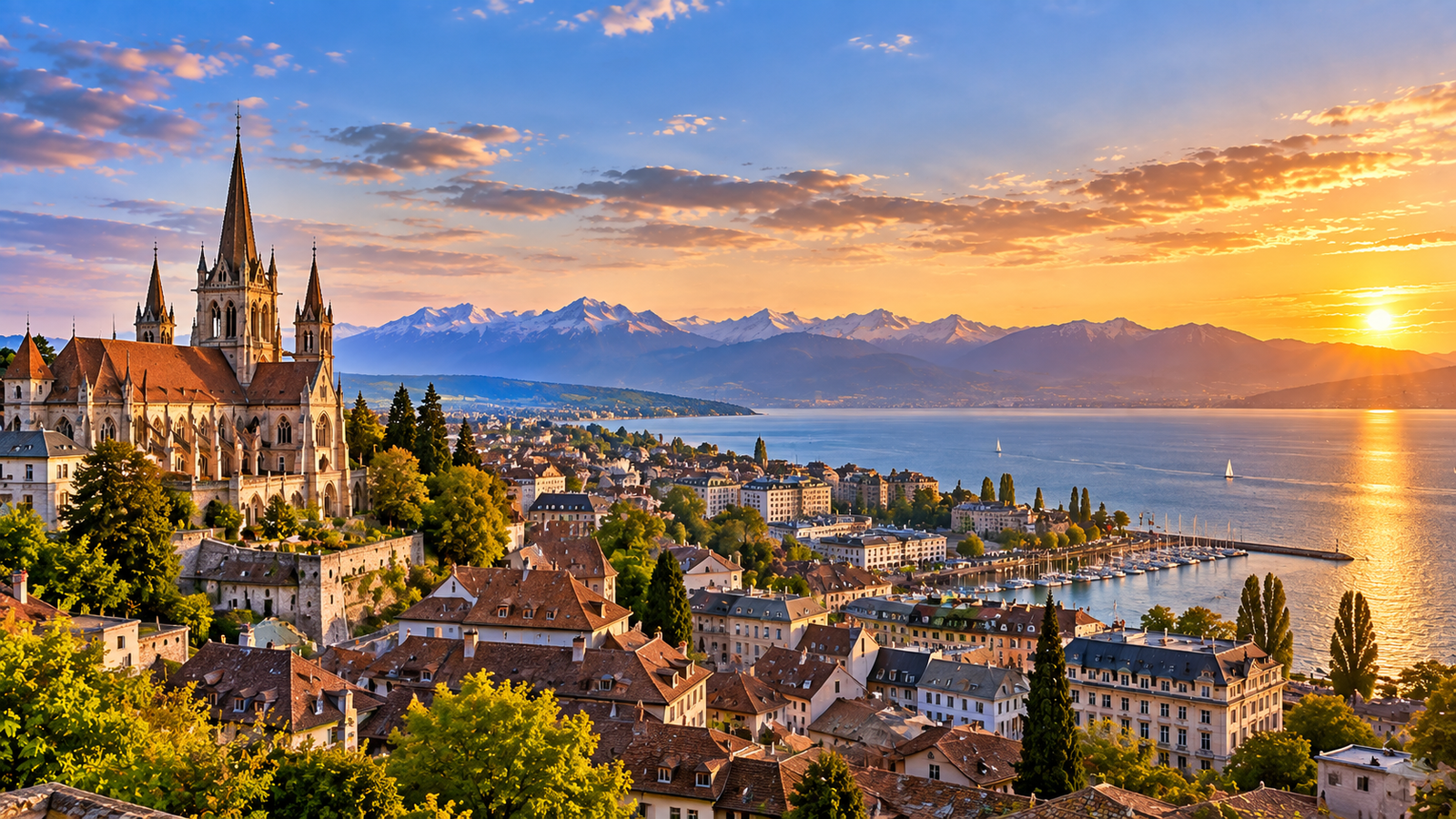
Lausanne, Lausanne
Lausanne: Switzerland’s Lakeside City of Culture, Innovation, and Olympic Spirit
Some Swiss cities impress with mountain scenery, while others captivate with history or culture. Lausanne stands out because it combines all three. Built across steep hills overlooking Lake Geneva, this French-speaking city offers a striking blend of waterfront beauty, medieval heritage, world-class cultural institutions, and an energy shaped by students, international organizations, and global sporting bodies.
As the capital of the Canton of Vaud, Lausanne occupies a dramatic setting between vineyards, lakefront promenades, and Alpine panoramas. Visitors quickly discover that the city is more than a scenic stop between Geneva and Montreux. It is a destination with its own distinct personality—elegant yet lively, historic yet forward-looking.
For travelers seeking a deeper understanding of western Switzerland, Lausanne provides one of the country’s most rewarding urban experiences.
A City Built on Slopes
Lausanne’s geography defines its character. Unlike many European cities that spread across flat terrain, Lausanne rises from the shores of Lake Geneva toward elevated neighborhoods connected by stairways, terraces, and panoramic viewpoints.
This unique landscape creates constantly changing perspectives. A short walk can reveal lake vistas framed by historic rooftops, while higher streets open toward the French Alps and the snow-covered peaks beyond the water.
The city’s steep topography has influenced everything from urban planning to daily life. Modern public transportation, including Switzerland’s only metro system, helps residents and visitors navigate the hills while linking major attractions across the city.
For first-time visitors, simply wandering between neighborhoods becomes part of the experience, with each elevation offering a new perspective on Lausanne and its surroundings.
The Historic Heart: Lausanne Cathedral and the Old City
At the center of Lausanne’s historic identity stands the Lausanne Cathedral, one of Switzerland’s most significant Gothic monuments.
Construction began during the medieval period, and the cathedral remains one of the finest examples of Gothic architecture in the country. Its soaring interior, stained-glass windows, and elevated position above the city have made it a landmark for centuries.
The cathedral terrace provides one of Lausanne’s most memorable viewpoints. From here, visitors can admire rooftops cascading toward Lake Geneva while enjoying distant Alpine scenery that changes with the seasons.
Surrounding the cathedral, the Old Town preserves much of Lausanne’s historical atmosphere. Narrow streets, public squares, historic buildings, and traditional facades create an environment that reflects the city’s medieval origins while remaining an active part of modern urban life.
Unlike open-air museum districts found elsewhere in Europe, Lausanne’s historic center continues to function as a living neighborhood filled with cafés, shops, cultural venues, and daily activity.
The Olympic Capital
Lausanne occupies a unique place on the global stage as the headquarters of the International Olympic Committee.
The city’s connection to international sport has become one of its defining identities. This relationship is celebrated at the Olympic Museum, located along the lakeshore in Ouchy.
Rather than focusing solely on athletic achievement, the museum explores the broader history, values, and cultural impact of the Olympic Movement. Interactive exhibits, memorabilia, multimedia displays, and outdoor installations offer insights into how the Games have evolved over time.
The museum’s lakeside setting adds another dimension to the experience. Visitors can explore landscaped gardens overlooking Lake Geneva before continuing along the waterfront promenade.
For sports enthusiasts, the Olympic presence provides a distinctive aspect of Lausanne that cannot be found elsewhere in Switzerland.
Ouchy and the Lake Geneva Waterfront
If the cathedral represents Lausanne’s historic soul, Ouchy showcases its relationship with Lake Geneva.
Located at the water’s edge, Ouchy has transformed from a historic port area into one of the city’s most attractive leisure districts. Wide promenades, parks, marinas, and lakeside walkways encourage visitors to slow down and enjoy the scenery.
The waterfront offers uninterrupted views across Lake Geneva toward the French Alps, creating one of the most picturesque urban settings in Switzerland.
Boat services connect Lausanne with destinations around the lake, allowing travelers to experience the region from the water. Watching historic paddle steamers arrive and depart remains one of the highlights of a visit to Ouchy.
Throughout the year, locals gather along the shoreline for walks, recreation, and relaxation, making the area an ideal place to observe daily life in the city.
A Cultural Center Beyond Expectations
While Lausanne’s Olympic connection attracts international attention, culture remains equally important to the city’s identity.
The city supports a rich network of museums, galleries, performance venues, and educational institutions. Art, design, photography, music, and theater all play visible roles in public life.
Among Lausanne’s most significant cultural developments is Plateforme 10, a major arts district created near the main railway station. This contemporary cultural hub brings together several museums and institutions, strengthening Lausanne’s reputation as one of Switzerland’s leading artistic centers.
The city’s cultural scene benefits from its international outlook. Students, researchers, artists, and professionals from around the world contribute to a dynamic environment where tradition and innovation coexist.
This combination of historical heritage and contemporary creativity helps distinguish Lausanne from many other Swiss destinations.
The Lavaux Vineyards Connection
One of Lausanne’s greatest advantages is its proximity to the Lavaux Vineyard Terraces, a UNESCO World Heritage Site stretching along the northern shores of Lake Geneva.
These terraced vineyards have shaped the landscape for centuries and represent one of Switzerland’s most remarkable cultural landscapes.
From Lausanne, visitors can easily reach vineyard villages where stone walls, narrow pathways, and panoramic viewpoints overlook the lake. The vineyards produce wines closely associated with the Vaud region and remain an important part of local identity.
Whether explored on foot, by train, or by boat, the Lavaux region adds another dimension to a Lausanne itinerary, connecting urban culture with rural heritage and spectacular scenery.
Architecture Across the Centuries
One of the pleasures of exploring Lausanne is observing how different historical periods coexist within a relatively compact area.
Medieval churches stand alongside nineteenth-century civic buildings. Elegant Belle Époque structures overlook modern developments and contemporary public spaces.
This architectural diversity reflects Lausanne’s long evolution from a medieval religious center into a modern international city.
Unlike destinations dominated by a single architectural style, Lausanne reveals its history gradually through contrasting neighborhoods, public squares, and cultural institutions.
Each district contributes a different chapter to the city’s story, rewarding visitors who take time to explore beyond the most famous landmarks.
Experiencing Lausanne Through the Seasons
Lausanne changes character throughout the year.
Spring brings fresh greenery to parks and lakeside promenades, while summer fills waterfront areas with activity and outdoor events. Autumn highlights vineyard landscapes around Lake Geneva, adding rich colors to surrounding hillsides.
Winter often brings crisp views across the lake toward snow-covered Alpine peaks, creating a dramatic backdrop for the city’s historic streets and cultural attractions.
Because many of Lausanne’s highlights combine indoor and outdoor experiences, the destination remains appealing regardless of season.
Visitors may arrive for the cathedral, the Olympic Museum, or the lakefront scenery, but many leave with a broader appreciation for a city that successfully balances heritage, culture, education, and natural beauty. Lausanne is not simply a gateway to the Lake Geneva region—it is one of Switzerland’s most compelling destinations in its own right.