
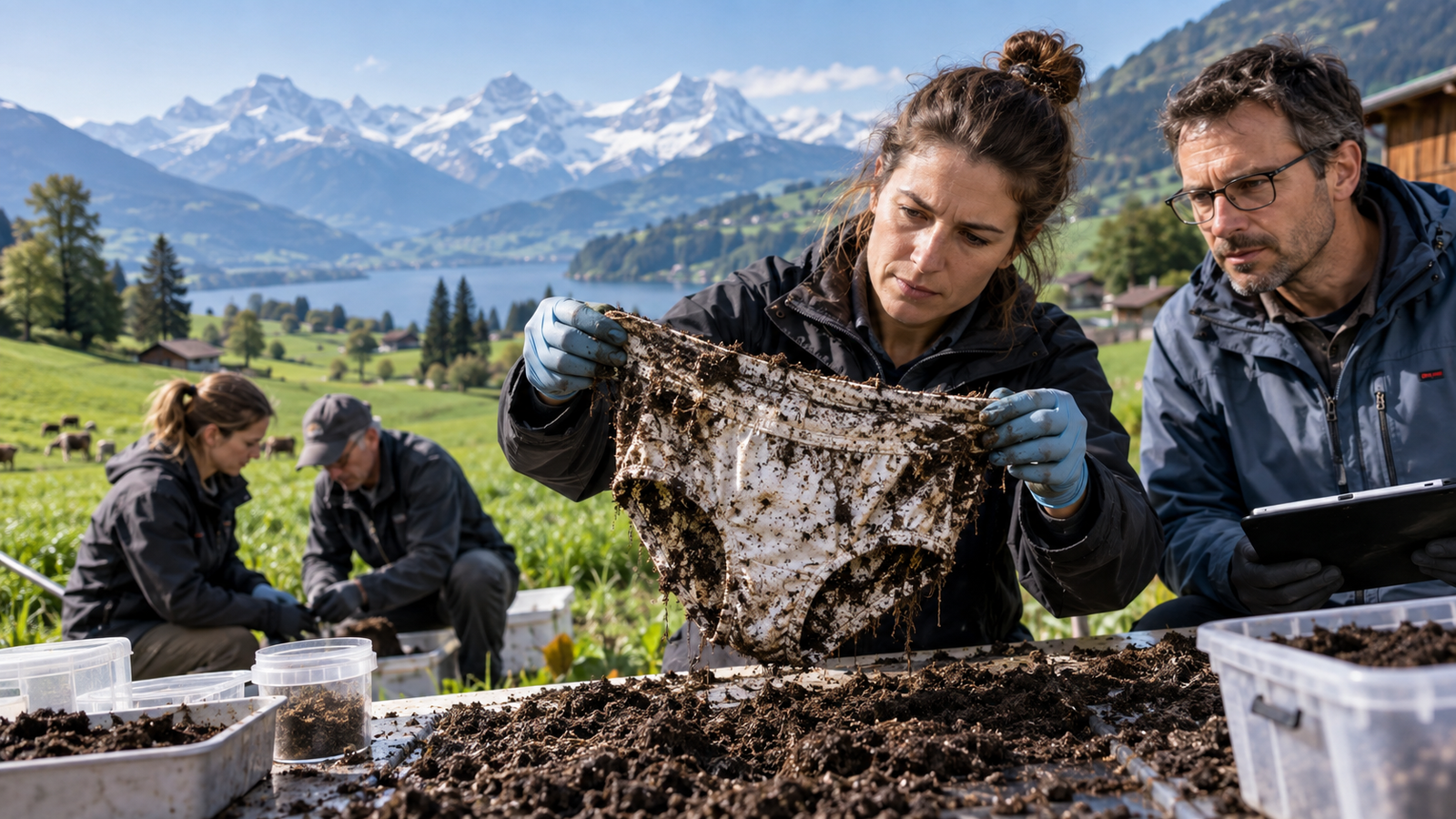
Swiss Soil Science Project Earns Ig Nobel Recognition for Burying Thousands of Cotton Underwear
A Swiss research project that asked people to bury cotton underwear in the ground has received one of science’s most unusual honors, earning international recognition at the 2026 Ig Nobel Prize ceremony in Zurich.
The award was presented for a citizen-science initiative that used ordinary cotton undergarments as a tool to evaluate soil health. While the concept may sound humorous, researchers say the project delivered valuable scientific insights into the biological activity taking place beneath the surface of farms, gardens, and grasslands across Switzerland.
The study, known as “Proof by Underpants,” involved large-scale public participation. Researchers recruited around 1,000 volunteers who buried more than 2,000 pairs of white cotton underwear in soils located in different environments throughout Switzerland. After a set period, the garments were dug up and analyzed to determine how much of the cotton had decomposed.
Scientists explained that cotton serves as a practical indicator because it is made largely from cellulose, a material readily broken down by microorganisms living in healthy soils. The more active and diverse the underground ecosystem, the faster the fabric decomposes. Conversely, limited decomposition can signal lower biological activity and potentially poorer soil conditions.
The project was led by researchers associated with the University of Zurich and the Swiss agricultural research center Agroscope, working alongside science communication and citizen-science specialists. Their approach combined scientific data collection with public engagement, encouraging participants to learn about the importance of soil ecosystems through direct involvement in the research process.
The findings helped illustrate how soil quality can vary significantly depending on land use. Areas with richer biological activity generally showed faster breakdown of the cotton material, while heavily managed lawns and less biologically active soils tended to leave larger portions of the fabric intact. Researchers said the results highlighted the critical role that microorganisms play in maintaining healthy agricultural and natural landscapes.
Recognition came at the 2026 Ig Nobel Prize ceremony, an annual event that celebrates research that “first makes people laugh, and then makes them think.” The awards are designed to spotlight unconventional scientific investigations that often address serious questions through unexpected methods.
This year’s ceremony carried additional significance because it was hosted in Zurich, marking the first time in the event’s history that the awards were held outside the United States. Organizers relocated the ceremony to Switzerland amid concerns related to international travel and visa accessibility for participants.
The Swiss soil project was among several studies recognized during the event. Other winning research explored topics ranging from the evolutionary origins of kissing and splash-reducing urinal designs to investigations involving cockroach milk and the aerodynamics of nose blowing. Despite the unusual subjects, organizers emphasized that each project contributed meaningful scientific knowledge or innovative thinking.
Researchers involved in the underwear study said one of the project’s greatest achievements was making soil science accessible to the general public. Soil health is often discussed in technical terms, yet it plays a central role in food production, biodiversity, water retention, and climate resilience. By using an everyday household item, scientists were able to create a memorable and easily understood demonstration of how living soils function.
The project also reflects a growing trend toward citizen science, where members of the public actively contribute to research efforts. Such initiatives can dramatically expand the geographic reach of studies while helping researchers collect data from locations that would otherwise be difficult or costly to monitor. At the same time, participants gain a greater understanding of scientific methods and environmental issues affecting their communities.
Experts increasingly warn that soil degradation represents a major challenge for agriculture and ecosystems worldwide. Healthy soils support crop productivity, store carbon, filter water, and sustain countless organisms that contribute to ecological stability. Tools that help assess soil condition, even unconventional ones, can therefore provide valuable information for land managers, farmers, and policymakers.
While burying underwear may seem unlikely to become a standard laboratory procedure, the project’s success demonstrates how creative approaches can draw attention to complex scientific issues. The Ig Nobel recognition acknowledges not only the originality of the method but also the broader educational impact of the research.
For the Swiss team, the award represents an unusual but meaningful achievement: transforming a simple pair of cotton underpants into a powerful symbol of the hidden biological world that sustains life above ground.