
Swiss Consumer Prices Accelerate as Inflation Reaches Highest Level Since 2024
Switzerland’s inflation rate accelerated sharply in August, reaching its highest level in nearly two years and signaling a shift in the country’s economic landscape after a prolonged period of subdued price growth.
New data released by the Federal Statistical Office showed consumer prices were 0.8% higher than a year earlier, doubling the annual inflation rate recorded in July. The result exceeded market expectations and marked the strongest inflation reading since September 2024, placing the latest figures at the center of attention ahead of the Swiss National Bank’s next monetary policy decision later this month.
The increase remains modest compared with inflation levels seen in many neighboring European countries, but it represents a notable change for Switzerland, where price growth has frequently hovered near zero over the past year. Policymakers have spent much of that period monitoring weak inflationary pressure and, at times, concerns about prices turning negative. The latest figures suggest that trend may be easing, at least temporarily.
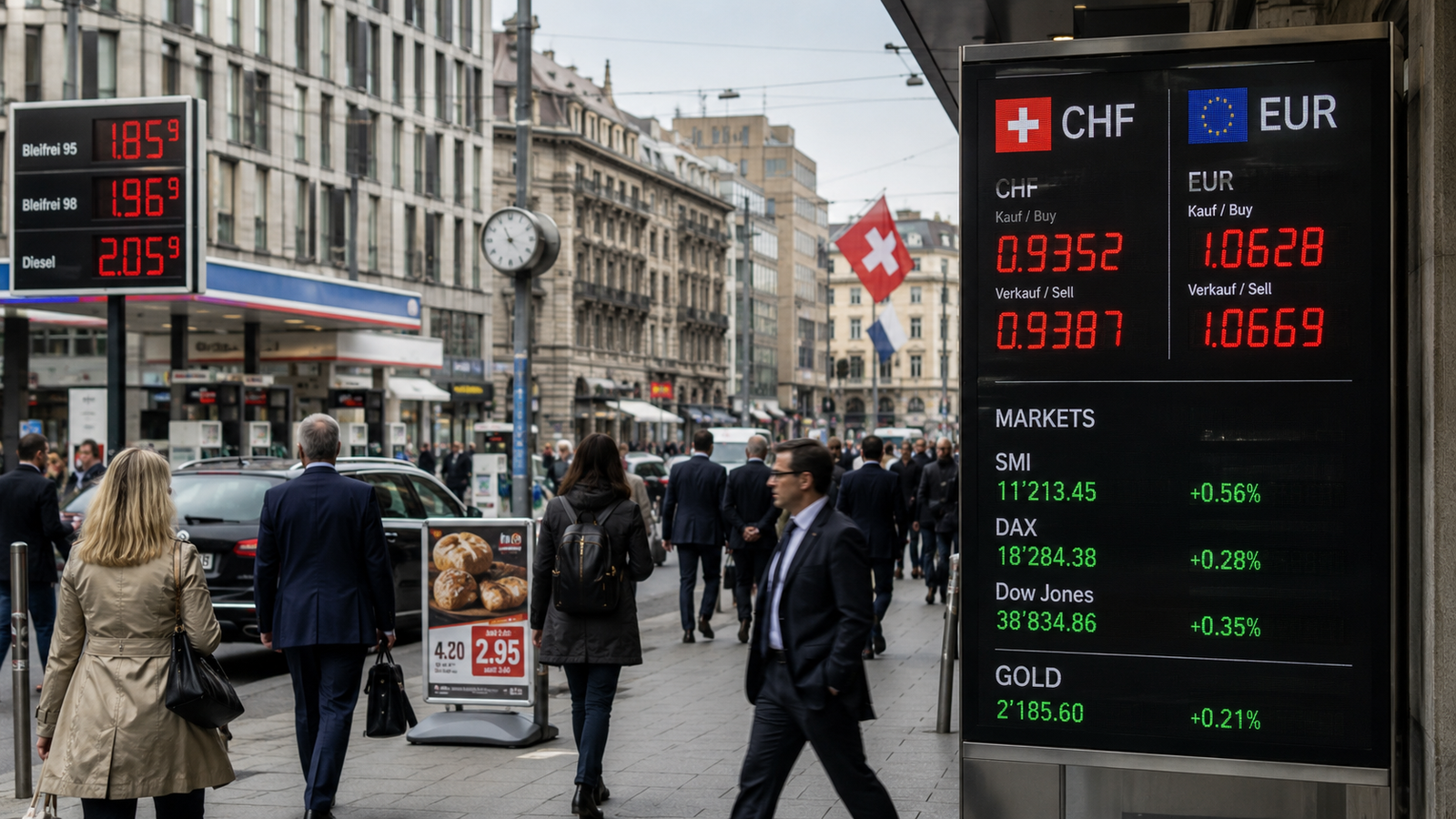
A significant factor behind the rise was the increase in energy-related costs. Higher prices for petrol, diesel and heating oil contributed to the August inflation jump as global energy markets continued to react to geopolitical tensions in the Middle East. Imported goods also became more expensive, adding further upward pressure on consumer prices.
The Federal Statistical Office reported that rising petroleum costs were among the most important drivers of the monthly increase. Some of that pressure was offset by lower prices for clothing and footwear, but the decline in those categories was not enough to prevent overall inflation from accelerating.
Economists have also pointed to currency movements as a contributing factor. The Swiss franc, traditionally considered one of the world’s safest currencies during periods of uncertainty, weakened against the euro in recent months. A softer franc can raise the cost of imported products by making foreign goods more expensive for Swiss consumers and businesses. Analysts say the currency’s movement may now be filtering into consumer prices.
Despite the increase, inflation remains comfortably within the Swiss National Bank’s target range of 0% to 2%. That distinction is important because it means policymakers are not yet facing the kind of inflationary challenge confronting some other advanced economies. The euro area, for example, recorded annual inflation of 3.3% in August, significantly above Swiss levels.
Another closely watched measure, known as core inflation—which excludes volatile items such as energy and unprocessed food—also moved higher. Core inflation increased from 0.3% to 0.4%, marking its first acceleration this year. Economists often view core inflation as a useful indicator of underlying price trends because it removes some of the short-term volatility associated with commodity markets.
The timing of the report is particularly significant because it arrives shortly before the Swiss National Bank’s September policy meeting. The central bank has maintained interest rates at zero while projecting only a modest increase in inflation over the coming quarters. Until now, most economists expected inflation to remain relatively subdued, making the latest data a potentially important input for policymakers.
Even so, analysts caution against interpreting a single month’s increase as evidence of a sustained inflation problem. Switzerland remains less exposed to global energy shocks than many European countries because a substantial share of its electricity generation comes from hydroelectric and nuclear power. That energy mix has historically helped reduce the impact of international fuel-price swings on domestic inflation.
The broader economic backdrop also differs from the conditions that fueled inflation spikes earlier in the decade. Separate economic data released this week showed that Switzerland’s economy expanded by 1.5% in the second quarter of 2026, its fastest growth rate in nearly five years. Strong performance from the pharmaceutical and chemical sectors contributed significantly to that expansion, providing evidence that the economy remains resilient despite external uncertainties.
For households, the latest inflation figures may translate into higher costs for transportation, heating and some imported consumer goods. However, overall price growth remains low by international standards, and Switzerland continues to rank among the most stable economies in Europe in terms of inflation control.
Financial markets will now focus on whether the recent increase proves temporary or becomes part of a broader trend. Much will depend on developments in energy markets, exchange rates and international economic conditions over the coming months. For now, the data suggest that inflation has regained momentum, but not yet to a level that would place Switzerland outside the price-stability framework maintained by its central bank.
As the Swiss National Bank prepares for its next policy announcement, officials face a markedly different inflation picture than they did earlier this year. Whether August’s figures represent a brief spike or the beginning of a more sustained shift in price growth will likely become one of the most closely watched questions in Switzerland’s economic outlook for the remainder of 2026.