From Alpine Fjords to Riviera Shores: Switzerland’s Most Beautiful Lake Cruises
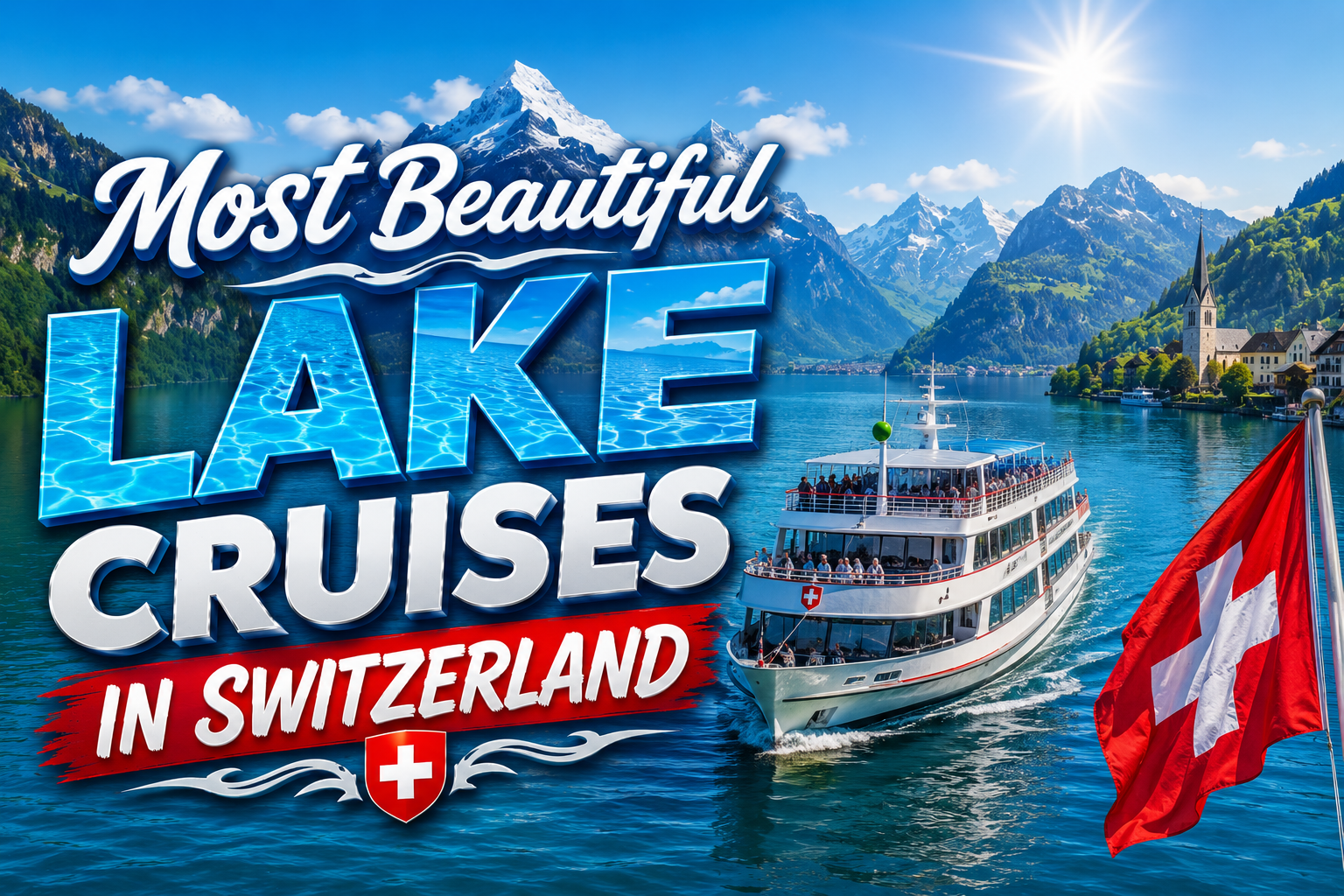
Switzerland is often celebrated for its mountain railways, yet some of the country’s most remarkable journeys unfold at water level. Across the Alps, glacial lakes have shaped trade routes, settlement patterns, tourism, and regional identities for centuries. Today, historic paddle steamers, elegant passenger vessels, and modern cruise boats offer access to landscapes that reveal Switzerland from an entirely different perspective.
The most memorable Swiss lake cruises are not defined by luxury alone. Their appeal lies in the relationship between water, mountains, villages, and history. Each lake tells a different story, reflecting the geography and culture of its region.
Rather than following a conventional ranking, these cruises are presented as distinctive travel experiences, each showcasing a unique face of Switzerland.
Where Switzerland’s National Story Meets the Water: Lake Lucerne
Few cruises combine scenery, history, and heritage as completely as a voyage across Lake Lucerne.
Located in the heart of Central Switzerland, the lake stretches through a maze of fjord-like arms surrounded by dramatic mountain landscapes. Steep cliffs rise directly from the shoreline, while historic towns and lakeside villages appear between forested slopes.
Lake Lucerne occupies a special place in Swiss history. The surrounding region is closely linked to the origins of the Swiss Confederation, and many historic landmarks visible from the water are associated with the country’s national story. Official tourism authorities regard the lake as one of Switzerland’s defining travel experiences.
The cruise itself is equally notable. The fleet operated by the Lake Lucerne Navigation Company includes beautifully preserved historic paddle steamers alongside modern passenger vessels. Watching a century-old steamboat glide beneath peaks such as Pilatus and Rigi feels less like transportation and more like a journey through a living landscape museum.
The constantly changing shoreline ensures that no two sections of the voyage look alike. Narrow inlets resemble Norwegian fjords, while broader sections open toward panoramic Alpine views.
The Cruise of Castles and Vineyards: Lake Geneva
If Lake Lucerne reflects Switzerland’s origins, Lake Geneva showcases its international character.
Shared by Switzerland and France, Lake Geneva is one of Western Europe’s largest lakes. The Swiss shoreline stretches through a region where vineyards, historic towns, and cosmopolitan cities coexist beneath Alpine peaks.
Cruising between Montreux, Lausanne, Vevey, and Geneva reveals one of the country’s most culturally rich landscapes. The route passes the UNESCO-listed Lavaux Vineyard Terraces, whose stone-walled vineyards have shaped the region for centuries.
One of the most iconic moments occurs near Chillon Castle. Rising directly from the water’s edge, the medieval fortress appears almost unchanged from the era when travelers first crossed the lake by sailboat.
The atmosphere here differs significantly from Central Switzerland. Palm trees, lakeside promenades, Belle Époque architecture, and mild microclimates create a distinctly Riviera-like setting.
Historic Belle Époque paddle steamers operated by CGN remain among the most celebrated vessels on Swiss waters, offering travelers an experience that blends heritage and scenery.
Between Two Alpine Giants: Lake Thun
Lake Thun occupies one of the most dramatic settings in Switzerland.
Located in the Bernese Oberland, it sits beneath some of the country’s most famous mountain landscapes. Cruises departing from Thun or Interlaken provide uninterrupted views toward the Eiger, Mönch, and Jungfrau region.
The lake’s deep blue waters contrast sharply with the surrounding peaks. Along the shoreline, medieval castles stand above vineyards, while traditional villages nestle against mountain slopes.
What distinguishes a Lake Thun cruise is its balance between natural beauty and cultural heritage. Castles such as Oberhofen and Spiez appear directly along the waterfront, creating scenes that seem designed specifically for photographers.
The cruise also serves as a gateway to one of Switzerland’s premier outdoor regions. Many passengers combine lake travel with mountain excursions, making the journey an integral part of a broader Bernese Oberland experience.
Switzerland’s Most Colorful Waterway: Lake Brienz
Just east of Interlaken lies a lake famous for its remarkable color.
Lake Brienz owes its vivid turquoise appearance to glacial sediments carried by mountain streams. Depending on weather and light conditions, the water can appear almost luminous.
A cruise here feels more intimate than on larger lakes. The surrounding mountains rise steeply from the shoreline, creating a sense of enclosure that enhances the visual drama.
Among the journey’s highlights is the approach to Giessbach Falls. Cascading down a forested mountainside toward the lake, the waterfall has attracted visitors since the nineteenth century. The historic Grandhotel Giessbach, overlooking the falls, remains one of Switzerland’s most recognizable heritage hotels.
Unlike Lake Geneva’s grand scale or Lake Lucerne’s historical associations, Lake Brienz captivates primarily through pure natural beauty.
For landscape photographers, it ranks among Switzerland’s most rewarding cruise destinations.
The Mediterranean Face of Switzerland: Lake Lugano
Switzerland’s Italian-speaking region introduces an entirely different atmosphere.
Lake Lugano extends across the border between Switzerland and Italy, surrounded by mountains that plunge dramatically toward the water. Yet despite the Alpine setting, the environment often feels Mediterranean.
Palm trees line promenades, colorful villages cling to hillsides, and outdoor cafés overlook sheltered bays.
Cruises on Lake Lugano reveal a side of Switzerland that many international visitors do not expect. The architecture, cuisine, language, and cultural influences differ noticeably from those found in German-speaking and French-speaking regions.
The lake’s complex shape creates constantly changing scenery. Narrow passages open into wider basins, while mountain ridges frame views in nearly every direction.
For travelers interested in Switzerland’s cultural diversity, few cruises provide a clearer illustration of the country’s regional contrasts.
The Hidden Gem of Western Switzerland: Lake Neuchâtel
Overshadowed by larger and more famous lakes, Lake Neuchâtel remains one of Switzerland’s most underrated cruising destinations.
Situated in the country’s French-speaking region, it offers broad horizons, peaceful shorelines, and a slower pace than many Alpine destinations.
The lake is surrounded by historic towns, nature reserves, and vineyards. Birdlife flourishes along sections of the shoreline, while medieval architecture reflects centuries of regional history.
Cruising here feels less dramatic than on mountain lakes, yet that gentler character forms part of its appeal.
Travelers seeking tranquility rather than spectacle often find Lake Neuchâtel surprisingly rewarding.
A Journey Through Swiss Engineering and Nature: Lake Zurich
Lake Zurich provides a unique combination of urban sophistication and natural scenery.
Departing from Switzerland’s largest city, cruise vessels quickly leave behind the financial center and enter landscapes of rolling hills, lakeside villages, and vineyard-covered slopes.
The contrast between city and countryside is one of the route’s defining characteristics.
Passengers can observe how seamlessly Switzerland integrates urban development with environmental preservation. Elegant villas, public parks, historic churches, and recreational waterfronts coexist along a carefully managed shoreline.
The cruise reveals why Lake Zurich remains such an important recreational and cultural asset for residents and visitors alike.
Why Swiss Lake Cruises Feel Different
Many countries offer scenic boat excursions. Switzerland’s lake cruises stand apart because they form part of a broader transportation and tourism network rather than existing solely as sightseeing attractions.
Many vessels connect directly with railways, mountain cable cars, historic funiculars, and hiking routes. Travelers can arrive by panoramic train, cross a lake by steamer, and continue into the mountains without ever requiring a car.
This integration reflects a uniquely Swiss approach to travel.
Equally important is the diversity of experiences. No single lake represents the entire country. Lake Geneva reveals Switzerland’s international elegance. Lake Lucerne embodies national heritage. Lake Lugano introduces Mediterranean influences. Lake Thun and Lake Brienz showcase Alpine grandeur.
Together, these waterways provide a different perspective on a country often viewed exclusively through the lens of mountains.
Seen from the deck of a boat, Switzerland becomes a nation shaped as much by its lakes as by its peaks—a landscape where water, culture, and geography remain inseparably connected.