Gletscherschlucht Grindelwald, Grindelwald, Switzerland
Inside Grindelwald Glacier Gorge: A Journey Through Switzerland’s Ice-Carved Wonder
The power of glaciers is difficult to comprehend until you stand in a place where they have visibly reshaped the landscape. At Gletscherschlucht Grindelwald, known in English as the Grindelwald Glacier Gorge, visitors can walk through a narrow canyon carved by ancient ice and flowing water, surrounded by towering rock walls that rise dramatically overhead.
Located just outside the famous mountain village of Grindelwald in the Bernese Oberland, the gorge offers a completely different perspective on the Swiss Alps. While nearby destinations attract attention with panoramic mountain views and iconic peaks such as the Eiger, the Glacier Gorge invites travelers beneath the surface, revealing the geological forces that helped create the Alpine landscape itself.
The result is one of the region’s most fascinating natural attractions—an immersive encounter with water, rock, and the legacy of glaciers.
Where Ice Once Dominated the Valley
Long before modern visitors arrived, enormous glaciers occupied much of the Grindelwald valley.
Over thousands of years, the Lower Grindelwald Glacier gradually advanced and retreated, shaping the surrounding terrain. As ice moved through the valley, it exerted immense pressure on the bedrock, carving and sculpting the landscape. Meltwater flowing beneath and alongside the glacier continued the process, cutting deeper channels into the rock.
The gorge visible today is a product of these combined forces.
Although the glacier itself has retreated significantly from the area over time, the canyon remains as evidence of its former presence. Every polished rock surface, narrow passage, and sculpted formation reflects the power of natural processes operating across immense timescales.
Visitors are essentially walking through a geological archive created by ice.
Entering a Different World
The transition from Grindelwald’s open valley to the interior of the gorge is striking.
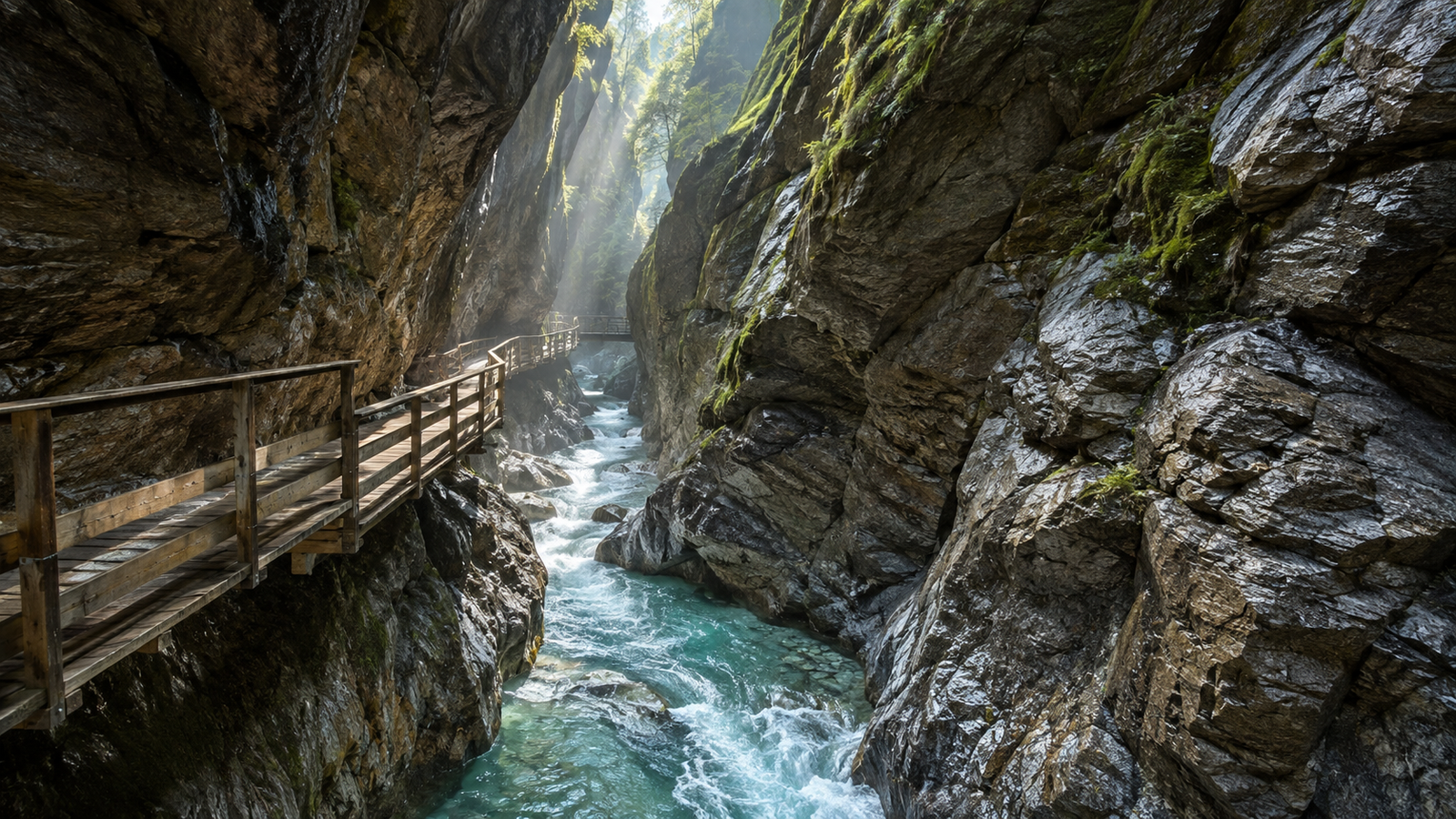
Almost immediately, the landscape changes character. Sunlight filters through the narrow opening above while steep limestone walls rise on either side. In some sections, the rock faces appear almost vertical, creating a dramatic sense of enclosure.
The sound of rushing water echoes through the canyon, amplifying the feeling of entering a hidden environment separate from the busy mountain resort nearby.
The gorge is traversed by a series of pathways and elevated walkways that allow visitors to safely explore its most impressive sections. These routes provide close-up views of geological features that would otherwise be inaccessible.
Every turn reveals a different perspective, making the experience feel dynamic rather than repetitive.
The Constant Presence of Water
Water is the defining element of the Glacier Gorge experience.
Fed by Alpine runoff and mountain streams, the Lütschine River flows through the canyon, continuing the erosional work that began during the Ice Age. Depending on seasonal conditions, the water can range from calm and reflective to energetic and turbulent.
The movement of water adds both visual and auditory drama to the environment. Cascades, pools, and swirling currents create a constantly changing scene that enhances the gorge’s atmosphere.
Visitors quickly realize that the landscape is not merely a relic of the past. It remains an active natural system that continues to evolve.
This combination of geological history and ongoing natural processes gives the gorge its unique appeal.
A Close Look at Alpine Geology
For those interested in earth science, Gletscherschlucht Grindelwald serves as an accessible introduction to Alpine geology.
The exposed rock walls reveal layers, fractures, and formations shaped by tectonic forces and glacial activity. Erosion has produced intricate patterns and textures that become visible from the walkways.
Even travelers without a scientific background often find themselves fascinated by the sheer scale of the formations. The gorge transforms abstract geological concepts into something tangible and immediate.
Rather than reading about glaciers in a textbook, visitors can see their impact directly in the landscape around them.
The experience offers an educational dimension without sacrificing its sense of adventure and discovery.
The Famous Spiderweb Experience
One of the gorge’s most distinctive modern features is the large suspended net installation often referred to as the “Spiderweb.”
Positioned above part of the canyon, the structure allows visitors to stand, walk, or relax while suspended over the gorge below. The experience provides a completely different perspective on the surrounding rock walls and flowing water.
The installation has become one of the attraction’s most photographed features, combining contemporary design with a dramatic natural setting.
While the geological history of the gorge spans thousands of years, the Spiderweb demonstrates how modern visitor experiences can enhance appreciation of the landscape without overshadowing its natural significance.
A Destination for Families and Outdoor Enthusiasts
One reason for the gorge’s popularity is its accessibility.
Unlike some Alpine attractions that require extensive hiking or mountaineering experience, Gletscherschlucht Grindelwald can be enjoyed by a broad range of visitors. Families, casual travelers, photographers, and nature enthusiasts all find something appealing within the gorge.
The pathways allow guests to experience dramatic scenery without undertaking a demanding mountain excursion. At the same time, the attraction complements the region’s broader network of hiking trails and outdoor activities.
Many travelers combine a visit to the gorge with exploration of Grindelwald, First, Kleine Scheidegg, or other destinations in the Bernese Oberland.
Seasonal Character and Atmosphere
The Glacier Gorge offers different experiences throughout the year.
Spring and early summer often bring powerful water flow as snowmelt increases river volume. Summer provides comfortable conditions for exploration and photography. Autumn introduces rich colors to the surrounding forests and quieter conditions in the valley.
Changing weather can dramatically alter the atmosphere inside the gorge. Sunlight illuminating the rock walls creates vivid contrasts, while mist and clouds can add an almost mystical quality to the environment.
Because of the confined nature of the canyon, even subtle changes in light and weather produce noticeable visual effects.
Photographers frequently return at different times of year to capture the gorge under varying conditions.
Beyond the Famous Mountain Views
The Bernese Oberland is renowned for grand panoramas, towering peaks, and expansive Alpine landscapes. Gletscherschlucht Grindelwald offers something complementary rather than competing.
Instead of looking outward across vast mountain scenery, visitors look inward at the forces that created that scenery. The gorge shifts attention from summits to geology, from distant vistas to close-up details carved into stone.
This perspective makes it one of the most distinctive natural attractions in the region.
Standing between towering canyon walls while glacial water rushes below, visitors gain a deeper appreciation for the immense natural forces that shaped the Alps. The Glacier Gorge is not simply a scenic stop near Grindelwald—it is a journey into the geological story of Switzerland itself, written in rock, water, and time.