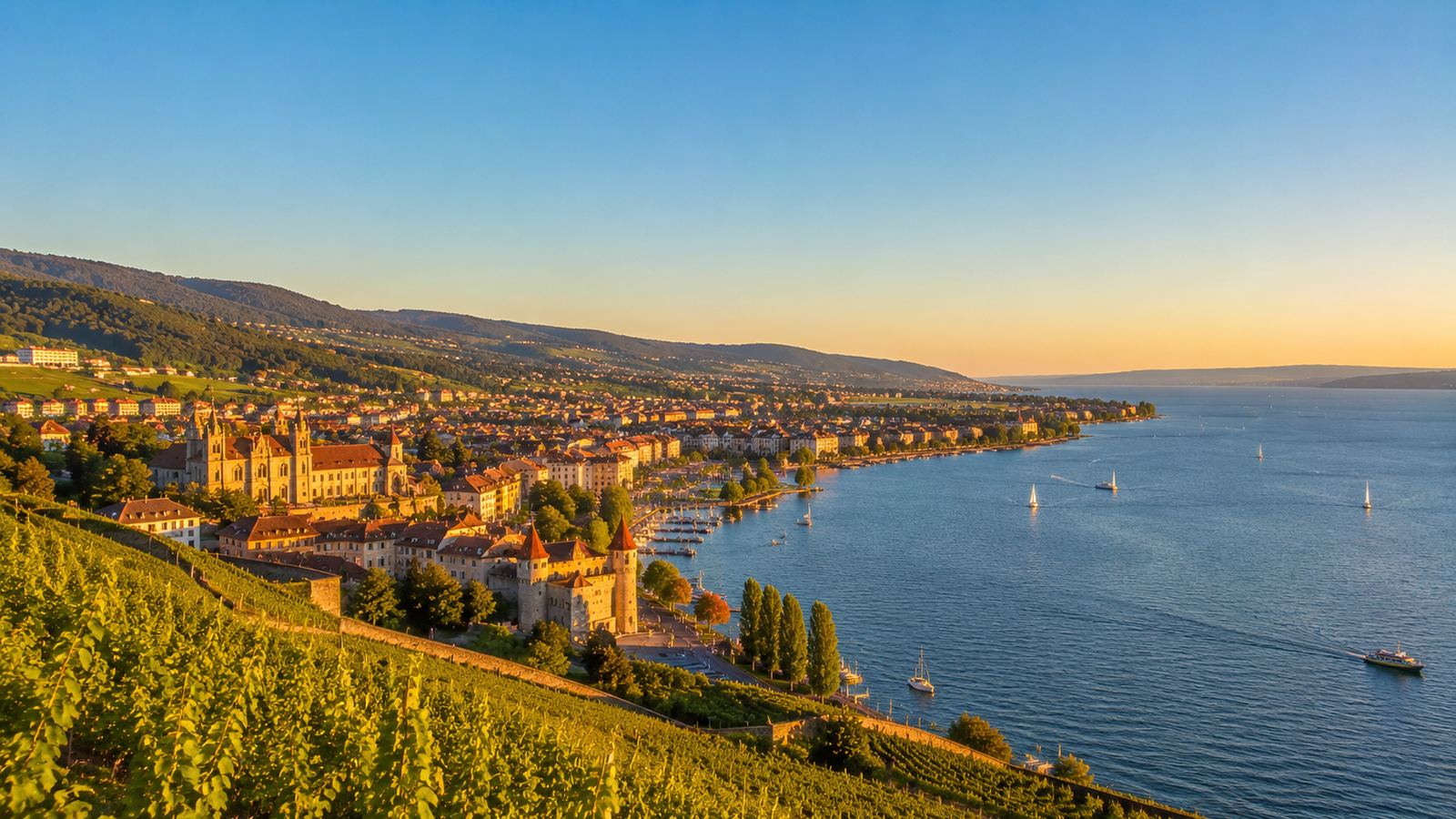
Lake Neuchâtel, Neuchâtel, Switzerland
Lake Neuchâtel: Switzerland’s Largest Lake Entirely Within Its Borders
Switzerland is home to many famous lakes, yet one of its most rewarding waterside destinations often receives less international attention than it deserves. Stretching across western Switzerland between historic towns, vineyard-covered hillsides, and important wetland habitats, Lake Neuchâtel offers a quieter and more varied experience than many of the country’s better-known lake regions.
Known in French as Lac de Neuchâtel, it holds a unique distinction: it is the largest lake located entirely within Switzerland. Unlike lakes that cross international borders or extend into neighboring countries, Lake Neuchâtel belongs wholly to Switzerland, linking several cantons through a landscape shaped by both nature and centuries of human activity.
For travelers seeking scenic beauty, cultural heritage, outdoor recreation, and authentic regional character, Lake Neuchâtel presents an impressive combination of attractions that unfolds gradually along its extensive shoreline.
A Lake at the Heart of the Three Lakes Region
Lake Neuchâtel forms part of Switzerland’s Three Lakes Region, together with nearby Lake Biel and Lake Murten. These interconnected landscapes have long played an important role in transportation, agriculture, and settlement throughout western Switzerland.
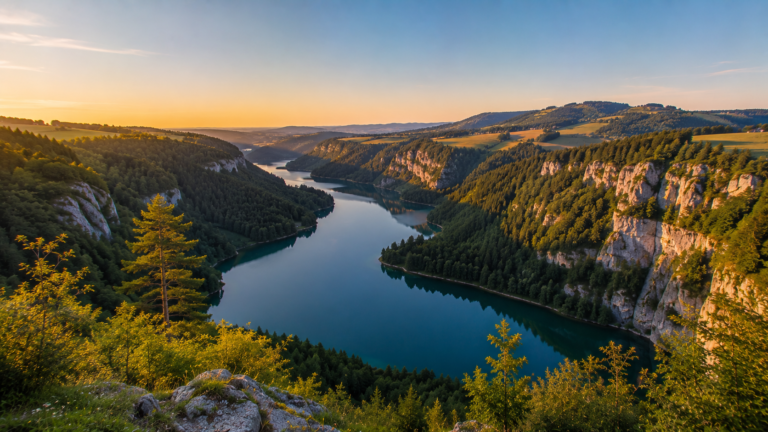
Fed by rivers descending from the Jura Mountains and the Swiss Plateau, the lake stretches for nearly 40 kilometers across a broad basin. Its size creates a sense of openness that differs from the enclosed mountain lakes found elsewhere in the country.
The surrounding geography contributes significantly to the lake’s appeal. To the northwest, the Jura Mountains rise above the shoreline, while rolling farmland, vineyards, forests, and historic communities characterize much of the surrounding countryside. This diversity of landscapes allows visitors to experience several distinct sides of Switzerland within a relatively compact region.
The City That Gave the Lake Its Name
On the northern shore lies Neuchâtel, the lakeside city that serves as the cultural and historical heart of the region.
The city’s character is immediately recognizable through its warm-colored limestone architecture, much of which was constructed using local stone from the Jura region. Historic streets climb gently from the waterfront toward the medieval center, where visitors encounter elegant buildings, narrow lanes, and landmarks that reflect centuries of development.
Above the old town stands Neuchâtel Castle and the adjacent Collegiate Church, both prominent features of the city’s skyline. These historic structures overlook the lake and provide insight into the region’s political and cultural history.
Today, Neuchâtel combines historical significance with a vibrant modern atmosphere. Museums, cafés, cultural institutions, and waterfront promenades contribute to a lively urban environment while preserving the city’s distinctive heritage.
A Landscape Defined by Vineyards
One of the most striking features of Lake Neuchâtel is the vineyard landscape that stretches along portions of its northern shoreline.
For centuries, wine production has been an important part of the region’s identity. Sunlit slopes overlooking the lake create favorable growing conditions, while the lake itself helps moderate temperatures and influence local microclimates.
Terraced vineyards form a patchwork of green across the hillsides, creating some of the most attractive rural scenery in western Switzerland. Walking and cycling routes often pass directly through these wine-growing areas, offering views across the lake toward distant shores and surrounding countryside.
The connection between wine culture and local communities remains strong, shaping regional traditions, gastronomy, and seasonal events throughout the year.
Traces of Prehistoric Europe
Beyond its natural beauty, Lake Neuchâtel occupies an important place in European archaeology.
The lake’s shores are home to several prehistoric pile-dwelling sites that form part of the UNESCO World Heritage property known as the Prehistoric Pile Dwellings around the Alps. These ancient lakeside settlements provide valuable evidence of human life in prehistoric Europe and offer insights into how communities adapted to changing environments thousands of years ago.
Archaeological discoveries from the region have helped researchers better understand early agricultural societies, trade networks, and settlement patterns around Alpine lakes.
This deep historical dimension distinguishes Lake Neuchâtel from many recreational destinations. Visitors are not only exploring a scenic landscape but also a region that has supported human communities since prehistoric times.
Wetlands, Birdlife, and Protected Landscapes
While many Swiss lakes are associated primarily with tourism and recreation, Lake Neuchâtel also plays a vital ecological role.
Its southeastern shoreline contains some of Switzerland’s most significant wetland habitats. The Grande Cariçaie nature reserve extends along much of the lake’s southern shore and represents the country’s largest lakeside marshland area.
The reserve supports an extraordinary diversity of plant and animal life. Wetlands, reed beds, forests, ponds, and meadows provide habitat for numerous bird species, amphibians, insects, and aquatic organisms.
Nature enthusiasts often visit the area for birdwatching, photography, and educational walks that reveal a side of Switzerland many international travelers rarely encounter. The protected landscapes demonstrate the ecological importance of the lake beyond its scenic value.
Lakeside Towns Worth Exploring
Although Neuchâtel is the region’s largest urban center, several smaller towns contribute significantly to the lake’s appeal.
Estavayer-le-Lac
Situated on the southern shore, Estavayer-le-Lac is known for its remarkably preserved medieval character. Historic streets, defensive towers, and centuries-old buildings create an atmosphere that reflects the town’s long history.
Its location beside the lake has also made it a popular destination for water sports and outdoor recreation.
Yverdon-les-Bains
At the southwestern end of the lake lies Yverdon-les-Bains, a town historically associated with thermal waters. The community combines historical heritage with modern leisure facilities and serves as an important gateway to the broader Three Lakes Region.
Together, these towns provide visitors with diverse cultural experiences that complement the natural attractions of the lake.
Exploring the Water
Lake Neuchâtel offers extensive opportunities for enjoying life on the water.
Passenger boats connect various lakeside destinations, providing scenic journeys between towns while revealing the scale of the lake from a different perspective. Sailing, paddleboarding, kayaking, and recreational boating are also popular throughout the warmer months.
Unlike many alpine lakes where steep mountains dominate the shoreline, Lake Neuchâtel’s broader geography creates expansive views across the water. On clear days, distant landscapes and changing weather patterns contribute to a constantly evolving panorama.
Several beaches and swimming areas also make the lake particularly attractive during summer, offering recreational opportunities that are less common around some of Switzerland’s more mountainous lakes.
Following the Rhythm of the Seasons
Each season brings a different character to Lake Neuchâtel.
Spring introduces blossoming vineyards, migratory birds, and renewed activity along the shoreline. Summer transforms the lake into a center for boating, swimming, and outdoor festivals. Autumn is particularly beautiful as vineyards take on shades of gold and red while harvest activities begin throughout the wine-growing regions.
Winter offers a quieter atmosphere, with peaceful lakeside walks and views of snow-covered Jura peaks reflected in the water.
This seasonal diversity ensures that the lake remains appealing throughout the year, regardless of travel interests.
The enduring charm of Lake Neuchâtel lies in its balance. It combines the cultural richness of historic towns, the agricultural traditions of Swiss wine country, the ecological significance of protected wetlands, and the recreational opportunities of Switzerland’s largest entirely domestic lake. Rather than competing with the country’s famous alpine destinations, it offers something different—a landscape where history, nature, and everyday life coexist along a shoreline that rewards slow exploration and repeated visits.