Five Defendants Face Trial Over Near-Fatal Skating Accident at Lausanne Youth Olympics
More than six years after a rehearsal accident nearly claimed the life of a professional skater during the Winter Youth Olympic Games in Lausanne, a Swiss court is preparing to examine whether negligence played a role in one of the most serious incidents associated with the international sporting event.
Proceedings are set to begin in Lausanne, where prosecutors have brought charges against five individuals connected to the staging of the opening ceremony. The case stems from an accident that occurred shortly before the start of the 2020 Winter Youth Olympic Games, when a Russian skater fell several meters onto the ice while participating in a rehearsal at the Vaudoise Arena. The fall left her critically injured and triggered a lengthy investigation into the circumstances surrounding the incident.
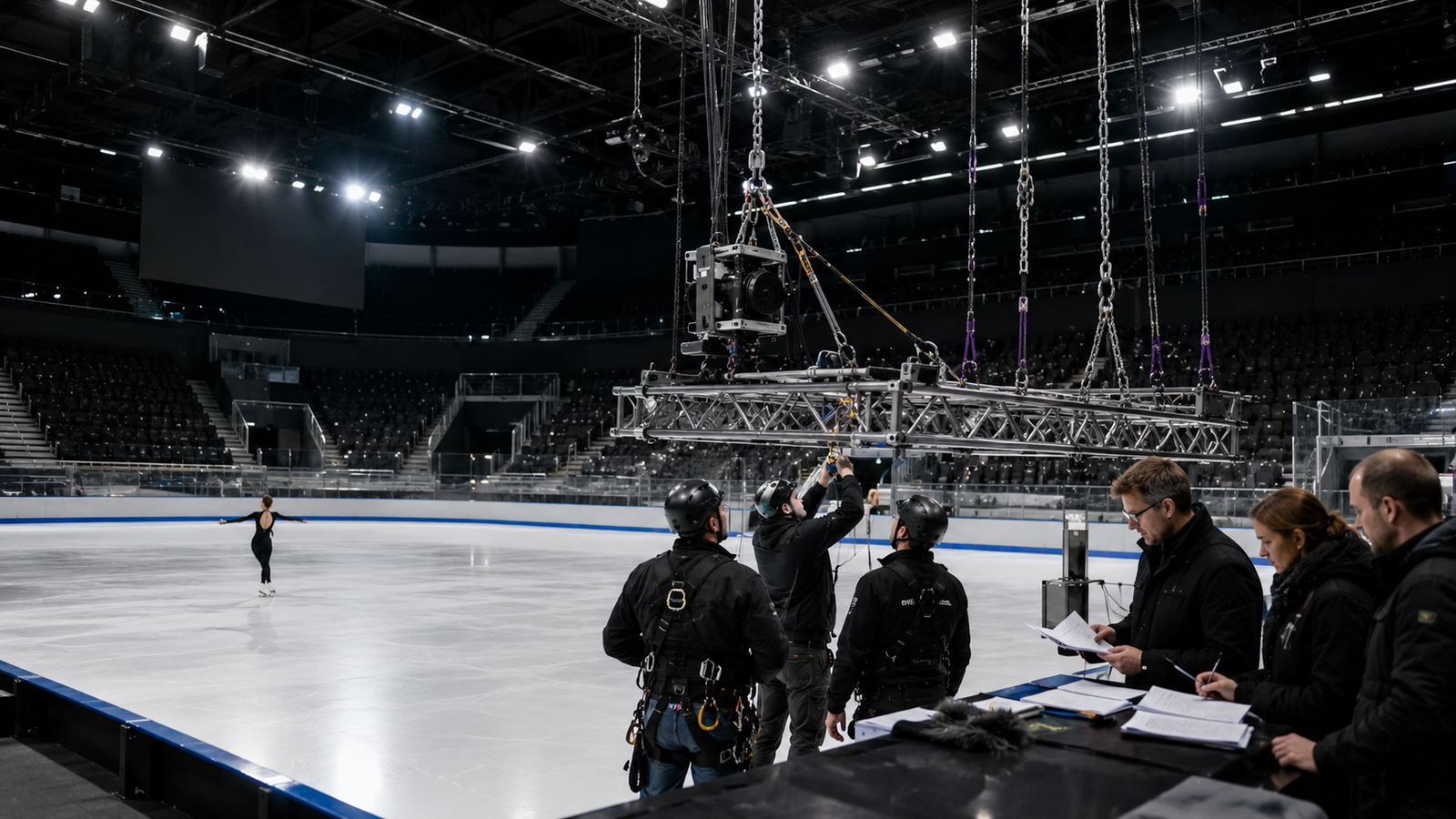
According to information released by Swiss authorities and previous reporting on the accident, the performer was suspended above the ice as part of an aerial segment of the ceremony. During the rehearsal, she lost balance and fell approximately four to five meters to the rink surface. Emergency responders transported her to a hospital in Lausanne, where she was treated for life-threatening injuries. At the time, the incident shocked organizers, athletes, and Olympic officials just days before the opening of the international competition.
The accident prompted an immediate police inquiry aimed at determining what caused the fall and whether any safety failures contributed to the event. Investigators examined technical equipment, installation procedures, and operational responsibilities linked to the aerial performance. Early reports indicated that a hoisting system was involved in lifting the skater above the arena before the accident occurred.
A subsequent investigation reportedly concluded that a winch used in the lifting mechanism had been installed incorrectly. However, investigators initially stopped short of identifying clear individual responsibility. The question of whether specific people acted negligently remained unresolved, leaving prosecutors and the courts to determine whether criminal liability exists.
That question now moves into the courtroom.
The defendants include four managers associated with a Swiss event-production company as well as the injured performer’s husband, according to court information reported by Swiss media. Prosecutors allege that negligence may have contributed to the accident and have brought charges related to grievous bodily harm through negligence. All five defendants will have the opportunity to challenge the allegations during the proceedings.
The trial is expected to focus heavily on technical evidence and operational decision-making. Judges will likely review how the aerial equipment was assembled, tested, and supervised before the rehearsal. They may also examine whether safety protocols were adequate and whether those responsible for managing the performance complied with professional standards commonly used in large-scale entertainment productions.
Legal experts note that negligence cases involving complex technical systems can be particularly challenging because responsibility is often distributed among multiple individuals and organizations. Establishing criminal negligence generally requires prosecutors to demonstrate not only that a mistake occurred but also that a duty of care was breached and that the breach directly contributed to the injuries sustained.
The accident occurred on the eve of a major international sporting event. The 2020 Winter Youth Olympic Games brought thousands of athletes, coaches, officials, and spectators to Switzerland. Organizers had designed an elaborate opening ceremony intended to showcase artistic performances alongside sporting celebration. News of the accident cast a shadow over final preparations and prompted expressions of concern from Olympic officials and event organizers.
At the time, International Olympic Committee representatives publicly expressed sympathy for the injured performer and her family. Organizers also indicated that modifications would be made to portions of the ceremony following the incident. The focus quickly shifted from celebration to questions surrounding performer safety and risk management in live event productions.
The forthcoming proceedings may have implications beyond the individuals directly involved. Large sporting events increasingly rely on sophisticated staging, aerial effects, and complex technical systems designed to create memorable ceremonies. Safety specialists say the case highlights the importance of rigorous equipment inspections, clear accountability structures, and comprehensive risk assessments whenever performers are suspended above crowds or hard surfaces.
While the trial centers on events that occurred in early 2020, its outcome could influence future discussions about safety standards for international sports ceremonies and large entertainment productions. A judicial determination regarding responsibility may also provide long-awaited answers for those affected by the accident.
For the injured skater, the legal process represents another chapter in a case that has remained unresolved for years. For prosecutors, defendants, and event organizers, it is an opportunity to clarify what happened during a rehearsal that transformed a celebratory Olympic moment into a life-altering tragedy.
As testimony begins in Lausanne, the court’s findings will be closely watched by legal observers, event professionals, and sporting organizations seeking to understand whether the accident resulted from unavoidable circumstances or preventable failures in planning and execution. The verdict could ultimately shape how responsibility is assigned when complex event technologies fail and serious injuries occur on one of the world’s most visible sporting stages.