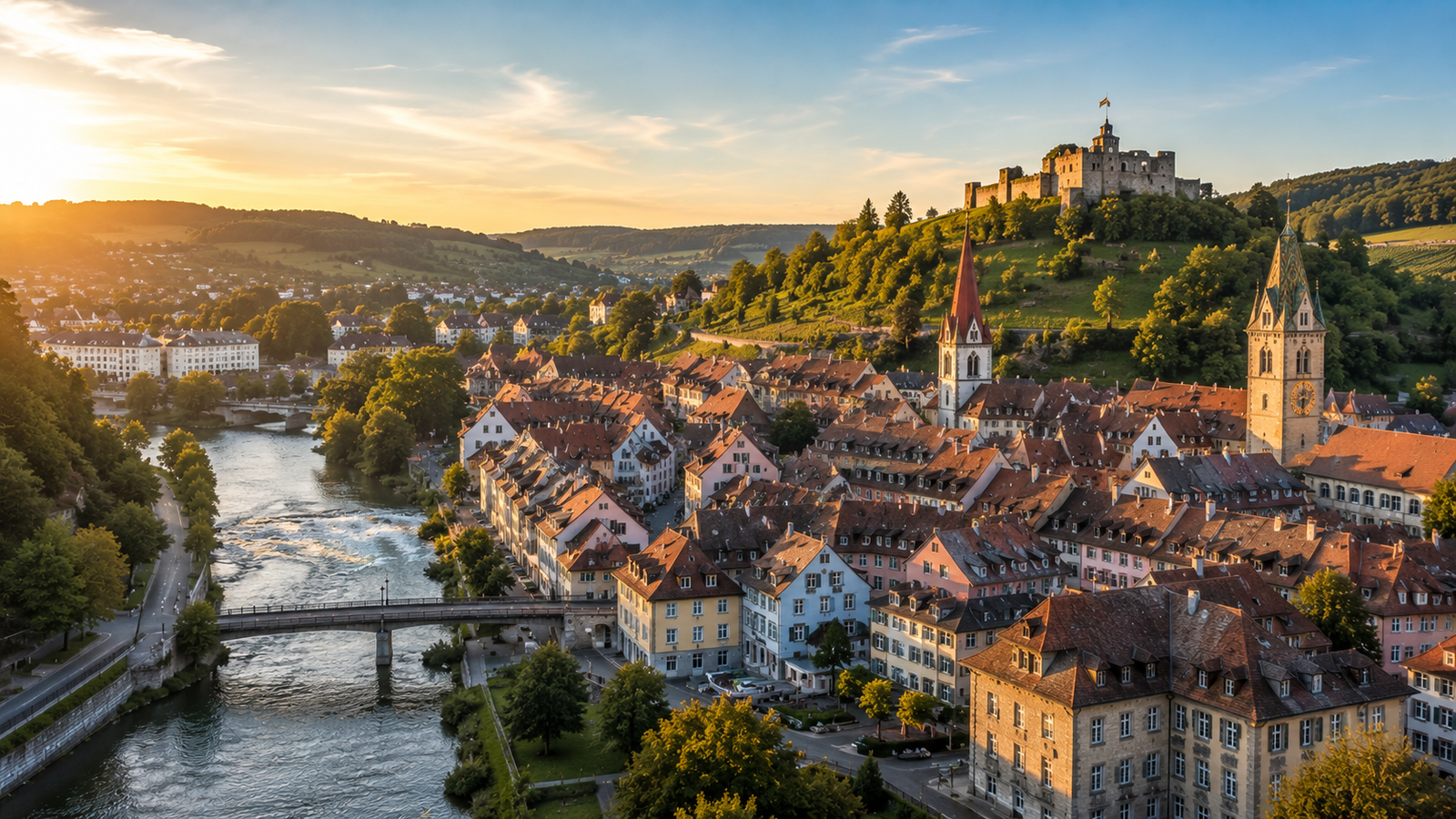
Baden, Aargau, Switzerland
Baden: Switzerland’s Historic Spa Town of Thermal Waters and Timeless Charm
Some Swiss cities are defined by mountains, others by lakes. Baden owes its identity to something hidden beneath the ground. For more than two thousand years, naturally heated mineral-rich water has emerged from the earth along the banks of the Limmat River, attracting travelers, rulers, physicians, and wellness seekers from across Europe. Today, Baden remains one of Switzerland’s most distinctive destinations—a place where ancient bathing traditions, historic architecture, and modern urban life coexist within a compact and highly walkable setting.
Located in the canton of Aargau, just northwest of Zurich, Baden combines the atmosphere of a historic town with the energy of a contemporary cultural center. While its thermal springs are the city’s defining feature, visitors quickly discover that Baden offers much more than wellness alone. Medieval streets, castle ruins, riverside promenades, museums, and vibrant public spaces contribute to a destination that rewards exploration in every season.
The City Built Around Hot Springs
Baden’s story begins long before Switzerland existed as a nation. During the Roman era, the settlement was known as Aquae Helveticae, a name referencing the thermal waters that made the location famous throughout the region. Archaeological evidence shows that the Romans developed extensive bathing facilities around the springs, transforming the area into an important health resort. Ancient writers even mentioned the site for its celebrated healing waters and pleasant setting.
The springs continued to shape the city’s fortunes through the Middle Ages. Baden evolved into one of Europe’s notable spa destinations, attracting visitors seeking relaxation, medical treatments, and social interaction. Kings, scholars, nobles, and merchants traveled here to enjoy the thermal waters, helping establish Baden’s reputation far beyond Switzerland.
Unlike many historic spa towns that have lost their original character, Baden has preserved a visible connection to its bathing heritage. The thermal water remains central to the city’s identity and continues to flow naturally from the same geological system that sustained visitors centuries ago.
Along the Limmat River
The city’s geography contributes significantly to its appeal. Baden sits along a bend in the Limmat River, where the waterway cuts through the surrounding landscape and creates scenic viewpoints, riverside pathways, and distinctive neighborhoods. The river not only shaped the city’s physical development but also played a role in trade, transportation, and urban growth over many centuries.
Walking along the river today reveals a pleasant blend of historic and contemporary architecture. Bridges connect different districts, while riverside promenades invite visitors to slow down and enjoy the surroundings. The relationship between the river and the thermal springs remains one of Baden’s defining characteristics.
Exploring One of Switzerland’s Best-Preserved Old Towns
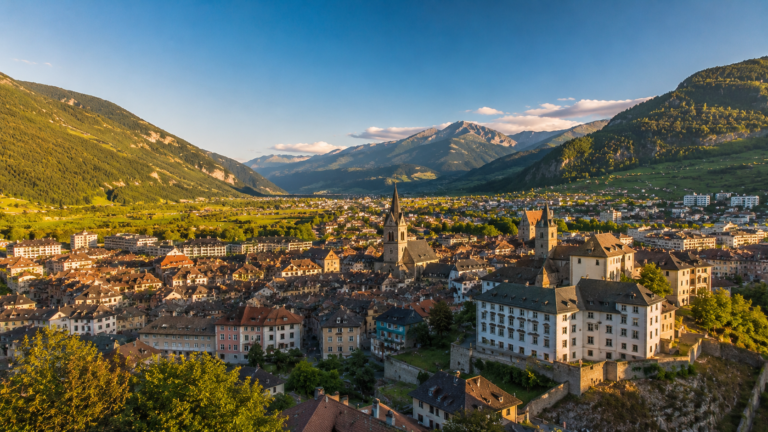
Although Baden is internationally known for its baths, its Old Town deserves equal attention. The historic center is considered one of the best-preserved in Switzerland and offers a compact collection of medieval and early modern architecture. Narrow lanes, restored buildings, public squares, and historic landmarks create an atmosphere that encourages exploration on foot.
The pedestrian-friendly streets reveal centuries of urban history. Colorful façades, traditional shopfronts, and inviting cafés line the historic core, while architectural details provide evidence of Baden’s long prosperity. Unlike larger cities where major attractions may be widely dispersed, many of Baden’s highlights can be discovered within a relatively short walking distance.
The City Tower remains one of the most recognizable landmarks in the center, serving as a reminder of the town’s medieval fortifications and historic significance.
Stein Castle Ruins and Panoramic Views
Overlooking Baden from a hill above the town are the ruins of Stein Castle, one of the city’s most important historic landmarks. The fortress originated during the medieval period and occupied a strategically significant position above the Limmat Valley. Ownership of the site changed over centuries, including periods under influential noble families and later the Habsburgs.
Although much of the structure survives only as ruins today, the location remains a favorite destination for visitors. The climb rewards travelers with sweeping views across the city, surrounding hills, and river valley. From this elevated perspective, it becomes easy to understand why the site held such strategic importance throughout history.
For photographers and history enthusiasts alike, Stein Castle provides one of Baden’s most memorable experiences.
The Modern Revival of the Spa District
The spa quarter is where Baden’s past and present meet most visibly. Over recent years, the district has undergone significant revitalization while preserving its historic importance. The area combines centuries-old bathing traditions with contemporary wellness facilities, creating an environment where visitors can experience both heritage and modern comfort.
The thermal water emerging from Baden’s springs reaches approximately 47°C and is recognized as the most mineral-rich thermal water in Switzerland. The springs have supplied the city for generations and remain the foundation of its wellness culture.
Today, visitors can enjoy the modern FORTYSEVEN wellness spa, public thermal fountains, and historic bathing locations that reflect different periods of the city’s development. Throughout the spa district, interpretive displays and walking routes help explain the long history of bathing culture that continues to define Baden.
Culture Beyond the Baths
Baden offers much more than thermal relaxation. The city supports a lively cultural scene that includes museums, theaters, galleries, and public events throughout the year. The Historical Museum Baden presents the story of the city through exhibitions that explore both its bathing heritage and industrial development.
The city also has a long tradition of entertainment and social gatherings. Historic institutions such as the Kursaal played an important role in Baden’s social life for generations and continue to influence the city’s cultural landscape today.
This combination of history, wellness, and culture helps distinguish Baden from destinations focused solely on spa tourism.
Experiences Worth Adding to Your Itinerary
Visitors to Baden often combine several experiences during their stay:
- Exploring the historic Old Town.
- Walking through the spa district.
- Relaxing in thermal baths and wellness facilities.
- Visiting Stein Castle ruins.
- Following riverside paths along the Limmat.
- Discovering local museums and cultural venues.
- Enjoying viewpoints overlooking the surrounding landscape.
- Exploring nearby hiking routes in the Lägern hills.
Because of the city’s manageable size, many of these experiences can be enjoyed within a single visit without feeling rushed.
Best Time to Visit
Baden welcomes visitors year-round. Spring and summer provide ideal conditions for walking tours, outdoor dining, and riverside activities. Autumn adds color to surrounding hills and vineyards, creating attractive scenery throughout the region.
Winter offers a different appeal. The contrast between cool air and naturally warm thermal water creates one of the most memorable spa experiences of the year, making Baden particularly attractive during colder months. The city’s historic streets also take on a quieter and more intimate atmosphere during winter.
Easy Access from Zurich and Beyond
One of Baden’s greatest advantages is its accessibility. Located a short distance from Zurich, the city is connected by frequent rail services and can easily be visited as a day trip or longer stay. Travelers arriving from other Swiss cities benefit from excellent public transportation connections.
Once in Baden, walking is often the best way to experience the city. Major attractions, historic districts, and spa facilities are conveniently located within a compact area, allowing visitors to move easily between them.
Rather than choosing between history, culture, and wellness, Baden brings all three together. Few places in Switzerland offer such a seamless connection between ancient Roman origins, medieval heritage, and modern relaxation. Whether visitors arrive for the thermal waters, the architecture, or simply a slower pace of travel, Baden delivers an experience rooted in one of the oldest continuously celebrated traditions in the country—the simple pleasure of healing waters flowing from the earth.