Switzerland Sees Unprecedented Late-Season Heat as September Temperatures Break Records
Switzerland experienced an extraordinary spell of late-season warmth over the final weekend of September, with several locations registering temperatures rarely seen so late in the year and weather observers reporting new records across parts of the country.
Meteorological data showed that temperatures climbed above seasonal norms in many regions north of the Alps, continuing a pattern of exceptional warmth that has characterized much of 2026. The unusual heat arrived as many parts of Switzerland typically begin transitioning toward cooler autumn conditions, making the latest readings particularly notable for climate observers and forecasters.
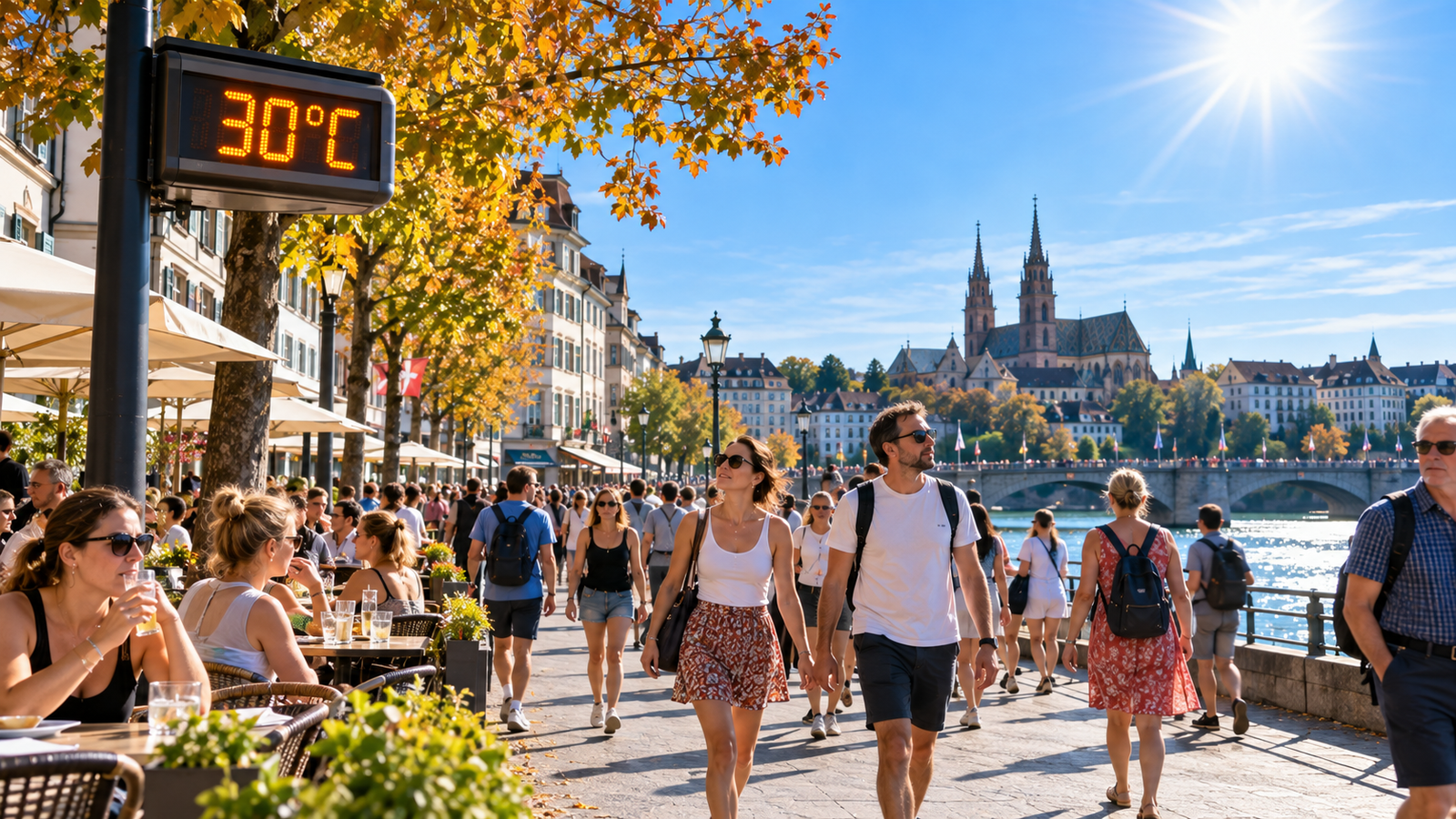
One of the most remarkable measurements was recorded in Basel-Binningen, where temperatures reached 30.1°C. According to weather monitoring reports, such a hot day occurring this late in the year on the northern side of the Alps has not previously been documented in available records. The milestone drew attention from meteorologists tracking temperature extremes and long-term climate trends across the country.
The late-September heat follows a summer already considered exceptional by Swiss standards. Earlier this month, meteorological authorities reported that the summer of 2026 was the hottest since national records began. Average temperatures between June and August surpassed previous benchmarks, reinforcing concerns about the increasing frequency of extreme heat events across Central Europe.
The latest heat episode adds another chapter to a year marked by numerous temperature milestones. In July, Basel-Binningen also recorded one of the country’s highest temperatures of the year when thermometers reached 39.7°C, matching the highest temperature ever measured on the northern side of the Alps. That event highlighted the intensity of summer conditions and raised questions about how often such extremes may occur in the future.
Weather experts note that temperature records are not unusual in isolation, but the timing of the latest event stands out. By late September, average temperatures across much of Switzerland are normally significantly lower than summer peaks. The persistence of summer-like conditions into autumn suggests an unusually prolonged warm period extending well beyond the traditional seasonal transition.
Across Europe, scientists and climate researchers have increasingly observed shifts in seasonal temperature patterns, including longer warm periods and more frequent heat events. Switzerland, with its extensive network of weather stations and long observational history, provides valuable data for tracking such changes. National meteorological records dating back more than a century allow experts to compare present-day conditions with historical averages and extremes.
The warm conditions were felt in urban centers as well as lower-elevation regions north of the Alps. Residents in several areas experienced temperatures more commonly associated with midsummer than with the closing days of September. Outdoor activities, tourism operations, and hospitality businesses benefited from the extended stretch of favorable weather, although prolonged warmth can also create challenges for agriculture, ecosystems, and water management.
Climate specialists caution that individual weather events cannot be attributed solely to broader climate change. However, long-term datasets indicate that Switzerland has experienced a general warming trend over recent decades. The country has repeatedly recorded unusually warm years, warmer summers, and a growing number of heat-related records compared with historical norms.
The impact of higher temperatures extends beyond daily comfort levels. Prolonged heat can affect public health, increase energy demand, influence agricultural production, and accelerate environmental changes in alpine regions. Switzerland’s glaciers and mountain ecosystems are particularly sensitive to temperature fluctuations, making extreme warmth an issue closely watched by scientists and policymakers.
Meteorological agencies continue to monitor evolving weather conditions as the country moves deeper into autumn. While temperatures are expected to fluctuate with changing weather systems, the record-breaking warmth observed in late September will likely remain one of the most notable weather events of the year.
For climate researchers, the event serves as another significant data point in a year already marked by exceptional temperatures. Whether viewed as a rare anomaly or part of a broader warming trend, the unprecedented late-season heat has added to growing evidence that Switzerland’s weather patterns are continuing to evolve in ways that challenge historical expectations.