
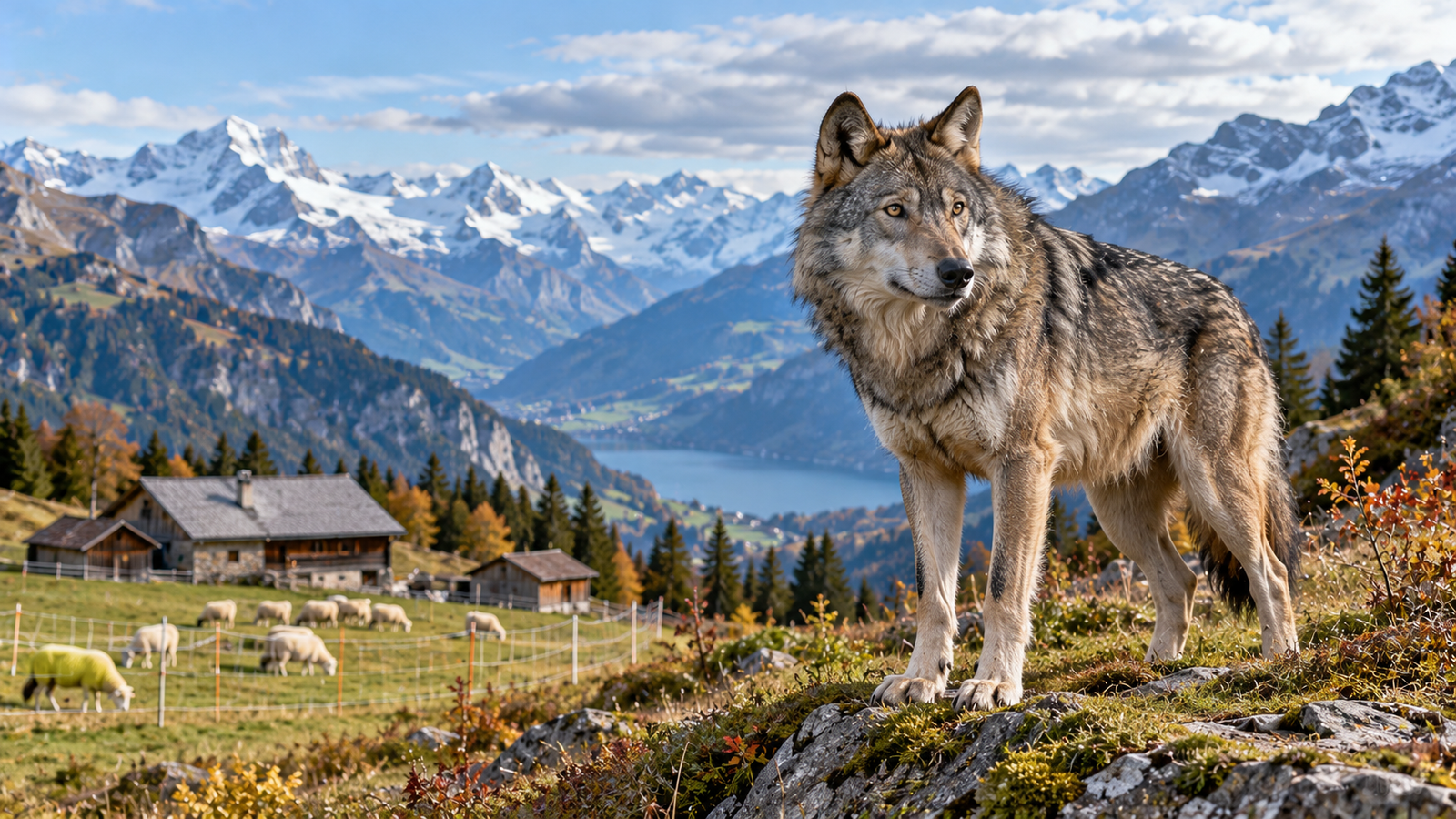
Switzerland Expands Preventive Wolf Controls as Authorizations Reach 39 Packs
Switzerland has authorized preventive wolf population controls for 39 packs at the beginning of autumn 2026, compared with 22 packs at the same point last year, reflecting the continued expansion of the country’s wolf population and growing efforts to manage conflicts with livestock farming. The Federal Office for the Environment (FOEN) has issued legally binding decisions covering the 39 packs, with the latest regulatory period running from September 1, 2026, through January 31, 2027.
The increase in authorizations does not mean that every wolf in those packs will be killed. The permissions specify which animals may be removed and under what conditions, while the cantons remain responsible for carrying out the measures within the federal framework.
The development highlights the challenge facing Switzerland as it seeks to protect farm animals while maintaining a viable wolf population.
More Wolf Packs Are Included in the Latest Decisions
The rise from 22 to 39 authorized packs represents a substantial increase in the number of groups covered by preventive management decisions. According to the Swiss news agency Keystone-SDA, the federal environment office attributes the increase in applications partly to the larger number of wolf packs now present in the country.
The KORA Foundation, which conducts research on large carnivores on behalf of the federal government, identified another factor: changes to Switzerland’s hunting regulations have made it possible for authorities to authorize the removal of wolf pups before their presence in a pack has been confirmed.
That does not mean unconfirmed pups can immediately be shot. A spokesperson for FOEN told Keystone-SDA that young wolves may only be killed after their presence has been established. The distinction separates the timing of an authorization from the conditions that must be satisfied before a cull can take place.
The number of approved packs is therefore a measure of the scope of the regulatory program, not a count of wolves already killed. Actual removals depend on the permissions granted, field conditions and implementation by the relevant cantons.
Switzerland’s Wolf Population Continues to Grow
Federal monitoring data show why wolf management remains a major issue for Swiss authorities. Following the previous preventive culling period, which ended on February 1, 2026, Switzerland had approximately 350 wolves. They were distributed across 30 packs living entirely within the country’s borders and another 10 cross-border packs. Individual wolves were also present outside established packs.
The return of wolves to Switzerland began in the 1990s, following their migration from neighboring countries, particularly Italy and France. The first established pack formed in the canton of Graubünden in 2012. Since then, the population has expanded into additional regions, bringing renewed attention to the relationship between wildlife conservation and livestock farming.
Preventive population management has been in place since 2023. Federal figures record 57 wolves killed during the 2023–2024 period, 92 during 2024–2025 and 77 during 2025–2026. The lower total in the most recent completed period indicates that the number removed can vary from year to year, even as the wider population grows.
FOEN has reported that preventive culling has helped slow the rapid growth of the population. However, the office has also cautioned that more regulatory periods will be needed to establish how durable that effect is.
How Preventive Wolf Management Works
Switzerland’s approach allows authorities to intervene before a specified level of livestock damage has occurred, provided the legal requirements for preventive regulation are met.
The revised hunting legislation, adopted by parliament in December 2022, introduced preventive population control as a means of reducing conflicts between wolves and alpine livestock farming. The revised law and implementing ordinance entered into force on February 1, 2025.
Under the framework, cantons submit applications to FOEN, which must approve the proposed measures before the cantons can order the authorized shootings. The rules permit the removal of a proportion of young wolves when the relevant conditions are satisfied. Entire packs can be targeted only under specified circumstances, including behavior that meets the legal criteria for being considered undesirable.
Livestock protection requirements also form part of the framework. Measures can include electric fencing, nighttime enclosures and livestock guardian dogs. The federal government subsidizes 80% of cantonal costs for livestock protection measures, according to FOEN.
These safeguards are important because preventive regulation is not an unrestricted authorization to hunt wolves. The legal process establishes limits on what may be done, which packs are covered and when the approved measures may be implemented.
Cantons Carry Out the Measures
Federal approval sets the boundaries of the program, but implementation takes place at the cantonal level.
The canton of Graubünden, in southeastern Switzerland, has already begun its latest regulatory campaign. On August 26, 2026, federal authorities approved applications covering 12 packs submitted by the canton, with additional permissions conditional on confirmation of this year’s young wolves. The canton said its approach would continue to combine preventive regulation with livestock protection.
In a separate development, authorized hunters and gamekeepers killed 17 wolves in Graubünden during September. As of October 6, the canton reported that 61 wolves were authorized for culling. The regulatory period is scheduled to continue through January at the latest.
Those figures illustrate the difference between the number of packs covered by federal decisions and the number of animals actually removed. They also show why national totals should be interpreted alongside local reports, which describe implementation in individual cantons.
Livestock Protection Remains Central to the Debate
The policy is intended to reduce losses among farm animals while allowing wolves to remain part of Switzerland’s wildlife. Measuring its effectiveness, however, requires more than counting permits or animals killed.
FOEN data indicate that livestock losses from wolf attacks have declined from their 2022 peak. Authorities attribute the trend to a combination of population regulation and protective measures, rather than to culling alone. At the same time, compensation paid for livestock damage rose to CHF 695,774 in 2025, illustrating that financial consequences for farmers have not disappeared.
The compensation figures also reflect the type of livestock affected and the costs associated with individual cases. They should not be interpreted as a direct measure of the number of attacks without considering those differences.
For farmers, effective protection can reduce the risk of losses. For conservation authorities, the central challenge is ensuring that interventions remain consistent with the obligation to preserve a viable wolf population.
The Regulatory Period Continues Through January
The current preventive control period is due to end on January 31, 2027. Until then, cantonal authorities will continue implementing approved measures under the federal rules. The full outcome will depend on how many authorized removals are carried out and how the wolf population develops across the country.
The increase to 39 authorized packs marks a wider regulatory effort than Switzerland had undertaken at the same stage a year earlier. But the number alone does not establish whether livestock losses will fall further or whether the wolf population’s growth will slow again.
Those questions will require updated monitoring data after the season concludes. For now, Switzerland’s policy remains focused on managing a growing predator population through a combination of preventive controls, legal restrictions and measures intended to protect livestock.