
Scientists Detect Rubber-Linked Chemicals in Swiss Raw Milk, Raising Questions About Dairy Equipment
A new Swiss scientific study has identified multiple rubber-related chemical compounds in raw milk samples, highlighting a little-studied pathway through which industrial materials may enter the food chain and prompting fresh discussion about food-contact equipment used in dairy production.
The research, conducted by scientists from the Swiss Federal Institute of Technology Lausanne (EPFL) and the Swiss Federal Office of Food Safety and Veterinary Affairs, detected several chemicals associated with rubber products in samples of Swiss raw milk. The findings were published in the peer-reviewed scientific journal Food Chemistry X.
Researchers examined milk collected from dairy production systems and investigated potential sources of contamination. Their analysis identified a range of rubber-related compounds that can originate from both environmental exposure and materials used during milk production and processing.
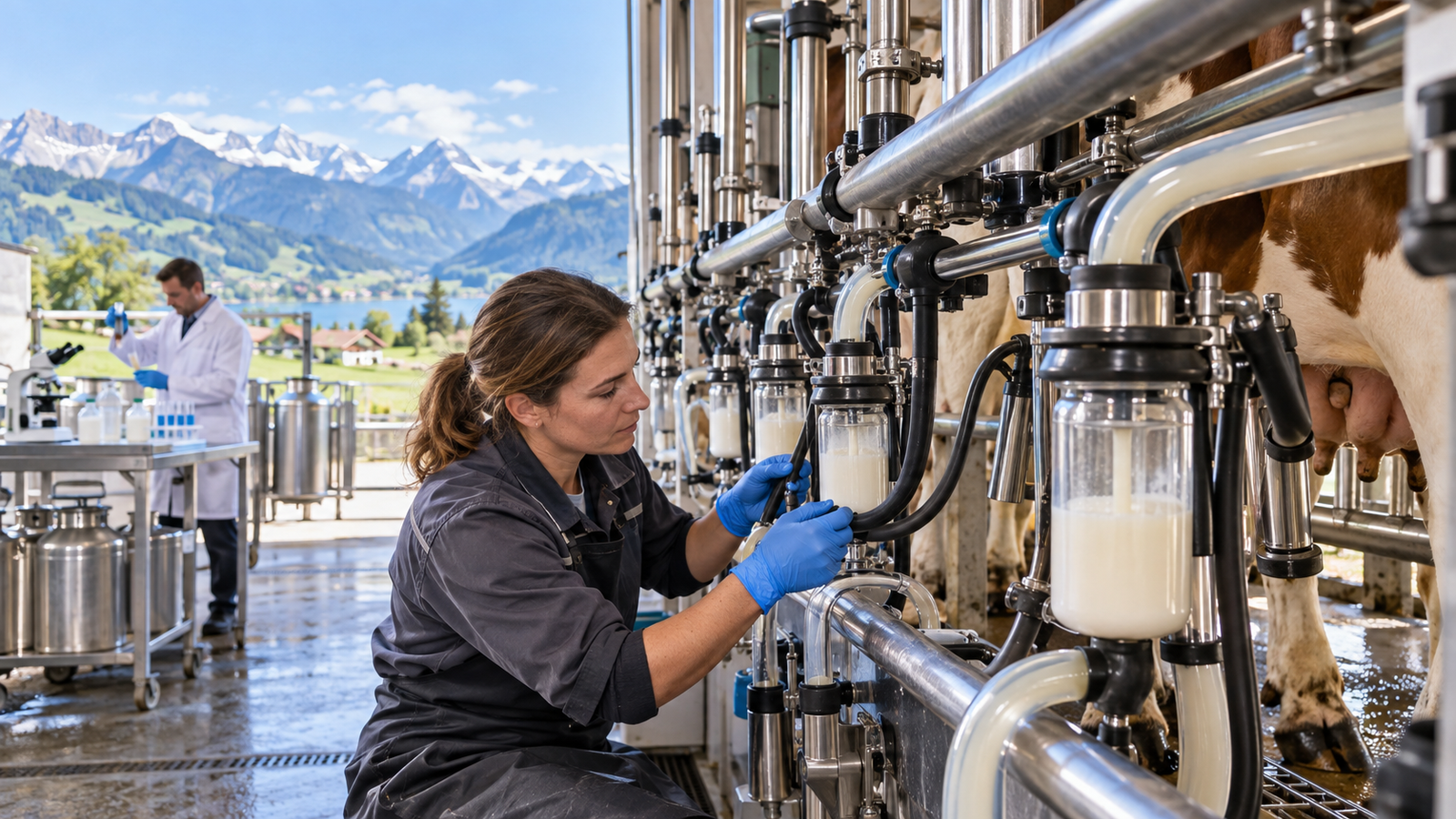
One of the most notable findings involved equipment commonly used throughout dairy operations. Scientists analyzed hoses, seals, gaskets and other rubber components that come into contact with milk during collection and transportation. According to the study, several of the same chemical compounds found in milk were also present in these materials, suggesting that migration from food-contact equipment may contribute to contamination.
Lead researcher Florian Breider said the results were surprising because the materials examined are approved for use in food production systems. The discovery highlights the complexity of assessing chemical exposure pathways in modern food supply chains, where products can come into contact with numerous industrial materials before reaching consumers.
The researchers emphasized that contamination may not originate from a single source. In addition to dairy equipment, environmental factors could also play a role. Rubber-related chemicals are widely used in tires, industrial products and manufacturing processes. As these materials wear down over time, small particles and associated compounds can enter soil, water and agricultural environments.
Scientists have increasingly focused on understanding how synthetic chemicals move through ecosystems and ultimately enter food products. Previous environmental studies have identified rubber additives and tire-related particles in waterways, sediments and agricultural environments around the world. Researchers note that these pollutants can travel long distances and accumulate in natural systems.
The Swiss study does not conclude that milk consumption poses an immediate health risk. Instead, it adds to a growing body of scientific work examining the presence of industrial chemicals in food and the need to better understand exposure routes. Researchers stress that additional investigations are required to determine the concentrations involved, the frequency of contamination and the potential implications for consumers.
Food-contact materials have become an increasingly important area of research worldwide. Scientists and regulators have long monitored substances that can migrate from packaging, processing equipment and storage systems into food products. Recent international studies have drawn attention to the large number of chemicals used in food-contact applications and the challenges involved in evaluating their long-term safety.
The Swiss findings arrive as researchers across Europe and North America expand efforts to identify previously overlooked contaminants in food systems. Advances in analytical chemistry now allow laboratories to detect extremely small quantities of compounds that would have been difficult to measure in the past. As a result, scientists are gaining a clearer picture of how industrial and environmental chemicals move through supply chains.
For Switzerland’s dairy sector, the study may encourage closer examination of production equipment and maintenance practices. The country is internationally known for its dairy products, making food quality and consumer confidence important priorities for producers and regulators alike.
Industry experts note that contamination issues linked to processing equipment are not unique to dairy production. Similar concerns have been studied in other food industries where rubber seals, tubing and mechanical components are routinely used. Understanding how these materials interact with food products is considered an important step in improving safety standards and reducing unintended chemical exposure.
The authors of the Swiss study say further research will be needed to determine the relative contribution of environmental sources compared with dairy equipment. Future investigations could help identify practical measures for reducing contamination and improving monitoring systems throughout the production process.
While the findings do not indicate an immediate public health emergency, they underscore the growing scientific interest in tracing hidden contaminants throughout food production networks. As researchers continue to explore the issue, the study provides new evidence that industrial materials used in everyday agricultural operations can become an unexpected source of chemical exposure.
The results are likely to contribute to ongoing discussions among scientists, regulators and food producers about how best to ensure that food-contact materials remain safe while maintaining the efficiency of modern agricultural systems. For consumers, the research serves as a reminder that food safety science continues to evolve as new technologies reveal previously undetected aspects of the food supply chain.