
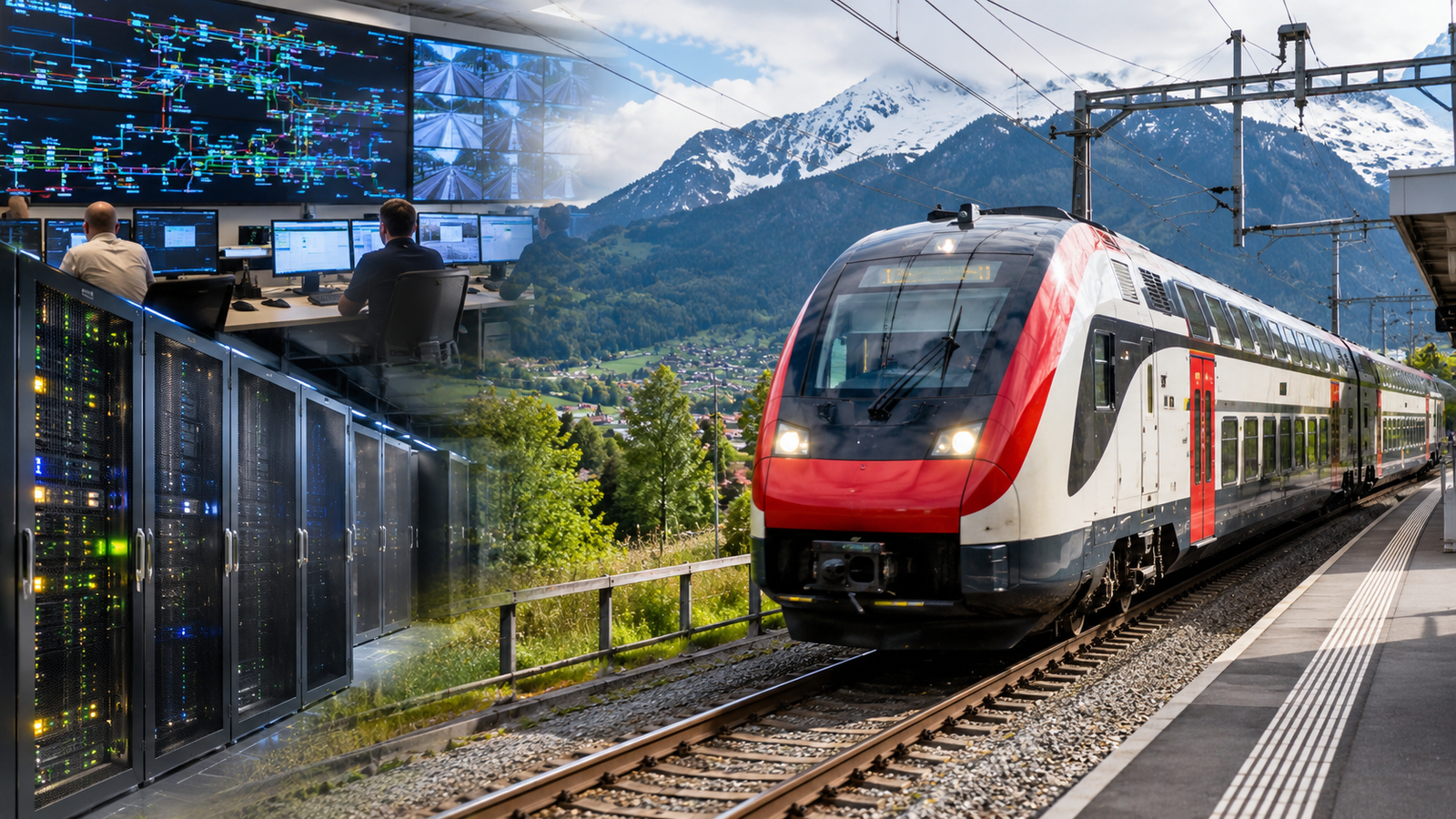
Swiss Railways Launches Long-Term Technology Overhaul Worth CHF 100 Million Annually
Switzerland’s national railway operator is preparing a major transformation of the technology systems supporting its nationwide rail network, opening a procurement process for long-term IT infrastructure contracts worth approximately CHF100 million annually.
Swiss Federal Railways (SBB) announced the initiative on November 9, 2026, with the first tender published on Switzerland’s official public procurement platform, SIMAP. The company plans to secure framework agreements lasting up to 20 years, covering cloud computing, data center infrastructure and platform services.
The procurement represents an important step in SBB’s efforts to strengthen control over its digital operations while reducing dependence on individual technology suppliers. The systems involved support essential railway functions, including train operations, energy supply, ticketing and passenger information.
Further tender announcements are scheduled through December 7, 2026, with contract awards expected during the first half of 2027.
A long-term strategy for critical railway technology
The scale of the procurement reflects the increasingly important role digital infrastructure plays in operating a modern railway network.
SBB relies on interconnected IT systems to coordinate operational processes and provide information to passengers. These systems also support business applications and the infrastructure responsible for managing railway operations.
A disruption affecting essential digital services could have consequences beyond the technology department, potentially affecting services that passengers and railway employees depend on.
SBB therefore intends to renew existing cloud service agreements while securing additional options for operating the technology required by its infrastructure modernization program.
The planned framework agreements have an estimated annual value of around CHF100 million. However, this figure represents the expected value of services rather than a fixed payment regardless of usage. According to SBB, it will only pay for services it actually obtains from contracted providers.
The procurement will be divided into several lots, allowing different areas of the technology infrastructure to be addressed through separate contracts.
Three cloud models will shape the new infrastructure
One of the most significant elements of the procurement is SBB’s decision to combine three different operating models rather than depend on a single cloud arrangement.
The first is a public cloud, where computing capacity and storage are provided through shared infrastructure used by multiple customers.
The second is a private cloud, which provides infrastructure reserved exclusively for SBB. This arrangement gives the railway a dedicated operating environment for services that require specific security, performance or management conditions.
The third option is a sovereign cloud. Under this model, the legal framework governing the infrastructure and its data will fall under either Swiss law or European Union regulations.
These arrangements are intended to give SBB greater flexibility when deciding where individual applications and data should operate.
Not every railway application has identical requirements. Some systems may prioritize computing capacity and flexibility, while others require stricter controls over data access, legal jurisdiction and operational continuity.
By combining different environments, SBB aims to match technology arrangements to the requirements of individual services.
The company has identified security, data protection, availability, resilience and regulatory compliance as important considerations in selecting the appropriate operating environment.
Digital independence becomes a strategic priority
The procurement also reflects a broader concern facing organizations that depend heavily on large technology suppliers.
Cloud services and enterprise software can provide substantial operational benefits, but relying too heavily on a limited number of providers may create long-term dependencies.
Changing suppliers can become difficult when organizations have built critical applications around particular technologies, storage systems and operating environments.
For a national railway operator, these dependencies carry additional importance because the underlying systems support services that must remain dependable.
SBB says its objective is to preserve its ability to make independent decisions about how its digital infrastructure operates. Limiting dependence on individual suppliers and technologies is therefore central to the new procurement strategy.
The inclusion of sovereign cloud services is particularly relevant to this objective because it introduces additional options concerning the legal jurisdiction governing data and infrastructure.
However, the announcement does not mean SBB is abandoning international technology providers or moving all its systems into exclusively Swiss-controlled facilities. Instead, the railway is pursuing a combination of operating environments based on operational and regulatory requirements.
Separate procurement planned for SAP services
SBB is also preparing another technology procurement exercise involving SAP services.
The company plans to publish a separate tender in mid-November 2026 because existing agreements covering these services are approaching their expiration.
SAP applications form part of SBB’s central business IT infrastructure. They support important internal processes and require continued operation and development.
The proposed framework agreements will initially run for five years, with an option to extend the arrangement by up to three additional years.
This procurement is separate from the broader cloud, data center and platform services contracts announced on November 9.
The distinction matters because the two procurement processes address different components of the railway’s technology environment. Together, they form part of a wider effort to secure the services needed to operate and develop SBB’s digital systems over the coming years.
A CHF7 billion railway digitalization challenge
The new IT procurement comes as Switzerland faces a much larger challenge: modernizing the digital foundations of its railway infrastructure.
At the end of October 2026, SBB and the Federal Office of Transport confirmed that approximately CHF7 billion would be required to digitalize railway infrastructure by 2045.
The investment is associated with the renewal and modernization of important safety-related infrastructure, including systems connected to the European Rail Traffic Management System (ERTMS).
The 2027 budget proposal earmarked CHF1 billion for railway infrastructure digitalization. SBB described that amount as an important initial step but said it would not be sufficient to complete all the measures requested by the transport authorities.
The Federal Office of Transport confirmed the railway’s estimated funding requirements and indicated that financing would come through different channels.
Importantly, the CHF7 billion infrastructure modernization requirement should not be confused with the newly announced IT service procurement. SBB has explicitly distinguished the funding arrangements for railway digitalization from the framework contracts being advertised through SIMAP.
The two initiatives are connected by the broader modernization strategy, but they represent separate financial and operational commitments.
What the changes could mean for passengers
Although the procurement focuses primarily on technology providers rather than visible railway improvements, its eventual effects could extend to everyday passenger services.
Reliable digital systems are essential for ticket purchases, travel information, operational coordination and the communication of service updates.
Modernizing the underlying infrastructure could help SBB maintain these services as the railway introduces additional digital applications and updates existing operational systems.
However, the tender announcement does not promise immediate improvements to train punctuality, ticket prices or journey times. Those outcomes depend on a wider range of operational, infrastructure and investment decisions.
The immediate objective is to secure the technology services needed to support the railway’s operations over an extended period.
The coming months will be important as SBB completes the tender process, evaluates potential providers and prepares to award the contracts in 2027.
For Switzerland’s railway network, the initiative highlights how maintaining a dependable transport system increasingly depends on the strength of the digital infrastructure operating behind the scenes.
The success of the modernization effort will ultimately depend not only on the technology SBB selects, but also on its ability to maintain security, operational independence and reliable services throughout the transition.


