Basel-Country Construction Spending Climbs to Record Level Despite Housing Slowdown
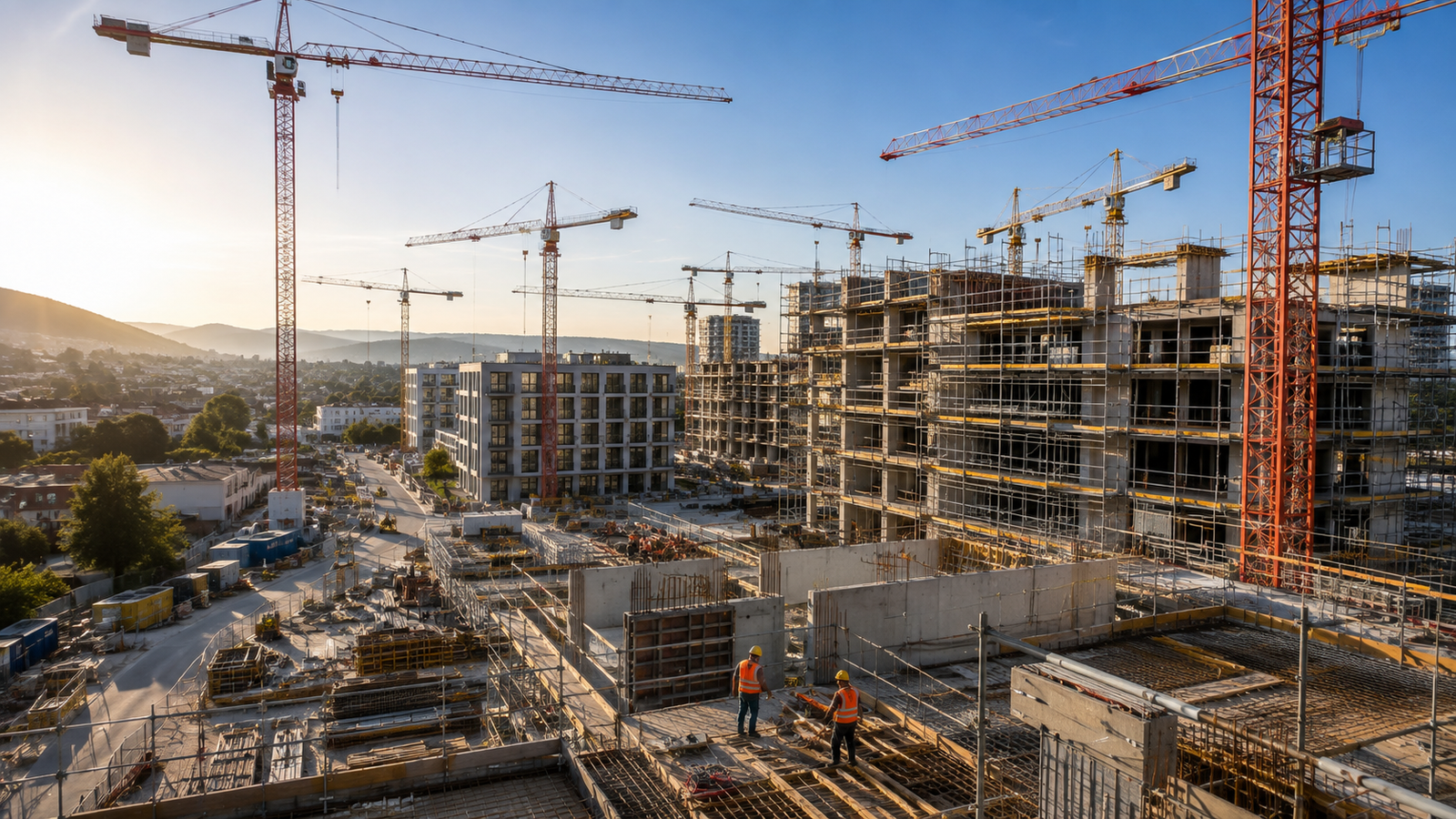
Construction activity in the Swiss canton of Basel-Country reached an unprecedented level in 2025, underscoring the region’s economic resilience even as parts of the residential housing market showed signs of cooling. New figures released by cantonal authorities indicate that the total value of construction work climbed to CHF2.5 billion, the highest level ever recorded in the canton and a notable increase from the previous year. The results highlight the growing importance of commercial and public-sector investment in sustaining construction activity across one of Switzerland’s most economically significant regions.
According to data from the Basel-Country statistical office, overall construction volume increased by approximately 4.8% compared with 2024. While housing construction remains the largest segment of the market, growth was largely fueled by strong gains in non-residential and government-funded projects. The figures suggest that businesses and public authorities continued to invest heavily in new facilities, infrastructure, and development projects despite broader concerns about rising construction costs and changing market conditions.
The strongest expansion occurred in non-residential construction. Investment in commercial and industrial projects rose sharply, reaching approximately CHF515 million during the year. Public-sector construction also posted significant growth, climbing to around CHF314 million. Together, these sectors compensated for weaker performance in private residential building activity, which declined from the previous year.
Private housing construction, while still accounting for the largest share of the market, fell by roughly 7% to around CHF1.3 billion. Analysts note that residential developers across Switzerland have been navigating a complex environment marked by financing pressures, evolving demographic demand, land constraints, and regulatory requirements. Although demand for housing remains strong in many Swiss regions, construction activity has not always kept pace due to the challenges associated with bringing new projects to market.
Even with the slowdown in residential investment, the canton recorded an increase in the number of homes added to the market. Statistics show that approximately 1,783 new housing units were created in 2025, representing an increase of around 8% compared with the previous year. Most of these additions came from newly constructed apartment buildings, while a smaller number resulted from property conversions and redevelopment projects.
The composition of new housing also shifted noticeably. One-bedroom and two-bedroom apartments accounted for a larger share of newly completed units, reflecting changing demographic trends and evolving household structures. Smaller households, urban living preferences, and affordability considerations have influenced housing development patterns across Switzerland in recent years. At the same time, the number of larger family-sized apartments declined, signaling a changing balance in residential construction priorities.
Detached housing construction continued to soften. The number of newly built single-family homes fell to 205 units during the year, extending a trend observed in several Swiss cantons where land availability, planning restrictions, and construction costs have increasingly favored denser forms of development. Urban planners and economists frequently point to these factors as reasons why apartment construction has become the dominant form of new housing delivery in many regions.
The Arlesheim district remained one of the canton’s most active development areas. Its proximity to Basel, strong transport connections, and role within the broader Basel metropolitan region have made it an attractive location for both residential and commercial investment. Continued growth in the district reflects the economic importance of the Basel area, which serves as a major center for life sciences, manufacturing, logistics, and international business.
The record construction figures arrive during an ongoing national discussion about housing supply. Although some Swiss regions have recently experienced moderation in rental growth, housing shortages remain a concern in many urban centers. Policymakers, developers, and economists continue to debate how best to increase housing availability while maintaining environmental standards, infrastructure capacity, and quality-of-life considerations.
Construction remains a vital component of Switzerland’s economy, supporting employment, infrastructure development, and long-term competitiveness. Industry forecasts from economic research institutions have suggested that construction demand will continue to be supported by infrastructure modernization, energy-efficiency projects, and population growth, although market conditions may vary across regions and sectors.
For Basel-Country, the latest figures point to a construction sector that is adapting rather than slowing. Strong business investment and public-sector spending have offset weaker residential activity, allowing overall construction volume to reach a historic peak. While future growth will depend on economic conditions, financing costs, and housing demand, the canton’s performance in 2025 demonstrates the breadth of investment activity occurring across its economy.
The record CHF2.5 billion construction volume not only highlights the strength of Basel-Country’s development pipeline but also reflects the region’s strategic role within Switzerland’s economic landscape. As public infrastructure projects advance and private-sector investment continues, the canton appears well positioned to remain one of the country’s most active construction markets in the years ahead.