Switzerland’s
Cantons
Discover the Heart of the Swiss Confederation
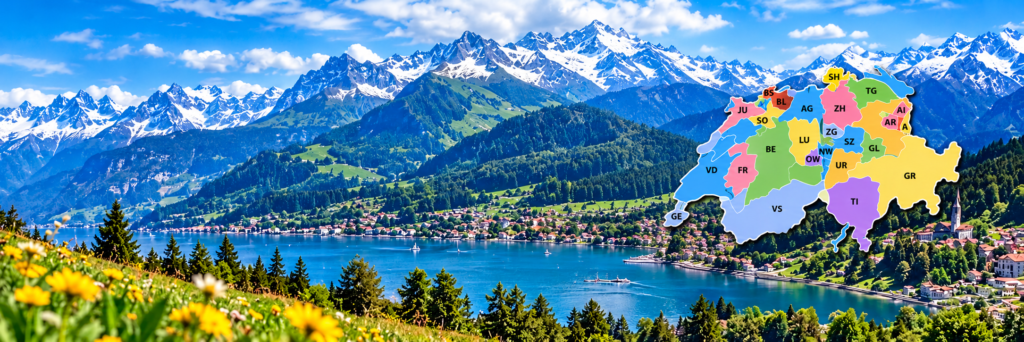
Explore all 26 Swiss cantons, their history, culture, languages,
attractions and unique idetities.


Switzerland’s 26 Cantons: The Foundation of the Swiss Confederation
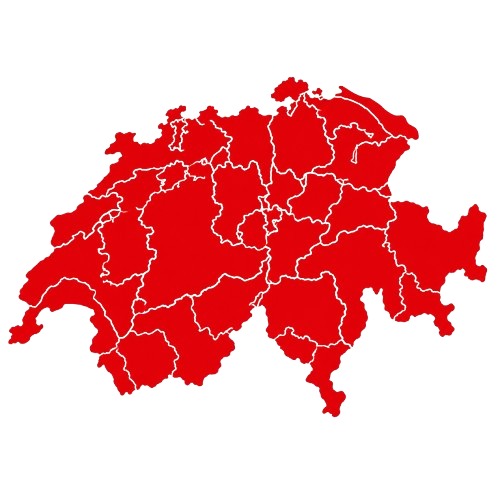
Switzerland is one of the world’s most decentralized and unique countries. Rather than being governed entirely from a central government, Switzerland is built upon 26 constituent states known as cantons. Each canton has its own constitution, parliament, government, courts, and significant autonomy in areas such as education, healthcare, policing, and taxation.
This federal system allows Switzerland to unite different cultures, languages, and regional identities while maintaining national unity. Today, the Swiss Confederation consists of 26 cantons and more than 2,000 municipalities.
What Is a Canton?
A canton is similar to a state, province, or region in other countries. Swiss cantons are not merely administrative divisions; they are constituent states with their own political powers.
Every canton has:
- Its own constitution
- Its own parliament
- Its own government
- Its own courts
- Its own tax system
- Authority over education, healthcare, policing, and cultural affairs
The Swiss Federal Government handles national matters such as foreign policy, defense, customs, and federal law, while cantons retain broad self-governing powers.
Why Does Switzerland Have 26 Cantons?
The origins of the Swiss cantons go back more than 700 years.
In 1291, the regions of Uri, Schwyz, and Unterwalden formed an alliance that is considered the foundation of modern Switzerland. Over the centuries, additional regions joined the Confederation, gradually expanding the country.
In 1848, following political reforms and the adoption of the Federal Constitution, Switzerland officially became a modern federal state. The cantons agreed to share some powers with the federal government while retaining substantial independence.
Switzerland originally consisted of fewer cantons, but territorial and political developments eventually led to today’s total of 26. The newest canton is Jura, which separated from the Canton of Bern and officially became Switzerland’s 26th canton in 1979.
Languages Across the Cantons
Switzerland has four national languages:
- German
- French
- Italian
- Romansh
Most cantons use one primary language, while several are officially multilingual. This linguistic diversity is one reason why Switzerland’s federal system is so important.
Switzerland’s 26 Cantons
- Zürich
- Bern
- Lucerne (Luzern)
- Uri
- Schwyz
- Obwalden
- Nidwalden
- Glarus
- Zug
- Fribourg
- Solothurn
- Basel-Stadt
- Basel-Landschaft
- Schaffhausen
- Appenzell Ausserrhoden
- Appenzell Innerrhoden
- St. Gallen
- Graubünden (Grisons)
- Aargau
- Thurgau
- Ticino
- Vaud
- Valais
- Neuchâtel
- Geneva
- Jura
Interesting Facts About Swiss Cantons
The Largest Canton
Graubünden is Switzerland’s largest canton by area and is famous for its Alpine landscapes and three official languages.
The Most Populous Canton
Zürich is the most populous canton and serves as Switzerland’s economic center.
Multilingual Cantons
Bern, Fribourg, and Valais are bilingual cantons, while Graubünden is officially trilingual.
Historic Democratic Traditions
The cantons of Glarus and Appenzell Innerrhoden still practice the traditional open-air citizens’ assembly known as the Landsgemeinde.
The Role of Cantons Today
Cantons remain at the heart of Swiss democracy. They manage many public services and play a key role in national decision-making. Certain constitutional changes require approval not only from Swiss voters but also from a majority of cantons, ensuring that all regions have a voice in shaping the country’s future.