Scientists Unlock 142 Years of Microbial History from Preserved Swiss Raclette Cheese
A rare collection of Swiss raclette cheese wheels spanning nearly a century and a half has provided researchers with an unusual window into the changing relationship between food production, microbes, and agricultural practices.
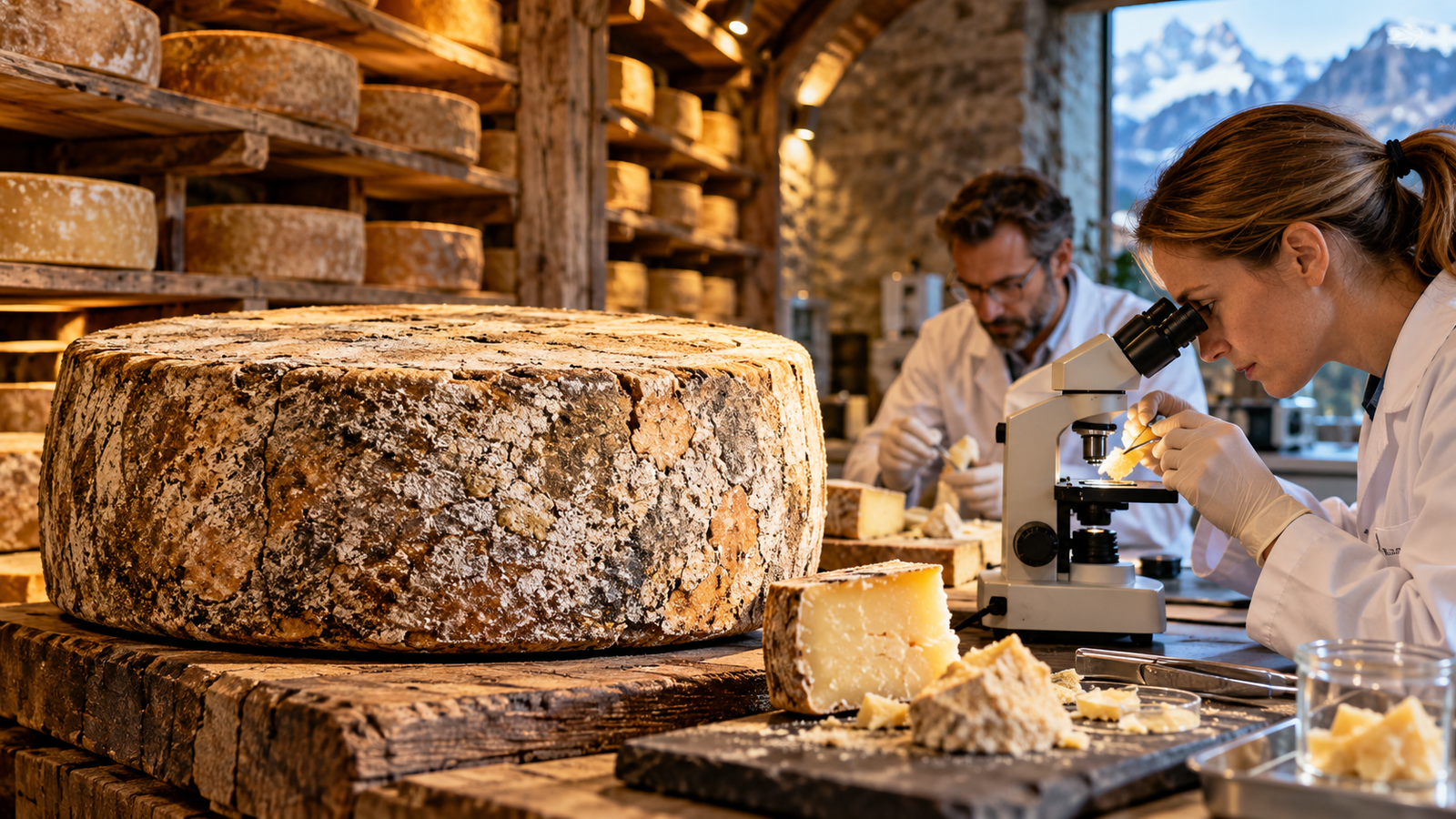
Scientists from Switzerland’s agricultural research center Agroscope and ETH Zurich have analyzed eight wheels of raclette cheese produced between 1875 and 2017, uncovering significant shifts in bacterial diversity and evidence of how modern farming practices have influenced the microscopic world hidden inside one of the country’s most iconic foods. The findings were recently published in the scientific journal Current Biology.
The cheeses originated from the same Alpine dairy in the canton of Valais, a region closely associated with the traditional raclette dish. What makes the collection extraordinary is that the wheels were preserved for generations through a local burial tradition, creating a unique historical archive that allowed scientists to compare cheese made over a span of 142 years.
Using modern DNA analysis techniques, researchers examined microbial communities preserved within the aging cheeses. Their results revealed that the oldest sample, produced in 1875, contained a much broader range of bacteria than modern versions.
According to the study, the nineteenth-century cheese hosted numerous bacterial species commonly associated with plants and animal digestive systems. Researchers believe this reflected traditional production methods that relied heavily on natural environmental microbes and less standardized processing techniques.
The findings highlight how cheese production has evolved since the late 1800s. As dairy manufacturing became more industrialized, producers increasingly adopted stricter hygiene standards, standardized procedures, and commercial starter cultures designed to deliver consistent flavor and quality.
While these advances improved food safety and reliability, the research suggests they also reduced the microbial diversity naturally present in cheese. Scientists observed a gradual decline in bacterial variety in samples produced during the twentieth and twenty-first centuries, reflecting broader changes in dairy production across Europe and beyond.
The study also sheds light on another major agricultural development: the introduction of antibiotics into livestock farming.
Researchers searched the cheese samples for genes linked to antibiotic resistance and discovered a clear historical pattern. The oldest cheese, dating from 1875, showed no evidence of antibiotic-resistance genes. However, samples produced during the second half of the twentieth century contained increasing numbers of such genetic markers.
One notable example was a cheese wheel from 1975, which contained a high concentration of genes associated with resistance to tetracycline antibiotics. Tetracyclines became widely used in Swiss veterinary medicine after the 1950s and were commonly employed to treat bacterial infections in livestock. Researchers believe the presence of these resistance genes reflects the impact of antibiotic use in dairy farming during that period.
Interestingly, the trend appears to have changed in more recent decades. The study found that the newest cheese sample, produced in 2017, did not contain detectable levels of the resistance genes identified in some earlier samples. Researchers say this may reflect changes in veterinary practices, tighter regulations, and growing awareness of antibiotic stewardship in agriculture.
Beyond documenting changes in farming and food production, the research offers insights into the long-term evolution of microorganisms involved in cheese making.
Lactic acid bacteria, which play a crucial role in transforming milk into cheese, were already showing signs of adaptation to dairy environments in the nineteenth century. This suggests that the domestication of these beneficial microbes largely occurred before the earliest cheese analyzed in the study.
Scientists also examined bacteriophages—viruses that infect bacteria and can disrupt cheese production by attacking starter cultures used during fermentation. Surprisingly, these viral communities appeared remarkably stable throughout the 142-year timeline, indicating that some microbial ecosystems associated with cheese production have remained resilient despite dramatic changes in agricultural practices.
The findings contribute to a growing field of research exploring how historical food products can preserve biological information long after they are produced. Much like tree rings or ice cores reveal clues about past environments, preserved cheese may serve as a valuable archive of microbial history.
Researchers argue that the study demonstrates the potential of aged food products to help scientists understand long-term changes in microbial populations, agricultural systems, and human influence on food production. The ability to recover DNA from cheese produced more than a century ago opens new opportunities for investigating how microbes respond to evolving farming methods, technological advances, and environmental pressures.
For Switzerland, the research also highlights the cultural importance of traditional Alpine cheesemaking. Raclette remains one of the country’s most recognizable culinary traditions, deeply rooted in the mountain regions of Valais. By combining modern genetic science with a rare historical collection, researchers have shown how a familiar food can preserve a surprisingly detailed record of social, agricultural, and biological change.
The study’s authors say the centuries-old cheese wheels provide far more than a glimpse into culinary history. They offer a biological timeline that tracks how humans have shaped the microbial world through evolving farming practices, hygiene standards, and medical advances—one wheel of cheese at a time.