Most Beautiful Old Towns in Switzerland: Historic Streets, Medieval Landmarks, and Timeless Charm
Switzerland is often celebrated for its Alpine scenery, sparkling lakes, and world-famous rail journeys. Yet some of the country’s most memorable experiences are found not on mountain peaks but within centuries-old streets where history remains woven into everyday life.
Across Switzerland, remarkably preserved old towns reveal the story of a nation shaped by trade, independence, religion, craftsmanship, and cultural exchange. Medieval towers still watch over public squares, arcaded shopping streets remain active centuries after their construction, and colorful facades continue to reflect regional traditions.
For travelers interested in architecture, history, photography, and local culture, Switzerland’s historic town centers offer some of the country’s most rewarding destinations.
Bern: Switzerland’s Medieval Capital
No discussion of Swiss old towns can begin anywhere other than Bern. The historic center of the Swiss capital is recognized as a UNESCO World Heritage Site and represents one of Europe’s finest examples of medieval urban planning.
Founded in the 12th century, Bern’s Old Town occupies a dramatic peninsula surrounded on three sides by the Aare River. Its layout remains remarkably intact, preserving long arcaded streets, sandstone buildings, historic fountains, and centuries-old towers.
Visitors can explore the famous Zytglogge astronomical clock tower, stroll beneath kilometers of covered arcades, and admire landmarks such as the Federal Palace and Bern Cathedral. Despite its national importance, Bern retains a relaxed atmosphere that makes discovering its historic core especially enjoyable.
Stein am Rhein: A Living Open-Air Gallery
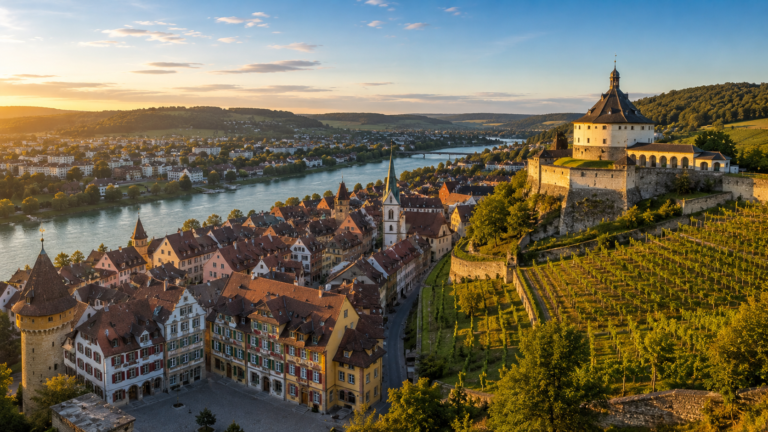
Near the western end of Lake Constance lies Stein am Rhein, one of Switzerland’s most visually striking historic towns.
The town is renowned for its exceptionally preserved medieval center and colorful painted facades that transform ordinary buildings into works of art. Elaborate frescoes depict historical events, religious scenes, and decorative motifs that have become a defining feature of the town.
Cobblestone streets lead visitors through a compact but captivating center filled with historic houses, small shops, and traditional restaurants. Above the town stands Hohenklingen Castle, offering panoramic views across the Rhine Valley and surrounding countryside.
Stein am Rhein demonstrates how preservation and everyday life can coexist without sacrificing authenticity.
Gruyères: History Above the Hills
Perched on a hilltop in western Switzerland, Gruyères combines medieval heritage with one of Switzerland’s most famous culinary traditions.
Surrounded by green pastures and rolling landscapes, the town appears much as it did centuries ago. A single main street lined with historic buildings leads visitors toward the imposing Gruyères Castle, which dominates the skyline.
The castle itself provides insight into regional history, while the town’s connection to Gruyère cheese attracts visitors from around the world. The combination of architecture, gastronomy, and scenery makes Gruyères one of Switzerland’s most distinctive historic destinations.
Lucerne: Where History Meets the Lake
Lucerne offers a different old-town experience. Rather than functioning as a preserved medieval enclave, the historic center remains an active part of a vibrant modern city.
Situated on the shores of Lake Lucerne, the city blends historic architecture with spectacular natural surroundings. Colorful buildings line public squares, while decorative murals reflect local traditions and historical events.
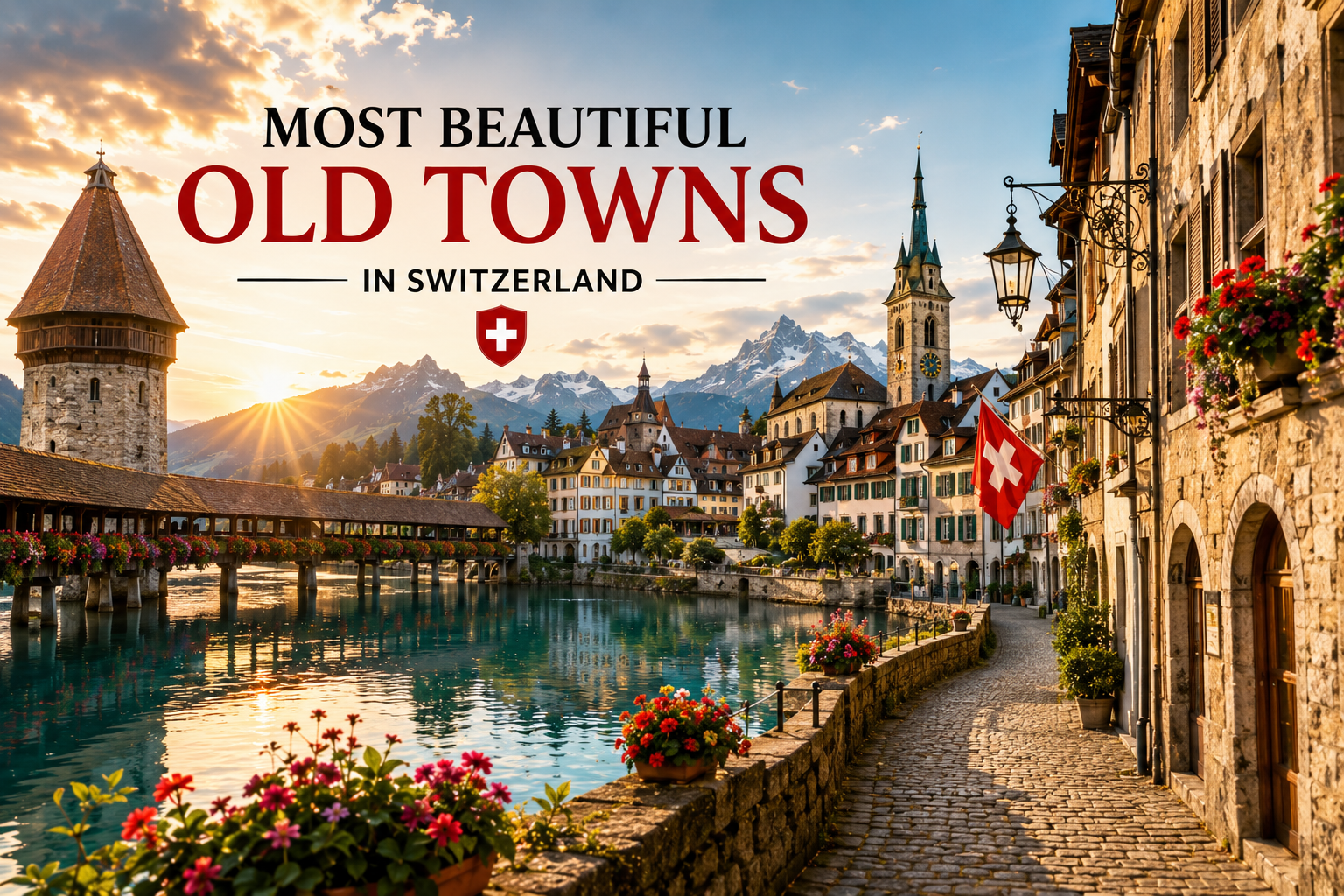
The famous Chapel Bridge, one of Switzerland’s most recognizable landmarks, connects visitors to the city’s past. Nearby towers, churches, and preserved fortifications illustrate Lucerne’s strategic importance during the Middle Ages.
The ability to move seamlessly between historic streets, waterfront promenades, and mountain excursions contributes significantly to Lucerne’s appeal.
Fribourg: A Hidden Historic Treasure
Often overlooked by international visitors, Fribourg possesses one of Switzerland’s most impressive medieval districts.
Located between the country’s French- and German-speaking regions, the city developed around the Sarine River and became an important commercial and cultural center. Its dramatic setting includes bridges, steep streets, and historic neighborhoods that descend toward the river valley.
The Gothic Cathedral of St. Nicholas dominates the skyline, while numerous preserved buildings reveal centuries of architectural evolution. Fribourg rewards travelers seeking a less crowded but deeply authentic historical experience.
Murten: Medieval Walls Beside the Water
Murten offers one of Switzerland’s best-preserved fortified old towns.
Located beside Lake Murten, the town remains enclosed by substantial medieval walls that visitors can still walk along today. The elevated fortifications provide views across rooftops, vineyards, and the lake itself.
Murten’s compact historic center features arcaded streets, traditional buildings, and public squares that maintain a strong connection to the town’s medieval origins. The area also played an important role in Swiss history, particularly during the Burgundian Wars of the 15th century.
Its manageable size makes Murten ideal for a relaxed day of exploration.
Bellinzona: The Fortress City
In Switzerland’s Italian-speaking canton of Ticino, Bellinzona presents a very different interpretation of historic urban heritage.
The city is famous for its three medieval castles—Castelgrande, Montebello, and Sasso Corbaro—which collectively form a UNESCO World Heritage Site. These fortifications once controlled key Alpine routes connecting northern and southern Europe.
Beyond the castles, Bellinzona’s old town reflects Italian architectural influences, creating a distinctive atmosphere rarely found elsewhere in Switzerland. Elegant piazzas, historic churches, and narrow streets contribute to the city’s unique character.
Baden: History Along the Limmat
Known since Roman times for its thermal waters, Baden combines historical significance with a lively urban atmosphere.
The old town features medieval towers, historic bridges, and charming streets lined with restaurants and shops. Remnants of Roman influence can still be found alongside later architectural developments.
Its proximity to Zurich makes Baden an accessible destination for travelers seeking a historic experience beyond Switzerland’s largest city.
Sion: Switzerland’s Historic Heart in Valais
Sion ranks among Switzerland’s oldest settlements and possesses a historical landscape unlike any other.
Two prominent hilltop landmarks dominate the city: the Basilica of Valère and Tourbillon Castle. Together they create one of the country’s most recognizable historic skylines.
The old town below contains centuries-old buildings, narrow streets, and public squares that reveal the city’s long development as a regional center. Surrounded by vineyards and mountain scenery, Sion combines cultural heritage with the natural beauty of the Valais region.
Chur: Switzerland’s Oldest City
Claiming more than 5,000 years of settlement history, Chur is widely regarded as Switzerland’s oldest city.
Its compact old town features winding alleyways, historic churches, and beautifully preserved buildings that showcase multiple historical periods. Unlike some larger destinations, Chur’s center feels intimate and highly walkable.
As the gateway to several famous Alpine rail journeys, including routes into the Graubünden mountains, Chur serves as both a cultural destination and an important transportation hub.
Why Swiss Old Towns Remain Special
What distinguishes Switzerland’s historic towns from many comparable destinations is the remarkable continuity between past and present. These are not museum districts preserved solely for visitors. They remain functioning communities where residents live, work, shop, and celebrate local traditions.
From Bern’s UNESCO-listed avenues and Stein am Rhein’s painted facades to Gruyères’ hilltop charm and Bellinzona’s powerful castles, each town reflects a different chapter of Swiss history. Together they reveal a country whose cultural heritage extends far beyond its famous mountains.
For travelers hoping to understand Switzerland more deeply, few experiences are as rewarding as wandering through its beautifully preserved old towns, where centuries of history remain visible around every corner.