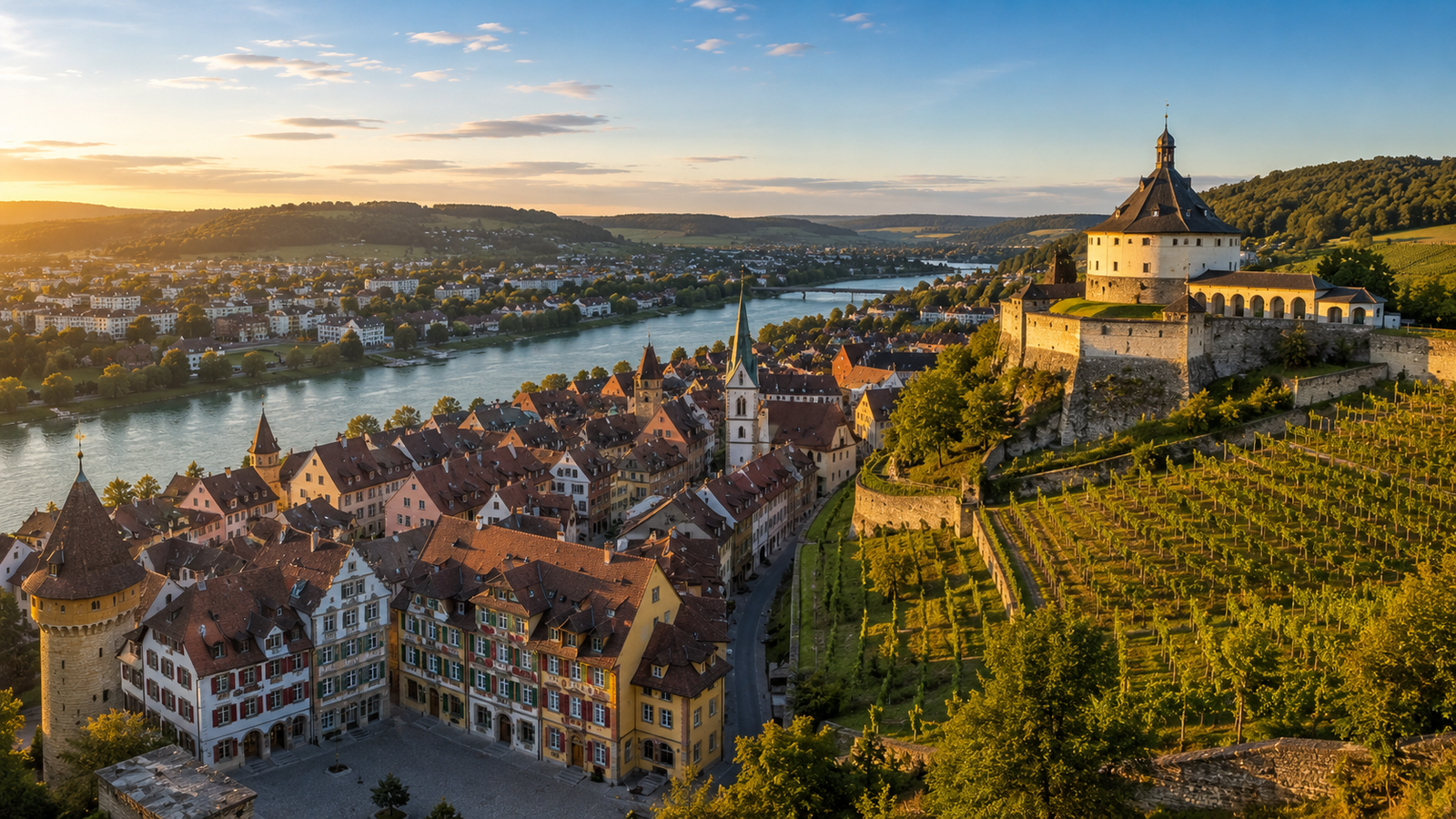
Schaffhausen, Switzerland
Schaffhausen: Switzerland’s Riverside City of History, Heritage, and the Rhine
At the northern edge of Switzerland, where the Rhine River continues its journey toward Germany, Schaffhausen stands as one of the country’s most distinctive historic cities. While many travelers know the region primarily because of the nearby Rhine Falls, Europe’s largest waterfall by volume, the city itself is a destination rich in architectural heritage, centuries of history, and a unique riverside atmosphere.
Schaffhausen offers a different side of Switzerland. Instead of alpine peaks dominating the skyline, visitors encounter Renaissance façades, medieval streets, vineyards, river landscapes, and one of the country’s most recognizable fortresses. The result is a destination where history and nature are closely intertwined, creating an experience that rewards both cultural exploration and outdoor discovery.
Where the Rhine Shapes the Landscape
Geography has played a defining role in Schaffhausen’s development. The city lies directly on the High Rhine, the section of the river between Lake Constance and Basel. This strategic location transformed Schaffhausen into an important trading center during the Middle Ages, particularly because river traffic was forced to bypass the powerful rapids and waterfalls downstream.
Surrounded by rolling hills, vineyards, forests, and river valleys, the region presents a landscape quite different from central Switzerland. The Rhine remains a central feature of daily life, influencing recreation, transportation, and local identity.
The city’s location near the German border also contributes to its distinctive cultural character. Visitors can easily sense the historical connections that have linked this region to both Swiss and broader European developments for centuries.
A Historic Trading Center with Deep Roots
Schaffhausen traces its origins to the early medieval period. The city grew around the Benedictine Abbey of All Saints, an institution that played a major role in the area’s religious, economic, and political development. Over time, Schaffhausen evolved into an important commercial center due to its position along major trade routes connecting northern and southern Europe.
Unlike many historic cities that lost much of their architectural heritage through modernization, Schaffhausen preserved an extraordinary collection of historic buildings. Walking through the old town reveals centuries of architectural evolution, from medieval foundations to Renaissance and Baroque influences.
The city’s prosperity during the late Middle Ages and Renaissance periods left a visible mark on the urban landscape. Merchants and wealthy citizens commissioned elaborate residences adorned with decorative façades, painted murals, bay windows, and carved details that continue to attract visitors today.
One of Switzerland’s Most Beautiful Old Towns
Schaffhausen’s old town is widely regarded as one of the finest historic centers in Switzerland. Much of the district remains remarkably intact, creating an environment where architectural heritage can be appreciated in its original urban setting.
Visitors exploring the old town encounter narrow streets, charming squares, historic fountains, arcades, and well-preserved buildings that showcase centuries of craftsmanship. Many façades feature intricate frescoes and decorative artwork that distinguish Schaffhausen from other Swiss cities.
The city is particularly famous for its oriel windows—ornamental bay windows projecting from historic buildings. These architectural features became symbols of wealth and prestige and remain among the most recognizable elements of Schaffhausen’s streetscape.
The pedestrian-friendly center encourages exploration at a relaxed pace. Around every corner, visitors discover hidden courtyards, small cafés, historic churches, and architectural details that reveal the city’s rich past.
Munot Fortress: The City’s Icon
Towering above the old town, Munot Fortress is unquestionably Schaffhausen’s most recognizable landmark. Built during the 16th century as a circular fortification, the structure occupies a commanding hilltop position overlooking the city and the Rhine Valley.
The fortress represents an unusual example of military architecture in Switzerland. Its massive stone walls and circular design make it instantly recognizable from nearly every part of the city. Today, Munot functions as both a historic monument and a popular gathering place.
Visitors can climb to the fortress and enjoy panoramic views extending across the old town, surrounding vineyards, the Rhine River, and neighboring landscapes. The elevated position provides one of the best opportunities to understand the city’s geographic setting.
Munot is more than a historic structure; it has become a symbol of Schaffhausen itself and remains deeply connected to local traditions and community life.
The Legacy of the Abbey of All Saints
Another major attraction is the former Abbey of All Saints, one of the most important historical sites in the city. Founded during the medieval period, the abbey served as a significant religious center for centuries.
Today, the complex houses cultural and historical exhibitions while preserving important architectural elements from its long history. Visitors can explore the church, cloister, and surrounding structures, gaining insight into the religious and civic development of the region.
The peaceful cloister gardens provide a striking contrast to the busy city center and offer a glimpse into monastic life during earlier centuries.
For travelers interested in history, the abbey serves as an essential starting point for understanding Schaffhausen’s origins and evolution.
Gateway to Rhine Falls
Although technically located near the neighboring community of Neuhausen am Rheinfall, Rhine Falls is inseparable from the Schaffhausen visitor experience. The waterfall is among Europe’s most impressive natural attractions and draws visitors from around the world.
The immense flow of water creates a dramatic spectacle throughout the year. Viewing platforms allow visitors to experience the power of the falls from multiple angles, while boat excursions bring travelers closer to the cascading water.
The connection between Schaffhausen and Rhine Falls makes the city an ideal base for exploring one of Switzerland’s most famous natural landmarks. Many visitors combine cultural sightseeing in the city with outdoor experiences at the falls during the same trip.
A City of Culture and Local Traditions
Schaffhausen balances its historic identity with a vibrant contemporary cultural scene. Museums, galleries, concerts, and seasonal events contribute to the city’s cultural life while preserving strong connections to regional traditions.
Wine production also plays an important role in the surrounding countryside. Vineyards covering nearby hillsides reflect a long-established agricultural heritage that remains visible throughout the region. Local wines and regional cuisine provide visitors with opportunities to experience another dimension of Schaffhausen’s character.
The city’s location along the Rhine has fostered centuries of exchange, helping shape a culture that combines Swiss traditions with influences from neighboring regions.
Best Things to Do in Schaffhausen
Travelers visiting Schaffhausen should consider:
- Exploring the historic old town on foot.
- Visiting Munot Fortress for panoramic views.
- Discovering the Abbey of All Saints and its cloister.
- Admiring Renaissance-era buildings and painted façades.
- Walking along the Rhine River.
- Taking an excursion to Rhine Falls.
- Exploring nearby vineyards and countryside trails.
- Visiting local museums dedicated to history and culture.
The compact nature of the city allows visitors to experience many highlights within a relatively short time while still leaving room for leisurely exploration.
When to Visit
Schaffhausen offers attractions throughout the year. Spring and summer provide pleasant weather for walking tours, river excursions, and visits to Rhine Falls. Vineyards become particularly attractive during autumn, when changing colors transform the surrounding landscape.
Winter presents a quieter atmosphere, allowing visitors to appreciate the city’s architecture and historic streets without large crowds. Seasonal events and festive decorations add additional charm during the colder months.
Getting There and Getting Around
Schaffhausen is well connected to Switzerland’s rail network and can be reached easily from Zurich and other major Swiss cities. Frequent train services make day trips and extended stays equally convenient.
Once in the city, most major attractions are accessible on foot. Public transportation provides connections to surrounding communities, including Rhine Falls and other regional destinations.
Few Swiss cities combine natural wonders and historical heritage as effectively as Schaffhausen. Its beautifully preserved old town, iconic Munot Fortress, riverside setting, and proximity to Rhine Falls create a destination that appeals to history enthusiasts, architecture lovers, and nature travelers alike. Rather than serving merely as a gateway to a famous waterfall, Schaffhausen stands confidently as one of Switzerland’s most rewarding urban destinations.